
12-hour days, no weekends: the anxiety driving AI’s brutal work culture is a warning for all of us | AI (artificial intelligence)
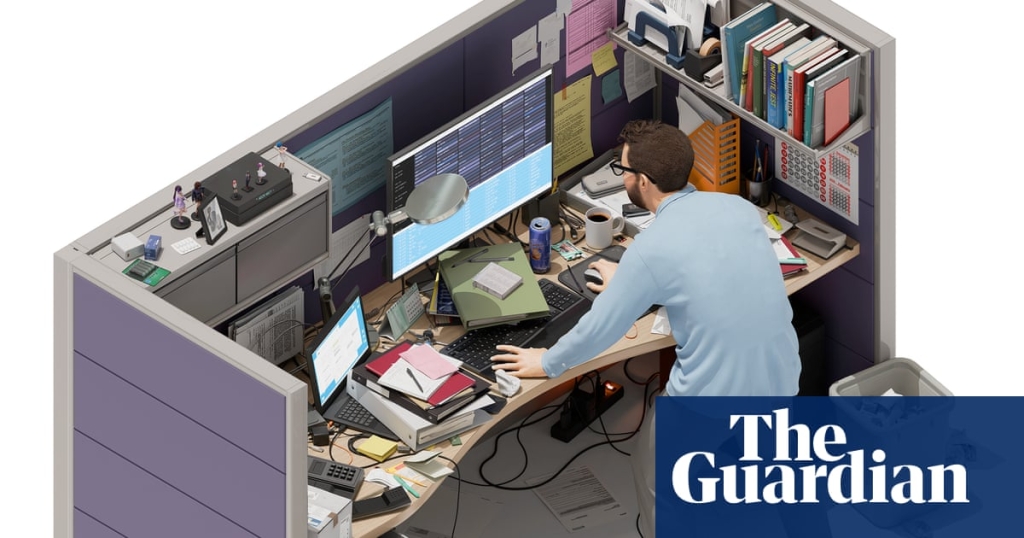
San Francisco’s AI Grind: How the Tech Industry’s New Normal Could Be Your Future
In the heart of San Francisco’s AI boom, a new work culture is emerging that’s reshaping not just the tech industry, but potentially every sector of the economy. As artificial intelligence companies race to dominate the future, employees are logging unprecedented hours, questioning their job security, and wondering if they’re building a future that will have room for them.
The stories coming out of San Francisco’s startup scene paint a picture of an industry in overdrive. Take Sanju Lokuhitige, co-founder of Mythril, who moved to the Bay Area specifically to be closer to the AI action. “I work seven days a week, 12 hours a day,” he admits, “minus a few carefully selected social events each week where I can network with other people at startups. Sometimes I’m coding the whole day. I do not have work-life balance.”
This isn’t an isolated case. Another startup employee, who asked to remain anonymous, described working conditions at his AI company as “horrendous.” The founders live and work in a two-bedroom apartment in Dogpatch, coding from 9 AM until as late as 3 AM, breaking only for DoorDash meals or to sleep. “I’d heard about 996, but these guys don’t even do 996,” he says. “They’re working 16-hour days.”
The term “996” refers to the notorious Chinese work schedule of 9 AM to 9 PM, six days a week—a culture that’s now taking root in Silicon Valley’s AI scene. In cafes across San Francisco on Sundays, you’ll find tables full of people still working, laptops open, coffee cups scattered, as the boundary between work and life continues to blur.
This intense work culture isn’t entirely new to tech. A decade ago, coders were chugging Soylent to stay at their desks longer, and hustle culture was already defining startup life. But something feels different now. The excitement about AI’s potential is tempered with genuine anxiety about the future of work itself.
Mike Robbins, an executive coach who has worked with giants like Google, Microsoft, Salesforce, and Airbnb, puts it bluntly: “If you were a software engineer five years ago, you could kind of write your ticket. Now, the balance of power has shifted away from tech workers.” Companies that once feared losing employees are now “more forthright in terms of what they want and be a little more demanding.”
The numbers back this up. Tech companies laid off about a quarter of a million workers globally in 2025, with AI cited as a main factor in nearly half of those cuts. Even Mark Zuckerberg and Elon Musk have been candid about their predictions that AI will replace junior and mid-level engineers, calling for their workforces to be more “efficient” and “extremely hard core.”
This creates a perfect storm of anxiety and motivation. Kyle Finken, a software engineer at Mintlify, voices a common concern: “I think a lot of people are concerned like, ‘Oh, am I going to have a job in three years?'” Yet paradoxically, many workers feel energized by the “extraordinary innovation” happening in AI and believe there will still be plenty of jobs for engineers in the future—just different ones.
The pressure to grind isn’t just about meeting employer demands. It’s about staying relevant in a field where tools and technology are changing nearly every day. Take the weekend off, and you might miss a major development that makes it harder to keep up with competitors. More importantly, you might miss the opportunity to build something impressive enough to land your next job.
“No one hires junior developers any more,” says Lokuhitige. Landing a job now requires “doing something cool”—building a new product or solving a problem that gets recognized as useful by larger companies. Job postings for entry-level tech jobs have dropped by a third since 2022, while postings requiring at least five years of experience have risen. If you’re not grinding at a startup, you’re missing the prerequisite to get hired in the future.
The implications extend far beyond San Francisco. Economists are divided on whether AI will replace most jobs or just change them, but there’s consensus that AI has already reshaped a great deal of entry-level work and will continue to do so. A Stanford paper found “substantial declines in employment for early-career workers” in AI-exposed industries, suggesting these areas could be like a “canary in the coalmine” for the rest of the economy.
The head of the International Monetary Fund recently predicted that 60% of jobs in advanced economies will be eliminated or transformed by artificial intelligence, “like a tsunami hitting the labour market.” In San Francisco, you can already see the early signs: Uber drivers competing with self-driving Waymos, baristas replaced by robotic coffee bars, and professional business services that support the tech industry negatively affected by the layoffs.
Robbins notes that companies once looked to Silicon Valley as a model of how they should operate, down to emulating policies like unlimited vacation days or adopting perks like free lunch in the office. “There was an idealization of tech and Silicon Valley for a long time across the business world. Some of that has changed,” he says. “Now, people aren’t asking me to tell them what’s going on in the Valley so that they can adopt it, the same way they were a decade ago.”
Rather than a model of how we should all work, the tech industry may be a premonition for the anxiety and attempts to compensate that are coming for all of us. The AI grind in San Francisco isn’t just a local phenomenon—it’s a preview of what many other industries will feel soon.
Tags: AI boom, Silicon Valley, work culture, 996 work schedule, hustle culture, tech layoffs, artificial intelligence, job security, startup life, San Francisco tech scene, AI automation, future of work, tech anxiety, coding culture, work-life balance, AI job displacement, tech industry trends, startup grind, AI development, tech burnout
Viral Phrases: “I do not have work-life balance,” “These guys don’t even do 996,” “No one hires junior developers any more,” “It’s definitely not an era of complacency,” “Like a tsunami hitting the labour market,” “The AI grind,” “Grinding at a startup,” “Building the future that may not include us,” “The canary in the coalmine,” “Writing your ticket,” “Extremely hard core,” “The shoeless era,” “The AI tsunami”
,
![Galaxy S26 teaser shows you AI, not the actual camera [Video]](https://techno-news.org/wp-content/uploads/2026/02/galaxy-s25-camera-2-150x150.jpg "Galaxy S26 teaser shows you AI, not the actual camera [Video]")
Leave a Reply
Want to join the discussion?Feel free to contribute!