
3 Apple devices you shouldn’t buy this month, and 10 I recommend
Apple’s 2026 Tech Roadmap: What’s Coming, What to Buy, and What to Avoid
As we navigate through 2026, Apple continues to dominate the tech landscape with strategic updates and forward-thinking innovations. From surprising AirTag upgrades to potential game-changing product releases, here’s everything you need to know about Apple’s current ecosystem and what’s on the horizon.
The AirTag Gets a Stealthy Upgrade
Apple recently surprised the tech world with an updated AirTag that maintains the same sleek design but delivers meaningful improvements. The new model features a 50% louder speaker, making it significantly easier to locate your keys or wallet when they’re hiding behind the couch cushions. More impressively, the precision-finding range has been dramatically enhanced thanks to the new U2 ultrawideband chip, allowing users to track their belongings from greater distances with pinpoint accuracy.
The timing of this update is particularly interesting, coming just months after the initial release and suggesting Apple is aggressively iterating on its product lineup. At $29 for a single unit or $99 for a four-pack, the AirTag remains one of the most accessible and practical Apple accessories available.
The Foldable iPhone: Apple’s Next Big Bet
Industry analysts are increasingly confident that 2026 will finally see Apple’s entry into the foldable smartphone market. While competitors like Samsung and Huawei have been testing the waters for years, Apple has historically preferred to observe market trends before making its move. The company’s strategy with smartwatches—waiting to see how the market developed before releasing the Apple Watch—appears to be repeating itself with foldables.
What makes this particularly intriguing is Apple’s potential to solve many of the current foldable phone pain points. The company’s expertise in materials science, combined with its vertical integration of hardware and software, could result in a foldable iPhone that addresses durability concerns and delivers a seamless user experience that competitors have struggled to achieve.
The $999 MacBook Revolution
One of the most exciting rumors circulating through Apple’s supply chain suggests the company is preparing to release a 13-inch MacBook powered by iPhone chips, with a groundbreaking price point of $999. This would represent Apple’s most affordable MacBook to date and could fundamentally reshape the laptop market.
The use of iPhone chips in a MacBook isn’t as far-fetched as it might sound. Apple’s M-series processors have already demonstrated that mobile chip architecture can deliver desktop-class performance, and a more affordable MacBook could open up the Apple ecosystem to millions of new users who have been priced out of the current lineup.
Vision Pro: The $3,500 Question Mark
Apple’s spatial computing headset continues to face challenges despite the company’s massive investment. Recent data from IDC suggests Apple sold approximately 45,000 Vision Pro units in the final quarter of 2025, a figure that falls well short of initial projections. Industry experts have noted that Apple has significantly reduced advertising spending for the device, suggesting the company is reassessing its strategy.
The $3,500 price tag remains the most significant barrier to adoption, but it’s not the only challenge. The current lack of compelling applications and the device’s somewhat cumbersome design have limited its appeal beyond early adopters and developers. However, Apple’s track record with new product categories suggests we shouldn’t count the Vision Pro out just yet.
AI: Apple’s Achilles’ Heel
While Apple has integrated AI features across its product lineup under the Apple Intelligence banner, the company’s virtual assistant Siri continues to lag behind competitors like Google Assistant and Amazon’s Alexa. Despite being installed on billions of devices worldwide, Siri’s capabilities remain limited compared to more advanced AI systems.
This year is likely to see Apple double down on AI improvements, potentially through strategic acquisitions or significant internal development. The company’s recent partnership with OpenAI suggests it’s willing to collaborate with external AI providers while building its own capabilities in-house.
Products to Avoid: The “Buy at Your Peril” List
Before making any Apple purchases in 2026, be aware of these outdated products that are due for imminent upgrades:
13/15-inch MacBook Air: With new hardware expected in early 2026, current models are already showing their age. The performance gap between existing Air models and the latest M4-powered MacBook Pro is becoming increasingly noticeable.
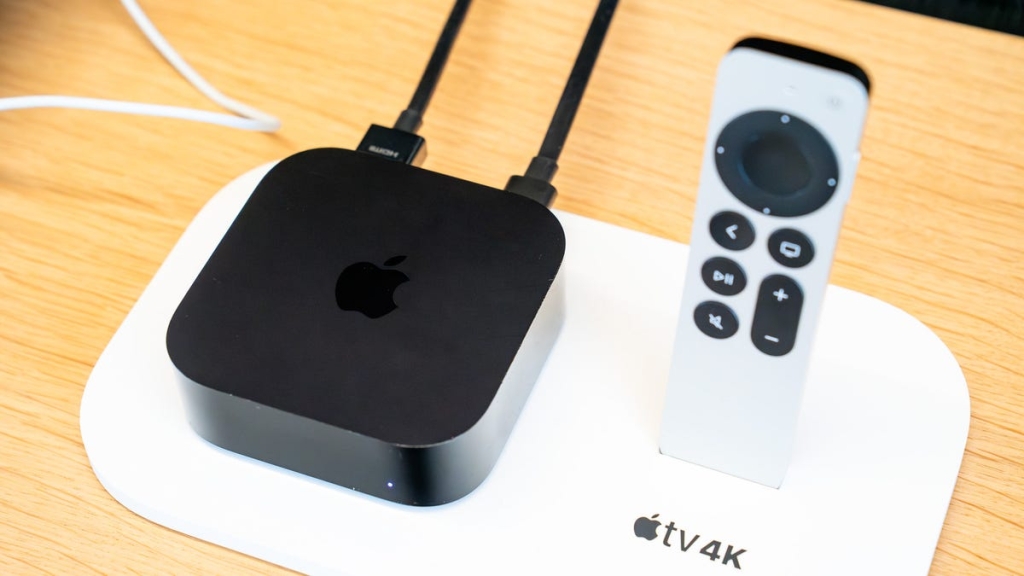
Apple TV 4K (3rd Generation): Released in October 2022, this streaming device still functions adequately but lacks support for Apple Vision and modern AI features. An upgraded version with a faster processor and enhanced capabilities is rumored to arrive early this year.
HomePod mini: This five-year-old smart speaker is desperately in need of an update. First released in October 2020, the HomePod mini suffers from limited processing power and basic Siri functionality. Spring 2026 is expected to bring a significant refresh with improved sound quality, better networking capabilities, and enhanced AI support.
Products Worth Buying: The “Good to Buy” List
These Apple devices represent excellent value and won’t see significant upgrades for at least another year:
1. AirTag 2
The updated AirTag delivers meaningful improvements without changing the price. The louder speaker and enhanced precision finding make it easier than ever to locate lost items, while compatibility with existing accessories ensures your current investments remain valuable.
2. iPhone 17 Series
The latest iPhone lineup brings faster A19 and A19 Pro processors, improved cameras, and better battery life. The new iPhone Air replaces the Plus line with an ultra-thin design, while the iPhone 17 Pro Max offers up to 2TB of storage for power users willing to invest $1,999.
3. Apple Watch Series 11, SE 3, and Ultra 3
The entire Apple Watch lineup has received significant health-focused upgrades, including hypertension alerting—a feature that’s also rolling out to older models. With prices ranging from $249 for the SE 3 to $899 for the Ultra 3 with titanium Milanese band, there’s an Apple Watch for every budget and use case.
4. AirPods Pro 3
These earbuds represent a significant upgrade over previous generations, with enhanced noise cancellation, improved audio quality, increased battery life, and the surprising addition of heart rate detection. This feature marks an interesting shift as Apple moves some core Apple Watch functionality to another device.
5. iPad, iPad Air, and iPad Pro
The iPad Air received a March 2025 refresh with the M3 chip, while the standard iPad got a performance boost thanks to the A16 chip. Updated M5-powered iPad Pro tablets landed late last year, offering unprecedented performance for creative professionals and power users.
6. MacBook Pro (M5)
The MacBook Pro line saw a somewhat confusing refresh, with a new 14-inch base model receiving M5 treatment while higher-end models stick with M4 Pro and M4 Max chips. Starting at $1,599, the 14-inch M5 model offers excellent performance for its price point.
7. Mac Studio
Apple’s pro-grade alternative to the Mac mini received processing boosts in March 2025, with M4 Max and M3 Ultra options available in various configurations. Prices range from $1,999 to $14,099 for fully tricked-out systems.
8. iMac (M4)
The M4 iMac received a refresh in October 2024 to bring it up to speed with Apple Intelligence. With configurations ranging from $1,299 to $1,899, it offers excellent value for users who prefer an all-in-one design.
9. Mac Mini
Apple’s smallest Mac got an upgrade to M4 and M4 Pro processors in October 2024. At just $599 for the base model, it represents the most affordable entry point into the Mac ecosystem.
10. iPad Mini (2024)
Introduced in October 2024, this iPad Mini features the A17 Pro chip and is Apple Intelligence-ready. Available in multiple colors and storage capacities, it offers excellent performance in a compact form factor.
The Tariff Challenge
Apple continues to navigate complex international trade relationships, with tariffs costing the company approximately $800 million in the previous quarter and an additional $1.1 billion projected for the following quarter. Rather than absorbing these costs, Apple has implemented subtle price increases and cost-cutting measures.
The iPhone 17 lineup saw a $100 price increase, but Apple made this less noticeable by adjusting storage configurations. Additionally, the switch from titanium to aluminum chassis represents significant cost savings, as titanium costs approximately 2.5 to 3 times more per pound than aluminum.
These strategic decisions suggest that consumers are ultimately bearing the burden of tariff costs, even if the increases aren’t immediately apparent. As trade relationships continue to evolve, Apple’s ability to adapt its supply chain and pricing strategies will be crucial to maintaining its market position.
Tags & Viral Phrases:
Apple 2026 roadmap, foldable iPhone rumors, $999 MacBook leak, Vision Pro sales disappointment, Siri AI improvements needed, AirTag 2 upgrade details, iPhone 17 Pro Max 2TB storage, Apple Watch Series 11 hypertension detection, AirPods Pro 3 heart rate monitoring, M5 MacBook Pro release, Mac Studio M4 Max performance, iMac M4 Apple Intelligence, Mac Mini $599 cheapest Mac, iPad Mini A17 Pro chip, Apple tariff cost strategies, trade war impact on Apple pricing, iPhone aluminum chassis switch, Apple supply chain adaptation, spatial computing headset challenges, Apple product buying guide 2026, tech industry tariff navigation, Apple ecosystem value assessment, future Apple product predictions, consumer tech purchasing decisions, Apple innovation strategy analysis.
,

Leave a Reply
Want to join the discussion?Feel free to contribute!