
3I/ATLAS: Interstellar comet has water unlike any in our solar system
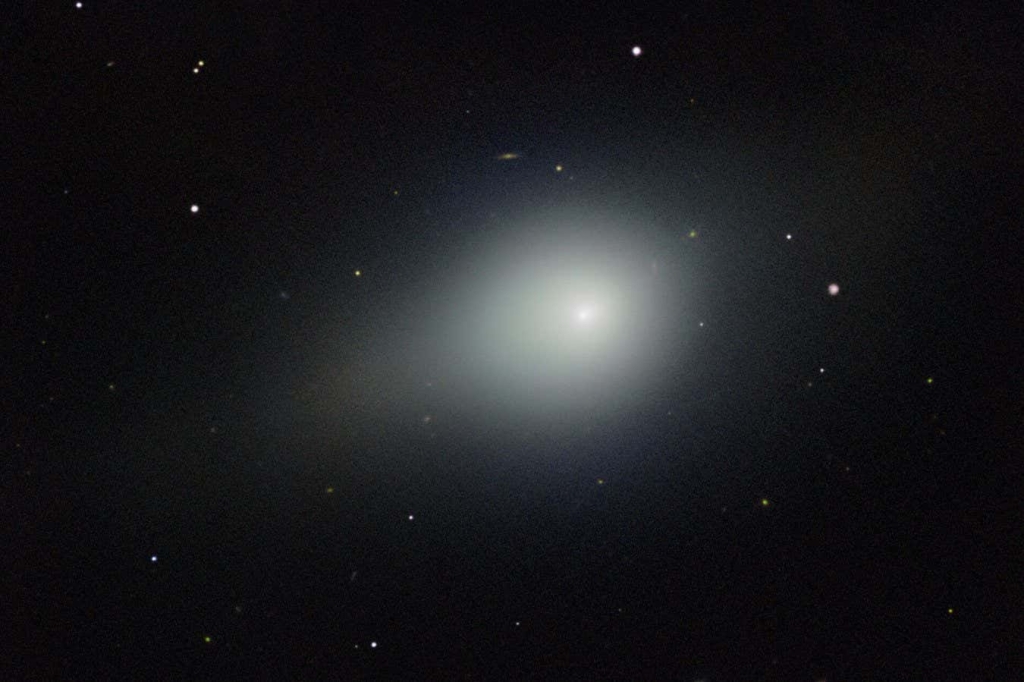
Cosmic Enigma: Interstellar Comet 3I/ATLAS Defies All Expectations
In a discovery that is sending shockwaves through the astronomical community, NASA scientists have unveiled astonishing new findings about the interstellar visitor 3I/ATLAS that challenge everything we thought we knew about our cosmic neighborhood.
When this mysterious comet first entered our solar system last year, astronomers were already baffled by its unusual characteristics. But the latest observations using the James Webb Space Telescope have revealed something so extraordinary that researchers are now questioning the very nature of star formation and planetary system evolution.
A Comet Like No Other
3I/ATLAS contains water and carbon molecules at levels never before seen in our solar system. The comet appears to be packed with far more carbon dioxide and water than almost any other comet we have studied, suggesting it formed around an alien star that is radically different from—and much older than—our own sun.
Early estimates had already placed its age at an astonishing 8 billion years, nearly twice as old as our solar system. But the new data reveals something even more mind-bending: the comet’s levels of deuterium—a form of hydrogen with an extra neutron—are at least 10 times higher than in any comet we’ve seen before.
The Numbers That Defy Logic
To put this in perspective, deuterium naturally exists in small amounts in Earth’s oceans. The levels found in 3I/ATLAS are more than 40 times higher than what we typically observe. “3I/ATLAS continues to astonish us with what it reveals about the similarities and differences of its host system compared with our own solar system,” says Martin Cordiner at NASA’s Goddard Space Flight Center in Maryland.
The comet’s deuterium-to-hydrogen ratio in water is so unusual that Paul Hartogh at the Max Planck Institute for Solar System Research in Germany called it “extremely unusual” and something “nobody would have expected.”
Born in the Cosmic Cold
Such high levels of deuterium are typically seen only in the coldest regions of the Milky Way. Ewine van Dishoeck at Leiden Observatory in the Netherlands explains that this means 3I/ATLAS probably formed in the very outer part of the disc around whatever star it was circling, making it easier for the comet to be ejected from its home system.
But the revelations don’t stop there. The comet also shows relatively low levels of carbon-13—a form of carbon with an extra neutron that is typically produced after stars explode in supernovae. This points to 3I/ATLAS forming at a time in the galaxy’s history when there weren’t as many polluting supernovae.
An Ancient Traveler
This suggests the comet must have been formed around a star system that is approximately 10 to 12 billion years old—more than twice as old as our sun. Cordiner describes it as originating from “a time in the galaxy’s history when there weren’t as many polluting supernovae.”
However, the precision of our current measurements means we can’t be entirely certain about its exact age. As Dishoeck notes, while the evidence strongly suggests an ancient origin, the data requires further refinement.
What This Means for Our Understanding of the Universe
The discovery of 3I/ATLAS challenges our fundamental understanding of how comets form and evolve. It suggests that there are star systems out there with chemical compositions and formation histories vastly different from our own.
This interstellar visitor is essentially a time capsule from another part of the galaxy, carrying with it chemical signatures that tell the story of a star system that existed billions of years before our own solar system even formed.
The Bigger Picture
As we continue to study 3I/ATLAS, astronomers are realizing that our solar system might be far more unique than previously thought. The comet’s extreme chemical composition suggests that the processes that formed our sun and planets may be quite rare in the cosmic landscape.
This discovery also raises fascinating questions about the potential for life elsewhere in the universe. If star systems can vary so dramatically in their chemical makeup, what does this mean for the conditions necessary for life to emerge?
The Future of Interstellar Exploration
The study of 3I/ATLAS represents a new frontier in astronomy. For the first time, we have the technology to analyze in detail the composition of objects that originated in completely different star systems.
As more advanced telescopes come online and our ability to detect and track interstellar objects improves, we may discover that 3I/ATLAS is just the first of many such cosmic visitors, each with its own unique story to tell about the incredible diversity of our galaxy.
This cosmic enigma reminds us that the universe is far stranger and more wonderful than we ever imagined, and that we are only just beginning to understand the vast tapestry of stellar evolution that surrounds us.
Tags: interstellar comet, 3I/ATLAS, James Webb Space Telescope, NASA discovery, cosmic mystery, ancient space object, deuterium levels, alien star system, solar system comparison, astronomical breakthrough
Viral Phrases: “comet older than the sun,” “40 times more deuterium,” “cosmic time capsule,” “alien star system secrets,” “interstellar visitor baffles scientists,” “galactic chemistry mystery,” “space object from another era,” “NASA’s astonishing discovery,” “cosmic enigma defies explanation,” “universe stranger than we thought”
,

Leave a Reply
Want to join the discussion?Feel free to contribute!