
5 Of The Oldest UK Roads Still In Operation Today
Here’s a detailed, tech-focused rewrite of the article, optimized for virality and approximately 1200 words:
Ancient Tech: Exploring the UK’s Oldest Operational Roads
In a world obsessed with cutting-edge technology, it’s easy to forget that some of the most impressive engineering feats are thousands of years old. The United Kingdom, a land steeped in history, boasts an incredible network of roads that have been in continuous use since Roman times – and even earlier. These aren’t just historical curiosities; they’re living, breathing pieces of infrastructure that have adapted and evolved with the times. Let’s take a journey through five of the UK’s oldest operational roads, exploring their fascinating history and how they’ve been integrated into modern life.
The Ridgeway: Britain’s Prehistoric Superhighway
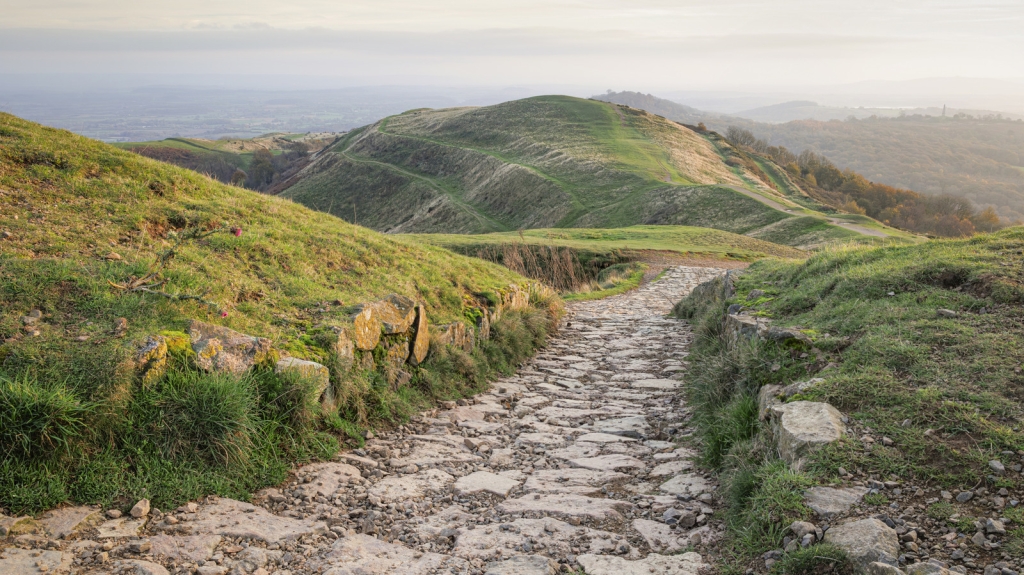
Often called Britain’s oldest road, the Ridgeway has been a vital artery for over 5,000 years. This 85-mile diagonal route from Overton Hill to Ivinghoe Beacon has seen everything from Neolithic traders to medieval armies. What makes the Ridgeway truly remarkable is its seamless integration of ancient and modern. Today, you can drive on paved sections, hike the trail, or even tackle off-road segments in a trail-rated vehicle.
The Ridgeway isn’t just a road; it’s a time machine. As you traverse its length, you’ll encounter Neolithic stone circles, hill forts like Segsbury Camp, and the iconic Uffington White Horse – a 3,000-year-old chalk figure that predates even the Romans. This road is a testament to the enduring nature of well-designed infrastructure and the human desire to connect disparate points across a landscape.
Icknield Way: The Contested Ancient Route
At 110 miles, the Icknield Way is longer than the Ridgeway and shares its endpoint at Ivinghoe Beacon. The origins of this route are hotly debated among historians. Some argue it’s truly ancient, while others claim it’s a more recent creation. Regardless of its age, the Icknield Way represents a fascinating example of how communities have worked to preserve historical routes.
The Icknield Way Association has been instrumental in maintaining this route, ensuring it remains true to its historical roots while adapting to modern needs. YouTube adventurer EastAnglianBushcraft completed the entire route in just four days, showcasing its accessibility and the diverse landscapes it traverses. The Icknield Way serves as a reminder that preserving our past requires active community engagement and legislative support.
Fosse Way: The Roman Engineering Marvel
Unlike the more meandering ancient routes, Fosse Way is a testament to Roman efficiency. This road cuts a straight line from Exeter to Lincoln, covering approximately 230 miles. Built during Rome’s northward expansion into England, Fosse Way is a prime example of Roman road-building prowess.
Today, Fosse Way exists as a patchwork of modern roads (including parts of the A429 and B4455) and off-the-beaten-path trails. While you won’t find many original Roman cobblestones, the road’s route still passes by numerous Roman forts, bathhouses, and other archaeological sites. The Chedworth Roman Villa, near the Fosse Way, offers a glimpse into the opulence of Roman Britain.
Interestingly, Fosse Way’s name comes from the Latin word “fossa,” meaning ditch. The exact origin of this name is debated – was it originally a road with a ditch, or a ditch converted into a road? This ambiguity highlights the complex layers of history that these ancient routes embody.
Watling Street: From Ancient Route to Modern Thoroughfare
Watling Street’s journey from ancient route to modern London street is a fascinating study in urban evolution. Once stretching nearly to the Welsh border, this 276-mile road has been incorporated into London’s street grid. In 2024, construction workers even uncovered a section of the original road beneath an existing street in Southwark.
Today, parts of Watling Street follow the routes of the A2 and A5, demonstrating how ancient infrastructure can be seamlessly integrated into modern road systems. The road’s historical significance extends beyond its physical presence – it was the site of the famous Battle of Watling Street in 61 AD, where the Roman general Gaius Suetonius Paulinus defeated the rebel queen Boudicca of Iceni.
Ermine Street: The Road to Hadrian’s Wall
Named after the Earningus tribe rather than the animal, Ermine Street is a prime example of Roman strategic road-building. Constructed around 43 CE, this road connected Bishopgate to Brough and became the primary route to Hadrian’s Wall. Today, you can drive along parts of Ermine Street by following the A10 and A1.
Like the other ancient routes, Ermine Street exists today as a series of connected segments rather than a single continuous road. However, this fragmentation doesn’t diminish its historical significance. As you travel along Ermine Street, you’ll encounter Roman ruins, burial mounds, and excavated road sections that bring history to life.
The Enduring Legacy of Ancient Infrastructure
These five roads – the Ridgeway, Icknield Way, Fosse Way, Watling Street, and Ermine Street – represent more than just ancient transportation routes. They are living monuments to human ingenuity, adaptability, and the enduring need for connectivity. As we marvel at our modern technological achievements, it’s worth remembering that some of the most impressive feats of engineering are those that have stood the test of time.
These roads have survived not just because of their initial construction quality, but because they’ve been continuously adapted and maintained by generations of users. They remind us that good infrastructure is not just about the latest technology, but about creating systems that can evolve with changing needs and technologies.
As we look to the future of transportation – with autonomous vehicles, smart roads, and sustainable materials – we would do well to study these ancient routes. They offer valuable lessons in durability, adaptability, and the importance of integrating infrastructure with the natural and historical landscape.
In an age of rapid technological change, these ancient roads stand as a testament to the enduring power of well-designed infrastructure. They challenge us to think beyond the immediate future and consider how our modern creations might be used and adapted thousands of years from now. After all, in the grand scheme of human history, our current technological marvels are but a blink of an eye compared to these ancient thoroughfares that have connected communities for millennia.
Tags: Ancient roads, Roman engineering, British history, Infrastructure evolution, Historical preservation, Archaeological sites, UK travel, Road trip, Ancient technology, Cultural heritage
Viral Sentences:
- “These roads have been connecting communities for longer than most civilizations have existed!”
- “Imagine driving on a road that’s older than the pyramids!”
- “The Romans knew how to build roads that could stand the test of time – literally!”
- “From chariots to cars: These ancient roads have seen it all.”
- “Who needs a time machine when you can walk these historic routes?”
- “The UK’s oldest roads are a testament to the enduring power of good infrastructure.”
- “These aren’t just roads; they’re living pieces of history under our feet.”
- “Ancient engineering meets modern technology on these historic routes.”
- “Discover the secrets of Roman road-building that still influence our infrastructure today.”
- “From Roman legions to modern commuters: The incredible journey of Britain’s oldest roads.”
,


Leave a Reply
Want to join the discussion?Feel free to contribute!