
AI Is Here to Replace Nuclear Treaties. Scared Yet?
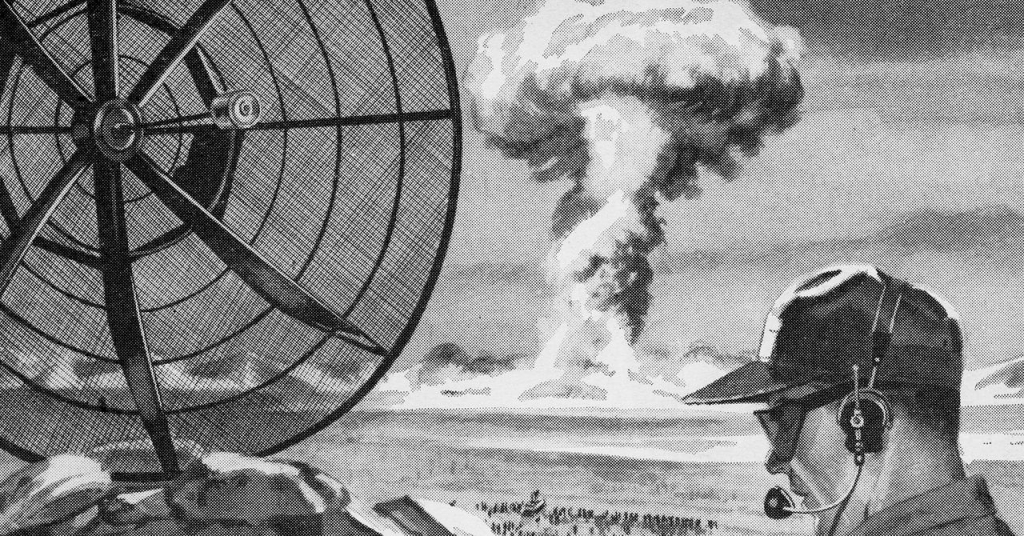
Satellite Eyes and AI Minds: The Future of Nuclear Arms Control in a Post-Treaty World
For more than half a century, the global community relied on a carefully constructed framework of treaties to steadily reduce the world’s nuclear arsenal. From the Cold War’s peak of over 60,000 warheads to today’s count of just over 12,000, decades of painstaking diplomacy, on-site inspections, and mutual trust whittled down the threat of nuclear catastrophe. That era, however, appears to be over. With the expiration of New START and the evaporation of trust between nuclear powers, the world now faces an uncertain and dangerous future—one that may require a radical, technology-driven solution.
Enter “cooperative technical means”: a bold proposal from researchers at the Federation of American Scientists (FAS) to monitor nuclear weapons using satellites, remote sensors, and artificial intelligence. In their report Inspections Without Inspectors, Matt Korda and Igor Morić outline a future where AI and machine learning replace human inspectors, analyzing satellite imagery and sensor data to verify compliance with arms control agreements. It’s an imperfect solution, but in a world where traditional treaties have collapsed, it may be the best option available.
A New Era of Nuclear Uncertainty
The expiration of New START on February 5, 2026, marks a pivotal moment in global security. The treaty, which limited the number of deployed nuclear warheads and launchers for the United States and Russia, was the last remaining pillar of the arms control architecture built over decades. Its collapse comes amid a broader unraveling of international cooperation, with both countries investing heavily in new nuclear weapons and delivery systems. China is rapidly expanding its intercontinental ballistic missile (ICBM) capabilities, while the United States’ retreat from global leadership has left allies like South Korea reconsidering their own nuclear options.
In this environment of mistrust and escalation, the traditional model of arms control—relying on on-site inspections and face-to-face diplomacy—has become politically untenable. “No country wants on-site inspectors roaming around on their territory,” Korda explains. Yet, the need for transparency and verification remains as urgent as ever.
AI and Satellites: The Eyes and Ears of Arms Control
Korda and Morić’s proposal leverages the power of existing satellite infrastructure and cutting-edge AI to create a new form of arms control. By monitoring ICBM silos, mobile rocket launchers, and plutonium production sites from space, and using AI to analyze patterns and detect changes, the world could maintain a degree of oversight without the need for intrusive inspections.
“AI is particularly good at pattern recognition,” Korda notes. “If you had a large enough and well-curated dataset, you could, in theory, train a model that’s able to identify both minute changes at particular locations but also potentially identify individual weapon systems.” This approach could provide a level of transparency and accountability that is currently lacking, even if it cannot fully replace the trust-building benefits of human inspectors.
The Challenges Ahead
Of course, this high-tech solution is not without its challenges. For one, it requires a degree of cooperation between nuclear powers—a tall order in today’s geopolitical climate. Countries would need to agree to participate, share data, and accept the limitations of remote monitoring. There are also technical hurdles, such as ensuring the accuracy and reliability of AI systems, and addressing concerns about data security and privacy.
Moreover, while “cooperative technical means” could help prevent the worst excesses of a new arms race, it cannot fully replicate the trust and stability fostered by traditional arms control treaties. As Korda acknowledges, this is a “plan B”—a stopgap measure in a world where the old rules no longer apply.
A Glimmer of Hope in a Darkening World
Despite the challenges, the FAS proposal offers a glimmer of hope in an otherwise bleak landscape. By harnessing the power of technology, the world may be able to maintain some degree of oversight and stability, even as the traditional arms control regime crumbles. It’s a reminder that, even in times of crisis, human ingenuity and cooperation can find new ways to address old problems.
As the world grapples with the specter of a new nuclear arms race, the need for innovative solutions has never been greater. Whether “cooperative technical means” can fill the void left by the collapse of New START remains to be seen. But one thing is clear: in a world where the old rules no longer apply, the future of arms control may depend on the eyes in the sky—and the minds of the machines that watch them.
Tags & Viral Phrases:
- AI arms control
- Nuclear weapons monitoring
- Satellite surveillance
- New START expiration
- Arms race 2.0
- Cooperative technical means
- Machine learning for nukes
- Global security crisis
- Trust in the age of AI
- Remote verification
- Nuclear treaty collapse
- Future of diplomacy
- Tech-driven arms control
- Space-based monitoring
- AI pattern recognition
- Geopolitical uncertainty
- Nuclear transparency
- Innovation in security
- Post-treaty world
- High-tech verification
,


Leave a Reply
Want to join the discussion?Feel free to contribute!