
A 307 Million-Year-Old Skull Reveals a Surprising Shift in Early Diets
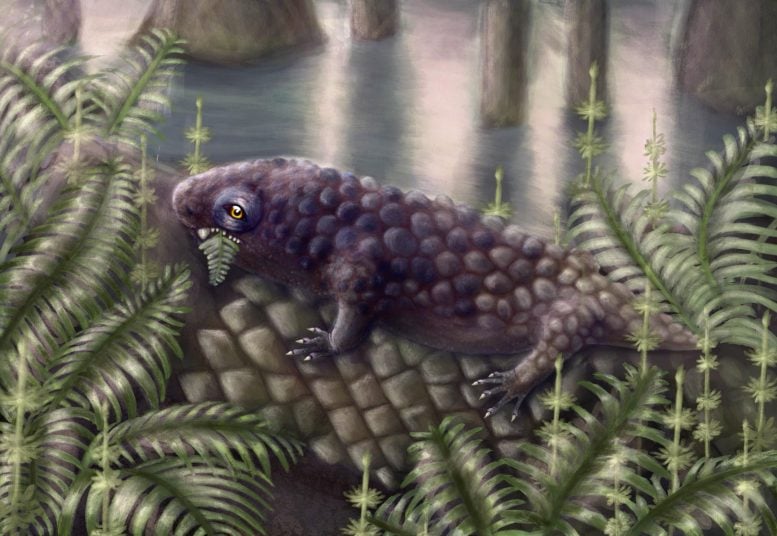
307-Million-Year-Old Skull Rewrites the Story of When Animals First Ate Plants
In a discovery that is shaking up our understanding of early terrestrial life, paleontologists have uncovered fossil evidence that some of Earth’s earliest land-dwelling animals were already experimenting with plant-based diets far earlier than previously believed. This revelation comes from the remarkably preserved skull of a 307-million-year-old creature, offering a tantalizing glimpse into a pivotal moment in the evolution of life on land.
Life on Earth began in the oceans, with the first simple organisms emerging in primordial seas. It wasn’t until about 475 million years ago that plants began their monumental journey from water to land, transforming the planet’s surface and paving the way for new forms of life. Animals with backbones—vertebrates—followed much later, arriving on land roughly 100 million years after plants had already taken hold. For a long time, scientists assumed that the earliest land vertebrates were primarily carnivorous, feasting on insects and other small animals before gradually adapting to include plants in their diets.
However, the discovery of this ancient skull challenges that assumption, suggesting that the shift toward herbivory may have occurred much earlier and more rapidly than previously thought. The fossil belongs to a creature named Tyrannoroter heberti, a name that hints at its surprising dietary habits. The skull’s structure reveals features typically associated with plant-eating animals, such as specialized teeth for grinding and a jaw capable of processing tough vegetation.
This finding is significant because it suggests that the transition from carnivory to herbivory among early land animals was not a slow, gradual process but rather a bold experiment that began soon after vertebrates first ventured onto land. It also implies that plants, having already established themselves on land, were an attractive and accessible food source for these pioneering animals.
The implications of this discovery extend beyond just the dietary habits of early vertebrates. It provides new insights into the complex interplay between plants and animals during a critical period in Earth’s history. As plants diversified and spread across the land, they created new ecological niches and opportunities for animals to exploit. The willingness of early vertebrates to experiment with plant-based diets may have been a key factor in their success and eventual dominance on land.
Paleontologists are now reexamining other fossils from this period, searching for additional evidence of early herbivory. If further discoveries support this new timeline, it could lead to a major revision of our understanding of how life on land evolved.
The story of Tyrannoroter heberti is a reminder that evolution is full of surprises. Just as early humans were once thought to have been strict carnivores before discovering the benefits of agriculture, these ancient animals were already exploring the possibilities of a plant-based diet millions of years earlier than we imagined. It’s a testament to the adaptability and ingenuity of life, and a fascinating chapter in the ongoing story of our planet’s history.
As scientists continue to uncover the secrets of Earth’s past, each new discovery brings us closer to understanding the complex and interconnected web of life that has shaped our world. The tale of the 307-million-year-old skull is just one piece of that puzzle, but it’s a piece that could change the way we think about the origins of herbivory and the early days of life on land.
Tags and Viral Phrases
307-million-year-old fossil, early land animals, plant-based diet, Tyrannoroter heberti, evolution of herbivory, ancient skull discovery, first vertebrates on land, transition from carnivory to herbivory, early terrestrial life, fossil evidence, Earth’s earliest land animals, plant-eating animals, specialized teeth for grinding, jaw capable of processing vegetation, ecological niches, adaptability of life, groundbreaking paleontology, rewriting evolutionary history, surprising dietary habits, bold experiment in evolution, complex interplay between plants and animals, diversification of plants, success of early vertebrates, major revision of evolutionary understanding, adaptability and ingenuity of life, interconnected web of life, origins of herbivory, early days of life on land, paleontological breakthrough, ancient animal diets, evolutionary timeline, fossil record, terrestrial ecosystems, pioneering animals, plant-based food sources, early animal experimentation, Earth’s history, scientific discovery, viral paleontology news, evolutionary surprises, ancient life adaptation, fossil analysis, groundbreaking discovery, early animal evolution, plant-animal interactions, ancient ecosystems, evolutionary biology, scientific revelation, viral science news, ancient dietary habits, evolutionary adaptation, early animal behavior, fossil reconstruction, scientific breakthrough, evolutionary innovation, ancient animal behavior, plant evolution, early animal diets, evolutionary milestones, ancient animal fossils, scientific research, evolutionary science, ancient animal adaptation, fossil findings, evolutionary discoveries, ancient animal behavior, scientific insights, evolutionary timeline, ancient ecosystems, early animal adaptation, fossil evidence, evolutionary biology, scientific discovery, ancient animal fossils, evolutionary milestones, early animal behavior, fossil reconstruction, scientific breakthrough, evolutionary innovation, ancient animal adaptation, fossil findings, evolutionary discoveries.
,


Leave a Reply
Want to join the discussion?Feel free to contribute!