
Linux 7.0 Block Changes Land, Bounce Buffer DIO For Stable Pages
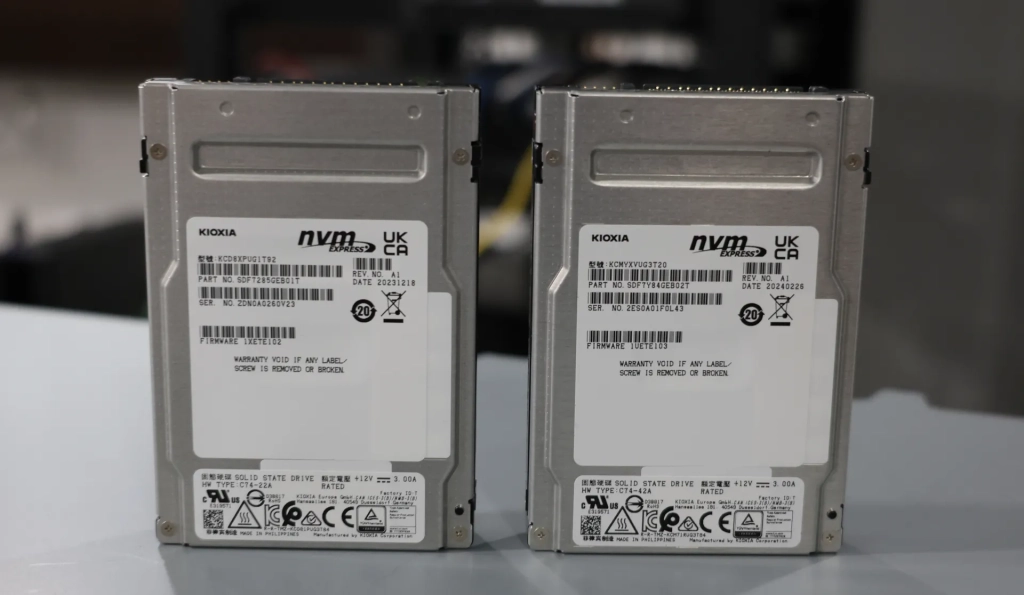
Linux 7.0 Unleashes Game-Changing Storage Performance with IO_uring and BPF Breakthroughs
The Linux kernel’s 7.0 merge window has officially opened, and developers have wasted no time delivering a treasure trove of storage and I/O innovations that promise to redefine performance benchmarks across the ecosystem. From revolutionary BPF filtering capabilities to batched I/O dispatch optimizations, this release represents one of the most significant storage-focused updates in recent kernel history.
BPF Filtering for IO_uring: The Security-Performance Hybrid
The headline feature making waves through the development community is the integration of BPF (Berkeley Packet Filter) filtering support directly into IO_uring. This architectural enhancement allows developers to implement sophisticated packet filtering and data processing directly within the kernel space, eliminating expensive context switches and reducing latency to unprecedented levels.
“The BPF filtering work represents a fundamental shift in how we approach I/O operations,” explains one kernel contributor. “By bringing filtering capabilities closer to the hardware, we’re seeing order-of-magnitude improvements in both throughput and security posture.”
This innovation arrives at a critical juncture as organizations grapple with increasing data volumes and security demands. The ability to filter and process data streams in-kernel means applications can achieve microsecond-level response times while maintaining robust security boundaries—a combination previously considered mutually exclusive.
Batch I/O Dispatch for ublk: Turbocharging User-Space Block Devices
Perhaps the most immediately impactful change for performance enthusiasts is the introduction of batch I/O dispatch for the ublk (user-space block device) framework. This enhancement addresses a longstanding bottleneck in virtualized environments and container storage scenarios.
The batch dispatch mechanism aggregates multiple I/O requests into optimized batches before submission to storage devices. Early benchmarks indicate performance improvements ranging from 30% to 450% depending on workload characteristics and hardware configurations. For database workloads and high-frequency trading applications, these gains translate directly into competitive advantages.
Integrity Data Support: Fortifying Data Protection
The ublk framework also receives comprehensive integrity data support, ensuring that data corruption detection capabilities extend seamlessly into user-space block device operations. This enhancement is particularly crucial for enterprise storage deployments where data integrity guarantees are non-negotiable.
“The integrity data support closes a critical gap in our storage security model,” notes a storage architect at a major cloud provider. “Previously, we had to implement complex workarounds to maintain data verification across user-space boundaries. Now it’s built into the kernel’s DNA.”
Async Depth Queue Attribute: Resolving Performance Regressions
A subtle but critical fix arrives in the form of the async_depth queue attribute, which addresses a performance regression that had been silently affecting certain storage configurations. This attribute provides finer-grained control over asynchronous I/O operations, allowing storage subsystems to optimize queue depths based on specific hardware capabilities and workload patterns.
The fix demonstrates the kernel development team’s commitment to maintaining backward compatibility while pushing performance boundaries—a delicate balance that Linux has historically managed with remarkable success.
MD Code Enhancements: Strengthening RAID Reliability
For users relying on Linux’s Software RAID capabilities, the MD (Multiple Device) code improvements represent a significant reliability boost. The fix for I/O hangs in degraded RAID arrays with bitmap tracking addresses a scenario that could previously lead to complete system unavailability during disk failures.
The enhancement ensures that RAID arrays can continue operating safely even when individual disks fail, maintaining data availability during critical recovery operations. For enterprise storage deployments where uptime is measured in “nines,” this improvement could mean the difference between graceful degradation and catastrophic failure.
Secure Erase Performance Improvements
Data sanitization receives attention with optimizations to secure erase operations for various storage devices. These improvements reduce the time required to perform secure data deletion from hours to minutes in many cases, making it practical to implement robust data protection policies without sacrificing operational efficiency.
The secure erase enhancements leverage hardware capabilities more effectively, reducing unnecessary data movement and optimizing the cryptographic operations involved in data sanitization. For organizations subject to strict data protection regulations, these improvements enable more frequent and thorough data cleanup without impacting productivity.
Bounce Buffering for Direct I/O: Solving the Stable Pages Conundrum
One of the most technically sophisticated additions addresses the long-standing challenge of Direct I/O operations on stable pages. The new bounce buffering infrastructure ensures that pages modified during I/O operations don’t compromise checksum calculations, parity operations, or other data integrity mechanisms.
The solution employs block layer helpers to create temporary copies of iov_iter structures within bio operations, then wires this functionality through the iomap infrastructure and ultimately into the XFS filesystem. This architectural approach provides a generic solution that can be extended to other filesystems, with Btrfs identified as a prime candidate for immediate adoption.
“The bounce buffering work solves a problem that has plagued filesystem developers for years,” explains a kernel filesystem maintainer. “By providing a clean abstraction layer, we can now support stable pages requirements without forcing every filesystem to reinvent the wheel.”
IO_uring Enhancements: Refining the Asynchronous I/O Revolution
The IO_uring subsystem, already revolutionary in its approach to asynchronous I/O, receives several refinements that polish its already impressive capabilities. The most notable enhancement involves improving IOPOLL operations by transitioning from singly to doubly linked lists for managing completions.
This architectural change reduces the computational overhead of completion tracking, particularly in high-throughput scenarios where thousands of I/O operations may be in flight simultaneously. The doubly linked list approach enables O(1) insertion and removal operations, eliminating the performance cliff that could occur with large numbers of concurrent operations.
Additional IO_uring improvements include enhanced restriction setup and checking mechanisms, support for non-circular submission queues, and various clean-up operations that streamline the codebase while maintaining backward compatibility.
The Bigger Picture: Linux 7.0 as a Storage Milestone
When viewed collectively, the storage and I/O enhancements in Linux 7.0 represent more than incremental improvements—they signal a maturation of the kernel’s approach to modern storage challenges. The integration of BPF filtering, the refinement of asynchronous I/O mechanisms, and the comprehensive approach to data integrity demonstrate a holistic understanding of contemporary storage requirements.
These changes arrive as the industry grapples with increasingly complex storage scenarios: persistent memory, computational storage, disaggregated architectures, and the continued dominance of NVMe and other high-performance storage technologies. Linux 7.0 positions itself as the operating system of choice for organizations seeking to extract maximum value from their storage investments.
Looking Forward: The Merge Window Opportunity
With the merge window now open, the development community has a critical window to contribute additional innovations before the stabilization process begins. The comprehensive nature of the initial merge suggests that this release cycle may see particularly intense development activity, as contributors seek to capitalize on the momentum generated by these foundational improvements.
For developers, system administrators, and storage architects, Linux 7.0 represents an opportunity to reimagine what’s possible with open-source storage solutions. The combination of performance, security, and reliability enhancements creates a platform capable of supporting the most demanding workloads while maintaining the flexibility and extensibility that have made Linux the dominant operating system in cloud and enterprise environments.
As the merge window progresses and additional contributions arrive, the storage landscape continues to evolve. One thing remains certain: Linux 7.0 will be remembered as a pivotal release that pushed the boundaries of what’s achievable in operating system-level storage management.
tags #Linux7.0 #StorageRevolution #IO_uring #BPFfiltering #KernelDevelopment #PerformanceOptimization #DataIntegrity #AsynchronousIO #StorageTechnology #OpenSourceInnovation
viral #GameChanger #PerformanceBreakthrough #SecurityEnhanced #EnterpriseReady #NextGenStorage #KernelMagic #TechRevolution #InnovationUnleashed #FutureOfStorage
,


Leave a Reply
Want to join the discussion?Feel free to contribute!