
Robinhood (HOOD) starts testing its own blockchain as crypto push deepens
Robinhood Launches Public Testnet for Ethereum Layer-2 Blockchain: A Bold Move in Tokenized Asset Trading
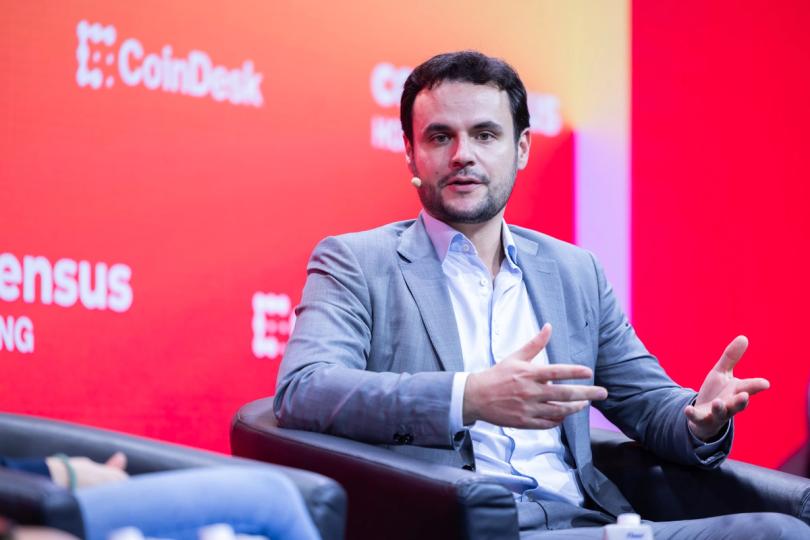
In a significant development for the cryptocurrency and financial technology sectors, Robinhood Markets, Inc. has unveiled the public testnet for its proprietary Ethereum layer-2 blockchain, dubbed “Robinhood Chain.” This strategic initiative, announced at CoinDesk’s Consensus Hong Kong conference, marks a pivotal step in Robinhood’s mission to integrate more trading activities directly onto the blockchain, enhancing efficiency and expanding its crypto ecosystem.
The Vision Behind Robinhood Chain
Robinhood Chain is built on Arbitrum, a leading layer-2 scaling solution for Ethereum, and is designed to support tokenized real-world assets (RWAs), including equities, exchange-traded funds (ETFs), and other traditional financial instruments. The platform aims to provide users with 24/7 trading capabilities and the ability to self-custody their assets using Robinhood’s crypto wallet. Additionally, users will be able to bridge across different blockchains and interact with decentralized finance (DeFi) applications on the Ethereum network.
Johann Kerbrat, Robinhood’s Senior Vice President and General Manager of Crypto, emphasized that the initiative is not solely about scaling Ethereum or achieving faster transactions. Instead, the focus is on leveraging Ethereum’s security and liquidity while customizing the blockchain to optimize it for tokenized traditional assets.
Timing and Market Context
The launch of Robinhood Chain comes at a time when Ethereum’s core roadmap is shifting attention back to the base layer. Recent upgrades have already reduced transaction costs, and further improvements are expected to alleviate network congestion. This development challenges the traditional narrative that layer-2 solutions are primarily necessary for scaling purposes.
Kerbrat acknowledged that while Ethereum’s layer-1 improvements are significant, they do not diminish the value proposition of layer-2 solutions. He noted that layer-2s can serve as application-specific environments, embedding features that are challenging to implement directly on Ethereum.
Tokenized Assets and Compliance
Robinhood’s venture into tokenization began last year with the introduction of token versions of U.S. stocks and ETFs for European users, complete with dividend payments and extended market hours. These assets, nearly 2,000 in total, were initially issued on Arbitrum. However, the total value of these equity tokens—approximately $15 million—lags behind leading issuers like xStocks and Ondo Global Markets.
Robinhood Chain aims to address this by offering a platform tailored to the unique requirements of tokenized equities and other regulated financial products. Compliance requirements vary by jurisdiction, and Robinhood plans to embed these considerations directly into the blockchain’s architecture.
Specialization in the Blockchain Ecosystem
The move towards specialized blockchains is gaining traction in the industry. Kerbrat highlighted that as the complexity of recreating the entire financial system on-chain increases, chains are likely to specialize. Some may focus on payments, while others, like Robinhood Chain, will concentrate on tokenized equity and traditional assets.
This approach aligns with recent statements from Ethereum co-founder Vitalik Buterin, who has argued that some rollups may need to accept different decentralization trade-offs, particularly when dealing with compliance or real-world assets. This perspective has sparked debate across the ecosystem, but for Robinhood, it does not alter their strategic direction.
Development and Future Plans
Robinhood first announced plans for its own blockchain in June 2025, positioning the project as part of a broader push into tokenization and onchain finance. Development has primarily occurred behind the scenes, with the public testnet now live.
Developers can access network entry points, documentation, and standard Ethereum development tools. Ahead of the mainnet launch, Robinhood plans to expand testnet functionality to include test-only assets, such as stock tokens, and deepen integrations with its wallet and other onchain financial tooling.
Implications for the Industry
Robinhood’s foray into building its own layer-2 blockchain underscores a growing trend among traditional financial institutions to embrace blockchain technology. By creating a platform optimized for tokenized assets, Robinhood is positioning itself at the forefront of the convergence between traditional finance and decentralized finance.
The success of Robinhood Chain could pave the way for other financial institutions to explore similar initiatives, potentially leading to a more integrated and efficient financial ecosystem. As the blockchain industry continues to evolve, the emphasis on specialization and compliance will likely play a crucial role in shaping its future.
Tags: Robinhood, Ethereum, Layer-2 Blockchain, Tokenization, Real-World Assets, Arbitrum, DeFi, Compliance, Financial Technology, Crypto Innovation
Viral Phrases: “Robinhood’s Bold Blockchain Bet,” “Tokenizing Traditional Finance,” “The Future of 24/7 Trading,” “Compliance Meets Crypto,” “Ethereum’s New Frontier,” “Specialized Blockchains for Specialized Assets,” “Onchain Finance Revolution,” “From Wall Street to Web3,” “The Convergence of TradFi and DeFi,” “Building the Financial System of Tomorrow”
,


Leave a Reply
Want to join the discussion?Feel free to contribute!