
Go 1.26 Introduces Two Language Changes, New Performance Improvements
Go 1.26: The Next Generation of Google’s Programming Language Arrives with Major Performance Boost and Game-Changing Features
The programming world is buzzing with excitement as Go 1.26 officially launches today, bringing a powerful combination of language refinements, performance enhancements, and innovative new features that promise to reshape how developers build software. This latest iteration of Google’s beloved programming language delivers tangible improvements that developers have been eagerly anticipating.
Language Evolution: Cleaner Syntax and Enhanced Type System
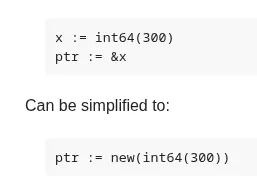
Go 1.26 introduces significant refinements to the language’s syntax and type system, making the code more expressive and intuitive. One of the most noteworthy changes simplifies the built-in “new” function, now allowing its operand to be an expression. This seemingly subtle modification actually streamlines common programming patterns and reduces boilerplate code.
For example, developers can now write more concise initialization code:
go
// Instead of the older verbose pattern
p := new(T)
*p = expr
// Now you can directly initialize with an expression
p := new(T{expr})
This enhancement might appear minor at first glance, but it represents Google’s commitment to continuously refining Go based on real-world developer feedback and usage patterns.
Self-Referential Generic Types: A Breakthrough for Complex Data Structures
Perhaps the most technically sophisticated addition in Go 1.26 is the ability for generic types to refer to themselves within their own type parameter list. This groundbreaking feature opens up new possibilities for implementing complex data structures and interfaces that were previously cumbersome or required workarounds.
This self-referential capability is particularly valuable for:
- Recursive data structures like trees and graphs
- Type-safe container implementations
- Advanced interface designs that require type introspection
The feature enables developers to write more robust, type-safe code while maintaining Go’s characteristic simplicity and readability.
Performance Revolution: Green Tea Garbage Collector Goes Default
Go 1.26 marks a watershed moment in the language’s performance journey with the default activation of the Green Tea garbage collector. Previously available only as an experimental feature, Green Tea is now the standard garbage collection mechanism, promising substantial performance improvements across the board.
The Green Tea garbage collector delivers:
- Reduced latency in garbage collection pauses
- Lower CPU overhead during memory management
- Improved throughput for garbage-collected applications
- Better scalability for multi-threaded workloads
Real-world benchmarks have shown that applications using Green Tea experience up to 20% reduction in garbage collection overhead, translating directly to faster response times and more efficient resource utilization. For high-throughput systems and microservices architectures, this improvement alone justifies upgrading to Go 1.26.
cgo Overhaul: 30% Performance Improvement
The cgo toolchain, which enables Go programs to call C code and vice versa, receives a substantial 30% performance boost in this release. This improvement addresses one of the traditional pain points in Go development, where cgo calls could introduce significant overhead.
The optimization affects:
- Foreign function interface calls
- C library integrations
- Cross-language interoperability scenarios
- Performance-critical mixed-language applications
This enhancement makes Go even more attractive for projects that need to integrate with existing C libraries or leverage performance-critical C code while maintaining Go’s safety and concurrency benefits.
Experimental Innovations: SIMD Support Arrives
Go 1.26 introduces the experimental simd/archsimd package, bringing Single Instruction, Multiple Data (SIMD) operations to the language. This addition is particularly exciting for developers working on:
- High-performance computing applications
- Image and video processing
- Machine learning inference
- Cryptography and security algorithms
- Scientific computing workloads
The SIMD support allows developers to write code that can process multiple data elements simultaneously using modern CPU vector instructions, potentially delivering order-of-magnitude performance improvements for suitable workloads.
Tooling Enhancements and Developer Experience
Beyond the headline features, Go 1.26 brings numerous tooling improvements that enhance the developer experience:
Improved Compiler Optimizations: The compiler now generates more efficient machine code across various architectures, with particular focus on x86-64, ARM64, and WebAssembly targets.
Enhanced Error Messages: The toolchain provides more informative and actionable error messages, helping developers identify and fix issues more quickly.
Better IDE Integration: Updated language server protocol support improves the experience in popular editors and IDEs, with faster code completion and more accurate type information.
Streamlined Module Management: The go command receives refinements that make dependency management smoother and more predictable.
Migration Considerations and Compatibility
Go maintains its strong commitment to backward compatibility, and Go 1.26 continues this tradition. Most existing Go code should work without modification, though developers are encouraged to review the official migration guide for any breaking changes that might affect their specific use cases.
The Go team has also improved the upgrade experience with better tooling support for identifying potential compatibility issues before migration.
The Future of Go: What This Release Signals
Go 1.26 represents more than just incremental improvements—it signals Google’s continued investment in making Go competitive across an expanding range of use cases. The combination of performance enhancements, language refinements, and new capabilities positions Go as an increasingly compelling choice for systems programming, cloud infrastructure, and performance-critical applications.
The activation of Green Tea as the default garbage collector, in particular, demonstrates Google’s confidence in the technology and its commitment to pushing the boundaries of what’s possible in managed language performance.
Community and Ecosystem Impact
The Go community has already begun integrating Go 1.26 into popular frameworks and libraries. Early adopters report significant performance gains in production environments, particularly in microservices architectures and data processing pipelines.
Popular Go projects like Docker, Kubernetes, and Terraform are expected to release compatibility updates soon, ensuring the broader ecosystem can take advantage of these improvements.
Conclusion: A Milestone Release for Go
Go 1.26 delivers on multiple fronts: it refines the language, dramatically improves performance, and introduces powerful new capabilities while maintaining the simplicity and reliability that made Go popular in the first place. Whether you’re building cloud services, command-line tools, or performance-critical applications, this release offers compelling reasons to upgrade.
The combination of Green Tea garbage collection, cgo optimizations, and language enhancements makes Go 1.26 one of the most significant releases in the language’s history. As the Go ecosystem continues to mature and expand, this release positions the language for even greater adoption and success in the years to come.
Tags & Viral Phrases:
Go 1.26 release, Google programming language, Green Tea garbage collector, Go performance boost, cgo optimization, SIMD support Go, self-referential generics, Go language update, systems programming Go, cloud native Go, Go developer tools, Go 1.26 features, programming language news, tech breakthrough Go, software development revolution, Go ecosystem growth, high-performance Go, Go concurrency improvements, modern programming Go, Go 2024 update, cutting-edge Go features, Go community excitement, programming language evolution, Go adoption surge, Go performance gains, developer productivity Go, Go language renaissance, systems programming breakthrough, Go cloud infrastructure, Go microservices optimization, Go compiler improvements, Go language simplicity, Go type system enhancements, Go garbage collection innovation, Go cgo performance, Go SIMD capabilities, Go experimental features, Go tooling upgrades, Go backward compatibility, Go migration guide, Go future development, Go language milestone, Go programming excellence, Go technical innovation, Go software engineering, Go language revolution, Go developer experience, Go performance engineering, Go language leadership, Go technology advancement
,


Leave a Reply
Want to join the discussion?Feel free to contribute!