
China’s Robot Dogs Do A Lot More Than Fetch
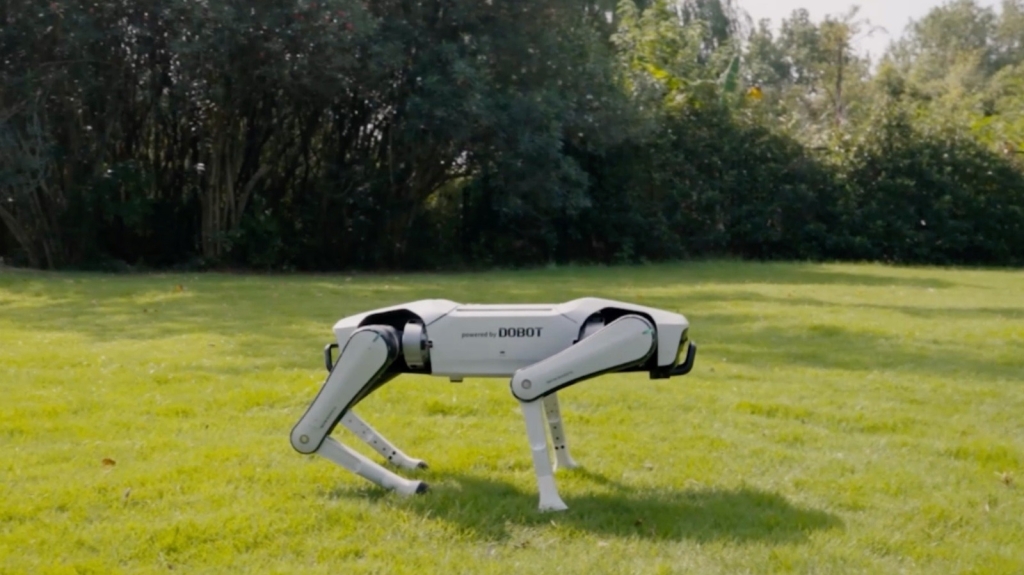
China’s Robotic Canine Revolution: How Four-Legged Machines Are Outpacing Humanoids and Taking Over Everything
China is doubling down on robotics in a big way, and the latest stars of the show aren’t humanoid figures walking stiffly down assembly lines—they’re agile, adaptable robot dogs that are quickly becoming the country’s most versatile machines. While much of the tech world has been focused on humanoid robots with their eerily familiar forms, China’s quadruped innovations are quietly outpacing them, proving that sometimes the most advanced technology comes in the most familiar packages.
One of the most jaw-dropping examples is a robot dog developed in China that can run at speeds matching Olympic legend Usain Bolt. But beyond headline-grabbing speed tests, these machines are evolving into real-world tools with a growing list of practical applications. From startups like Vita Dynamics and Dobot, consumer-ready models are hitting the market at prices that make them surprisingly accessible. Vita’s quadruped robot launched in late 2025 for under $1,500, while Dobot’s Rover X1 started pre-sales for less than $1,000. Both are designed to carry lightweight loads, capture photos and videos with auto-tracking, and even serve as interactive companions for families.
What makes the Dobot Rover X1 particularly intriguing is its modular design—users can swap between regular legs and wheeled ones, allowing it to adapt to different terrains, perform tricks, and even function as a mobile security guard. The company markets it as an “ever-vigilant sentinel,” capable of lighting your path during camping trips or standing guard at home.
But these aren’t just toys or novelty gadgets. Chinese companies are rapidly moving from prototype showcases at trade shows to actual commercial sales, signaling a major shift in how robotics are integrated into daily life.
The versatility of these machines is staggering. In the same way old iPhone ads boasted “there’s an app for that,” it seems there’s now a robot dog for almost every task imaginable. Chinese state broadcaster CCTV recently featured a robot dog navigating a simulated combat course, weaving through barricades and obstacles while streaming live video to assist troops in scouting enemy positions—all without putting human lives at risk.
On the opposite end of the spectrum, these machines are being deployed for peaceful, scientific purposes. In Antarctica, a six-legged robot dog is assisting researchers by carrying heavy equipment across icy terrain without slipping, thanks to its extra legs and specialized anti-slip “shoes.” Meanwhile, in Hong Kong, the Environmental Protection Department is using quadruped robots to detect bird species and monitor tree health, blending cutting-edge tech with conservation efforts.
The list of potential uses keeps growing: robot dogs are being positioned to patrol streets, assist in battlefields, preserve nature, aid scientific research, and serve as all-purpose helpers around the home. And this is just the beginning. With companies like Xpeng planning to release humanoid robots with synthetic skin in 2026, the competition between form factors is only heating up.
What’s clear is that China’s robotics industry is no longer just experimenting—it’s executing. The robot dog, once a futuristic fantasy, is now a tangible, multipurpose tool that’s outpacing its humanoid counterparts in both capability and market readiness. Whether they’re sprinting like Olympians, guarding campsites, or counting birds in Hong Kong, these machines are proving that the future of robotics might just have four legs.
#RobotDogs #ChinaRobotics #QuadrupedRobots #FutureTech #AIandRobotics #TechInnovation #RoboticCompanions #MilitaryTech #ScientificResearch #ConsumerRobots #DobotRoverX1 #VitaDynamics #XpengRobots #TechTrends2025 #ViralTechNews #NextGenRobots
They’re not just fetching—they’re fighting, exploring, and protecting.
Robot dogs are outpacing humanoids in China’s tech race.
From battlefields to bird watching, these machines do it all.
Under $1,000 for a robot dog? China’s making it happen.
Modular legs, wheels, and AI—these aren’t your average pets.
Antarctica’s newest explorer has six legs and anti-slip shoes.
The future of robotics might walk on four legs, not two.
China’s robot dogs are here, and they’re ready for anything.,


Leave a Reply
Want to join the discussion?Feel free to contribute!