
FCC clears Amazon Leo to boost satellite broadband coverage and cover polar regions
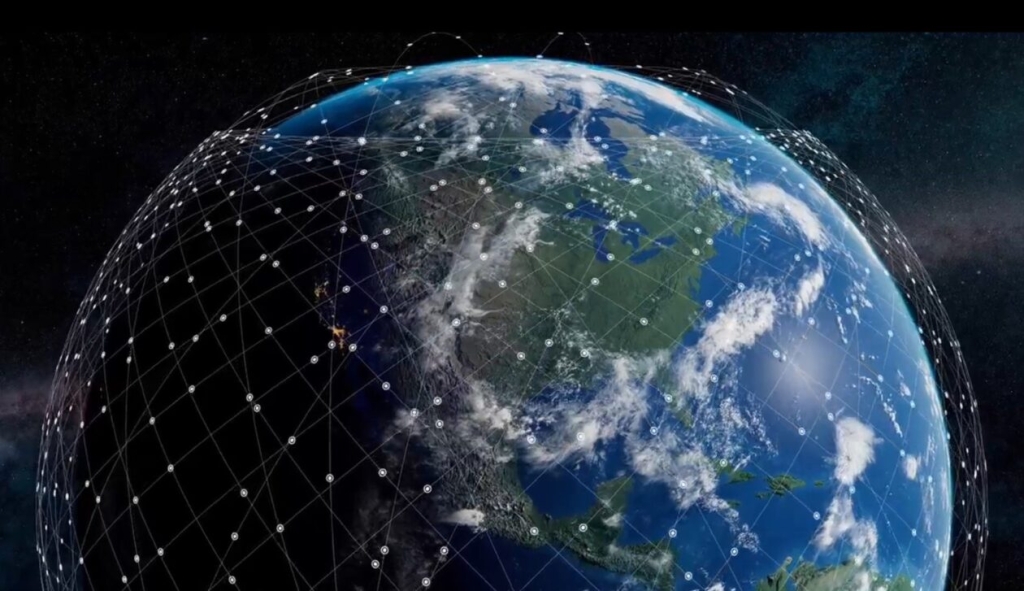
Amazon Secures FCC Approval for Massive Expansion of LEO Satellite Constellation—Poised to Challenge SpaceX in Global Internet Race
In a landmark decision that could reshape the global satellite internet landscape, Amazon has received Federal Communications Commission (FCC) approval to dramatically expand its LEO (Low Earth Orbit) satellite constellation. The tech giant’s ambitious plan will see the deployment of over 4,500 second-generation satellites, effectively doubling the size of its previously authorized first-generation network and extending coverage to include Earth’s polar regions.
The Green Light for Amazon’s LEO Gen 2
The FCC’s approval marks a significant milestone for Amazon’s Project Kuiper, the company’s answer to SpaceX’s Starlink. With this authorization, Amazon’s total satellite constellation will grow from 3,232 first-generation spacecraft to an impressive 7,000+ satellites across both generations.
“This is a transformative moment for global connectivity,” said Rajeev Badyal, Vice President of Technology for Amazon LEO, in a LinkedIn announcement. “Amazon LEO Gen 1 performance is impressive on its own, but there’s so much more to look forward to with LEO Gen 2: enhanced capacity, expanded coverage including polar regions, and additional throughput. This is particularly crucial for enterprise and government customers who need maximum performance to move large volumes of data through our network.”
Technical Advancements and Enhanced Capabilities
The second-generation satellites represent a significant technological leap forward. They will operate across multiple frequency bands, including Ku-band and V-band, enabling support for high-bandwidth applications such as satellite television and 5G connectivity. This multi-band approach positions Amazon to compete directly with established players in the satellite communications market.
The V-band spectrum, in particular, offers several advantages for satellite communications. Operating in the 40-75 GHz range, V-band frequencies provide wider bandwidth channels, allowing for higher data transmission rates. When combined with Ku-band capabilities (operating in the 12-18 GHz range), the Gen 2 satellites will deliver unprecedented performance in terms of speed and reliability.
Global Coverage Including Polar Regions
One of the most significant aspects of the Gen 2 approval is the expanded coverage area. While first-generation satellites will provide service between approximately 56 degrees north and 56 degrees south latitude, the new constellation will extend connectivity to the entire globe, including the challenging polar regions. This comprehensive coverage is particularly important for scientific research stations, maritime operations, and remote communities in extreme latitudes that have historically struggled with connectivity.
Regulatory Considerations and Frequency Allocation
The FCC’s decision wasn’t without some limitations. While approving most of Amazon’s requested frequency allocations, the commission deferred Amazon’s request to operate in the 20.2-21.2 GHz and 30.3-31.0 GHz ranges of the Ka-band. This decision reflects the FCC’s careful balancing act between enabling innovation and managing the increasingly crowded radio frequency spectrum.
The commission also dismissed challenges to Amazon’s application from competitors Iridium and Viasat, clearing the path for the expanded constellation to move forward without further regulatory hurdles.
Deployment Timeline and Strategic Implications
Amazon has committed to a phased deployment approach, with specific milestones built into the FCC approval:
- 50% of the newly authorized satellites must be launched by February 2032
- All 7,000+ satellites must be operational by February 2035
This timeline provides Amazon with a decade-long runway to build out its constellation while ensuring steady progress toward full operational capability.
The approval comes at a critical juncture for Amazon’s satellite ambitions. To date, the company has launched 180 first-generation satellites, with another 32 scheduled for launch this week aboard a European-built Ariane 6 rocket. However, this progress falls significantly short of the FCC’s requirement to have 1,616 satellites in orbit by the end of July 2026.
In response to this challenge, Amazon recently requested an extension of the halfway-point milestone to 2028, pledging to have all 3,232 Gen 1 satellites in orbit by mid-2029. The FCC’s approval of the Gen 2 expansion suggests the commission may be willing to grant some flexibility on the original timeline, recognizing the complexity and scale of building a global satellite network.
Market Competition and Industry Impact
Amazon’s expanded constellation approval intensifies competition in the satellite internet sector, particularly with SpaceX’s Starlink, which currently dominates the market with over 6,000 active satellites and more than 3 million subscribers worldwide.
However, Amazon brings significant advantages to the table. The company’s vast infrastructure, including its Amazon Web Services (AWS) cloud platform, provides a unique foundation for integrating satellite connectivity with terrestrial networks. This vertical integration could enable innovative service offerings that combine satellite and ground-based connectivity in ways that pure-play satellite companies cannot match.
The expanded constellation also positions Amazon to capture enterprise and government customers who require high-performance, low-latency connectivity for mission-critical applications. The enhanced throughput and coverage capabilities of Gen 2 satellites make them particularly attractive for applications such as remote sensing, disaster response, and military communications.
Technical and Operational Challenges Ahead
Building and operating a constellation of over 7,000 satellites presents enormous technical and operational challenges. Amazon will need to:
- Develop and manufacture satellites at an unprecedented scale and pace
- Establish a reliable launch cadence with multiple launch providers
- Build and maintain ground station infrastructure worldwide
- Develop sophisticated network management systems to handle satellite handoffs and traffic routing
- Ensure orbital debris mitigation and collision avoidance
- Meet stringent reliability requirements for continuous global coverage
The company has already begun addressing these challenges, establishing partnerships with launch providers including United Launch Alliance, Blue Origin, Arianespace, and Rocket Lab. Amazon has also invested in manufacturing facilities and ground station infrastructure to support its ambitious deployment schedule.
Economic and Social Implications
The expansion of global satellite internet coverage has far-reaching economic and social implications. By providing high-speed internet access to underserved and unserved regions, Amazon’s constellation could help bridge the digital divide, enabling economic development, education, and healthcare access in remote areas.
For businesses, the enhanced connectivity could enable new models of remote work, precision agriculture, and Internet of Things (IoT) applications in previously disconnected regions. Government agencies and emergency responders could benefit from reliable communications in disaster-prone areas where terrestrial infrastructure is vulnerable.
Future Outlook
As Amazon moves forward with its expanded constellation plans, the satellite internet market is likely to see accelerated innovation and competition. The race between Amazon, SpaceX, and other players like OneWeb and Telesat could drive down costs, improve service quality, and expand the range of applications for satellite connectivity.
The successful deployment of Amazon’s Gen 2 satellites could also have implications beyond consumer and enterprise internet services. The enhanced capabilities could support emerging applications such as augmented reality, autonomous vehicles, and smart cities, where reliable, high-speed connectivity is essential.
With FCC approval secured and manufacturing and launch partnerships in place, Amazon is now positioned to execute on its vision of global satellite internet coverage. The coming years will be critical as the company works to meet its deployment milestones and prove the viability of its ambitious constellation plans in the competitive and rapidly evolving satellite internet market.
Tags & Viral Phrases:
AmazonLEO #ProjectKuiper #SatelliteInternet #SpaceTech #FCCApproval #SpaceXCompetitor #GlobalConnectivity #SatelliteConstellation #InternetForAll #TechGiantMoves #LEOExpansion #PolarCoverage #NextGenSatellites #AmazonVsSpaceX #SpaceRace2025 #DigitalDivide #SatelliteBroadband #TechInnovation #SpaceIndustry #FutureOfInternet #SatelliteTV #5GviaSatellite #Vband #Kuband #LowEarthOrbit #SpaceXStarlink #SatelliteCompetition #AmazonAWS #SpaceInfrastructure #OrbitalDeployment #TechNews #SatelliteTechnology #InternetAccess #RemoteConnectivity #SpaceBusiness #SatelliteManufacturing #LaunchPartnerships #GroundStations #NetworkManagement #OrbitalDebris #DigitalInclusion #TechAdvancement #SpaceEconomy #SatelliteServices #GlobalInternet #TechExpansion #SatelliteNetworks #SpaceCommunication #AmazonTech #SatelliteLaunch #SpaceInnovation #TechCompetition #InternetTechnology #SatelliteMarket #SpaceIndustryNews #TechDevelopment #SatelliteCoverage #GlobalCoverage #SpaceInvestment #TechGrowth #SatelliteFuture #InternetEvolution #SpaceExploration #TechLeadership #SatelliteDeployment #InternetInfrastructure #SpaceTechnology #TechDisruption #SatelliteConnectivity #GlobalNetwork #TechEcosystem #SpaceCommerce #SatelliteRevolution #InternetAccessibility #TechTransformation #SatelliteEra #GlobalInternetAccess #SpaceEnterprise #TechMilestones #SatelliteBreakthrough #InternetRevolution #SpaceAchievement #TechProgress #SatelliteMilestone #InternetFuture #SpaceSuccess #TechVictory #SatelliteApproval #InternetExpansion #SpaceApproval #TechAuthorization #SatelliteGreenLight #InternetAuthorization #SpacePermission #TechClearance #SatelliteGoAhead #InternetLaunch #SpaceCommencement #TechBeginning #SatelliteStart #InternetInitiation #SpaceKickoff #TechCommence #SatelliteInitiation #InternetCommencement #SpaceLaunch #TechLaunch #SatelliteBegin #InternetBegin #SpaceStart #TechStart #SatelliteCommence #InternetCommence #SpaceInitiate #TechInitiate #SatelliteInitiate #InternetInitiate
,


Leave a Reply
Want to join the discussion?Feel free to contribute!