
Record–Breaking Ocean Drilling Uncovers a Dangerous Earthquake Secret
Record-Breaking Ocean Drilling Uncovers a Dangerous Earthquake Secret
In a groundbreaking discovery that could reshape our understanding of seismic hazards, scientists have unearthed a critical clue hidden deep beneath the Pacific Ocean. New research reveals that a seemingly fragile layer of clay, lurking just beneath the Japan Trench, played a decisive role in the catastrophic seafloor displacement during the 2011 Tōhoku earthquake—one of the most powerful and destructive seismic events in recorded history.
For years, researchers have grappled with a perplexing question: how did the Tōhoku earthquake’s rupture extend so perilously close to the seafloor, triggering a tsunami of unprecedented scale? The answer, it turns out, lies in a thin but treacherous layer of clay that acted as a lubricant, enabling the fault to slip with alarming ease.
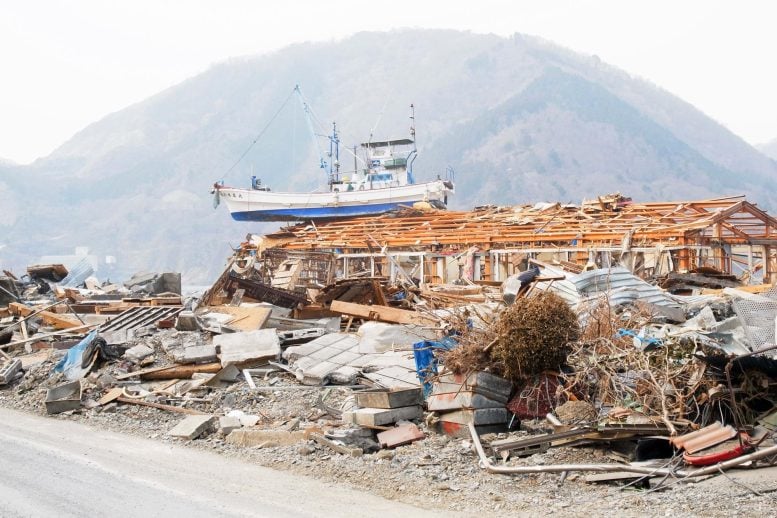
The 2011 Tōhoku earthquake, which struck off the coast of Japan with a magnitude of 9.0, was not just a seismic event—it was a geological phenomenon that defied conventional understanding. The quake’s rupture propagated all the way to the trench axis, the boundary where the Pacific Plate subducts beneath the North American Plate. This shallow slip was the primary driver of the massive tsunami that inundated Japan’s coastline, claiming thousands of lives and causing billions of dollars in damage.
To unravel this mystery, an international team of scientists embarked on a daring deep-sea drilling expedition. Using the state-of-the-art research vessel Chikyu, they drilled into the Japan Trench, reaching depths of over 7,000 meters below the ocean surface—a record-breaking feat in itself. What they found was astonishing: a layer of smectite clay, just a few meters thick, that had acted as a “slip plane” during the earthquake.
This clay layer, formed from the erosion of ancient volcanic rocks, possesses unique properties that make it exceptionally weak and prone to deformation. Under the immense pressure and heat of the subduction zone, the clay behaves almost like a lubricant, allowing the two tectonic plates to slide past each other with minimal resistance. During the Tōhoku earthquake, this lubrication effect enabled the fault to rupture all the way to the seafloor, amplifying the displacement and, consequently, the tsunami’s destructive power.
The implications of this discovery are profound. It suggests that similar clay layers may exist in other subduction zones around the world, potentially increasing the risk of devastating tsunamis in regions previously thought to be relatively safe. This newfound understanding could revolutionize earthquake and tsunami hazard assessments, prompting governments and scientists to reevaluate the seismic risks in vulnerable coastal areas.
Moreover, the research highlights the importance of interdisciplinary collaboration in tackling complex geological challenges. By combining expertise in seismology, geology, and oceanography, the team was able to piece together a puzzle that had stumped the scientific community for over a decade. Their findings, published in the prestigious journal Science, have already sparked a wave of new studies aimed at identifying and characterizing similar clay layers in other subduction zones.
As the world continues to grapple with the growing threat of natural disasters, this discovery serves as a stark reminder of the Earth’s dynamic and often unpredictable nature. It underscores the need for continued investment in scientific research and technological innovation, as well as the importance of global cooperation in mitigating the risks posed by earthquakes and tsunamis.
In the wake of this revelation, one thing is clear: the secrets of the deep ocean hold the key to understanding some of the most pressing challenges facing humanity. And as we delve deeper into the mysteries of our planet, we may uncover even more surprises that could reshape our understanding of the world beneath our feet.
Tags and Viral Phrases:
- Fragile clay layer
- Japan Trench
- 2011 Tōhoku earthquake
- Record-breaking ocean drilling
- Deep-sea drilling expedition
- Smectite clay
- Subduction zone
- Tsunami risk
- Seismic hazard assessment
- Geological phenomenon
- Tectonic plates
- Fault rupture
- Catastrophic seafloor displacement
- Scientific breakthrough
- Global cooperation
- Natural disaster mitigation
- Earth’s dynamic nature
- Deep ocean secrets
- Geological challenges
- Interdisciplinary collaboration
- Technological innovation
,

Leave a Reply
Want to join the discussion?Feel free to contribute!