
With co-founders leaving and an IPO looming, Elon Musk turns talk to the moon
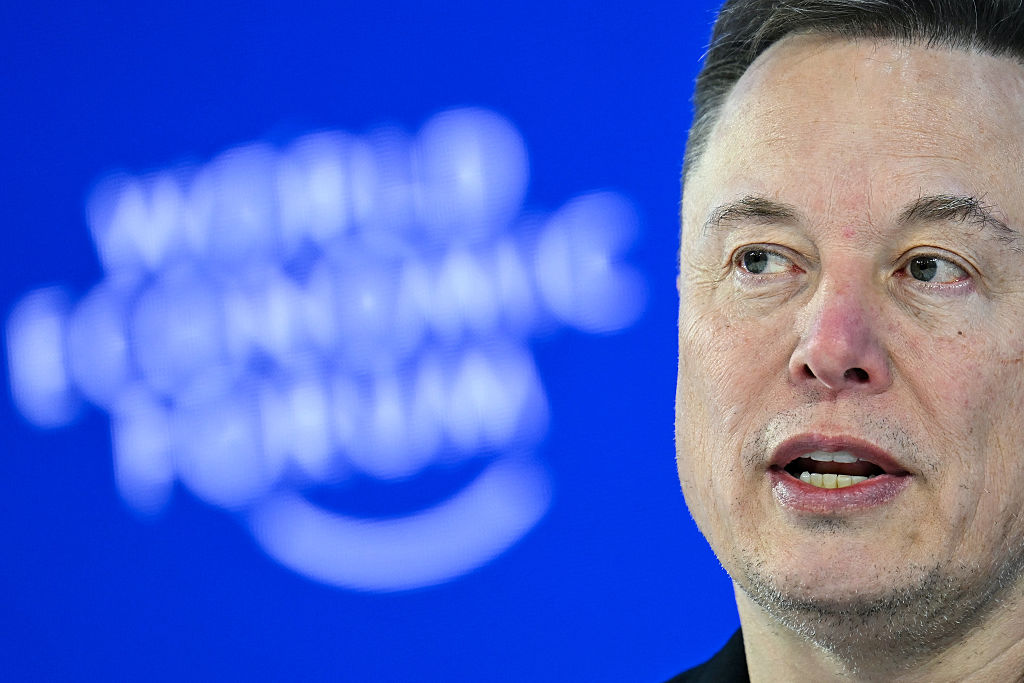
Elon Musk’s Lunar Leap: The Moon Factory, the AI Race, and the Great SpaceX Pivot
In a move that sounds more like a sci-fi blockbuster than a corporate strategy session, Elon Musk has reportedly directed xAI employees to set their sights on the moon — not just as a destination, but as a manufacturing hub for the future of artificial intelligence.
During a late-night all-hands meeting on Tuesday, Musk laid out a vision so audacious it left even his most loyal followers blinking: a lunar factory capable of building AI satellites and launching them into orbit using a giant mechanical catapult. According to The New York Times, which claims to have heard the meeting, Musk told his team that this off-world facility is essential if xAI is to outpace every competitor in the AI arms race.
“You have to go to the moon,” Musk reportedly said, his tone leaving no room for debate. The goal? To harness more computing power than any rival on Earth — or off it. “It’s difficult to imagine what an intelligence of that scale would think about,” he added, “but it’s going to be incredibly exciting to see it happen.”
This isn’t just a pivot; it’s a paradigm shift. For decades, Musk has championed Mars as humanity’s ultimate frontier. But in a surprise post just before the Super Bowl, he announced that SpaceX had “shifted focus to building a self-growing city on the Moon,” claiming it could be achieved in half the time it would take to establish a colony on Mars. That’s a dramatic about-face for a company that, in its 24-year history, has never even sent a mission to the moon.
The timing of the lunar announcement is as curious as the plan itself. Just days earlier, xAI co-founder Tony Wu announced his departure from the company. Barely 24 hours later, another co-founder, Jimmy Ba, followed suit. That brings the total number of xAI’s founding team members who have left to six out of twelve — a startling exodus for a company that only launched in 2023 and is now at the center of a high-stakes merger with SpaceX.
Despite the turmoil, Musk remains characteristically bullish. “If you’re moving faster than anyone else in any given technology arena, you will be the leader,” he told employees, “and xAI is moving faster than any other company — no one’s even close.” He also hinted that the company’s rapid evolution means some early-stage team members may not be the right fit for its next chapter.
But the real question isn’t about personnel — it’s about feasibility. How exactly does one build a factory on the moon? How do you transport materials, assemble satellites, and operate a giant space catapult in one-sixth Earth’s gravity? Musk didn’t address these logistical nightmares in his address, and neither did he explain how this fits into the newly merged xAI-SpaceX entity, which is barreling toward a potentially historic IPO with a rumored $1.5 trillion valuation.
Yet, for some investors, the moon isn’t a distraction — it’s the master plan. According to a venture capitalist who spoke with TechCrunch last year, Musk has been building toward a single, overarching goal from the beginning: the world’s most powerful world model, an AI trained not just on text and images, but on proprietary real-world data no competitor can replicate.
Tesla provides energy systems and road topology. Neuralink offers a window into the brain. SpaceX contributes physics, orbital mechanics, and now, potentially, lunar manufacturing. The Boring Company adds subsurface data. Stack a moon factory on top of that, and you start to see the outline of something unprecedented — an AI trained on a dataset so vast and unique that it could, in theory, outthink anything else on the planet.
But is it legal?
Under the 1967 Outer Space Treaty, no nation — and by extension, no company — can claim sovereignty over the moon. However, a 2015 U.S. law created a significant loophole: while you can’t own the moon, you can own whatever you extract from it. As Mary-Jane Rubenstein, a professor of science and technology studies at Wesleyan University, explained to TechCrunch, the distinction is somewhat illusory. “It’s more like saying you can’t own the house, but you can have the floorboards and the beams,” she said. “Because the stuff that is in the moon is the moon.”
That legal framework is the scaffolding on which Musk’s moon ambitions apparently rest — even as not everyone agrees to play by those rules. China and Russia, for instance, have been vocal critics of the U.S. interpretation of space resource laws.
For now, the vision remains just that — a vision. The team to help him get there keeps getting smaller, the logistics remain unsolved, and the legal landscape is murky at best. But if there’s one thing Elon Musk has proven time and again, it’s that he’s not afraid to think bigger, bolder, and farther than anyone else.
Whether the moon becomes the next great AI frontier — or just another Musk moonshot — only time will tell. But one thing is certain: the race to build the most powerful intelligence in the solar system just left the atmosphere.
Tags: Elon Musk, xAI, SpaceX, moon factory, lunar manufacturing, AI satellites, giant catapult, space race, Mars colony, orbital data centers, world model AI, Outer Space Treaty, space resource law, Tony Wu, Jimmy Ba, SpaceX IPO, $1.5 trillion valuation, Neuralink, Tesla energy, Boring Company, sci-fi tech, viral innovation, future of AI, lunar ambitions, off-world manufacturing
Viral Sentences:
- “You have to go to the moon.”
- “It’s difficult to imagine what an intelligence of that scale would think about.”
- Musk’s moon factory will launch AI satellites with a giant catapult.
- Six of xAI’s twelve co-founders have now left the company.
- SpaceX IPO could value the company at $1.5 trillion.
- The moon is the new AI frontier.
- Legal loophole: You can’t own the moon, but you can own what you extract from it.
- Musk’s world model AI will be trained on data no competitor can replicate.
- Tesla, Neuralink, SpaceX, Boring Company — all pieces of the AI puzzle.
- The race to build the most powerful intelligence in the solar system just left the atmosphere.
,

Leave a Reply
Want to join the discussion?Feel free to contribute!