
How many folds are too many for a foldable?
The Foldable Revolution: How Many Folds Are Too Many?
The smartphone world has undergone a seismic shift in recent years, and foldables have emerged from the realm of futuristic prototypes to become a legitimate, if still niche, category of devices. The ability to transform a compact smartphone into a tablet-sized powerhouse—and back again—has captured the imagination of tech enthusiasts and everyday users alike. But as manufacturers push the boundaries of what’s possible, a new question arises: how many folds are too many?
The Rise of the Trifold
For years, the foldable market was dominated by two designs: the book-like fold (think Samsung Galaxy Z Fold) and the clamshell (like the Galaxy Z Flip). These devices offered a compelling blend of portability and screen real estate, and their popularity has only grown as technology has matured. But the race for innovation never stops, and now we’re seeing the next evolution: trifold devices.
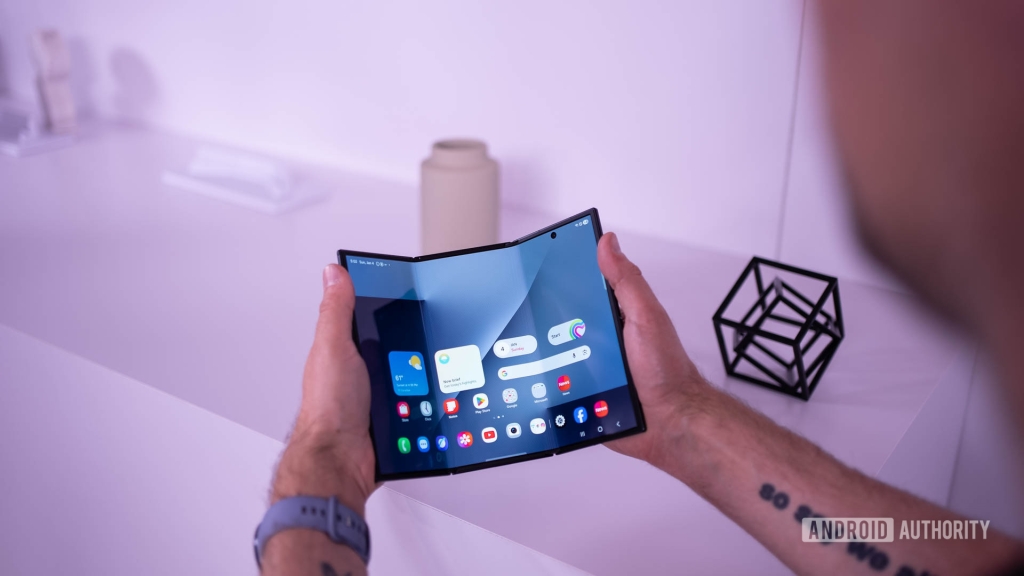
HUAWEI and Samsung have both taken the plunge into this uncharted territory with the Mate XT and Galaxy Z TriFold, respectively. These devices feature three foldable panels and two hinges, allowing for even larger displays without the bulk of a traditional tablet or laptop. The Mate XT, in particular, has turned heads with its sleek design and impressive engineering, while Samsung’s offering brings the company’s signature polish and ecosystem integration to the table.
But with great innovation comes great complexity. Trifolds are heavier, thicker, and more expensive than their dual-fold counterparts. They also raise questions about durability, usability, and whether the added screen space is truly necessary. After all, a foldable’s appeal lies in its ability to condense a large display into a pocket-friendly form factor—does adding another fold enhance that experience, or does it push the device into a new category altogether?
The Form Factor Debate
One of the most intriguing aspects of the foldable conversation is the role of form factor. For many users, the way a device folds—and how it feels in the hand—is just as important as the number of folds themselves. A clamshell foldable, for example, offers a unique blend of nostalgia and modernity, evoking the flip phones of yesteryear while delivering cutting-edge technology. On the other hand, book-like folds provide a more traditional tablet experience, making them ideal for productivity and media consumption.
But trifolds take things to a whole new level. With three panels, these devices can transform from a compact smartphone into a miniature laptop or even a small tablet, depending on how they’re folded. This versatility is undeniably appealing, but it also introduces new challenges. How do you design a user interface that works seamlessly across three screens? How do you ensure the device is comfortable to hold and use in all its configurations? And perhaps most importantly, how do you justify the premium price tag that comes with such advanced engineering?
The Future of Foldable Devices
As the foldable market continues to evolve, it’s worth considering what other devices could benefit from this technology. Imagine a foldable TV that can be tucked away when not in use, or a laptop with a screen that expands to the size of a desktop monitor. Even smartwatches could see a foldable makeover, with flexible displays that wrap around the wrist for a more immersive experience.
But for now, the focus remains on smartphones. And in this arena, the competition is fierce. Samsung has long been the leader in the foldable space, thanks to its early entry and consistent innovation. However, HUAWEI’s recent foray into trifolds has shaken things up, and other players like Xiaomi, Oppo, and Motorola are also making their mark. The result is a dynamic and rapidly evolving market that shows no signs of slowing down.
So, How Many Folds Are Too Many?
The answer to this question ultimately depends on your needs and preferences. For some, a single fold is enough to strike the perfect balance between portability and screen size. For others, the added versatility of a trifold is worth the trade-offs in weight and complexity. And then there are those who believe that foldables, in any form, are a solution in search of a problem.
What’s clear is that the foldable revolution is far from over. As technology continues to advance, we can expect to see even more innovative designs and use cases emerge. Whether it’s a device with four folds, a foldable smartwatch, or something entirely new, one thing is certain: the future of mobile technology is anything but flat.
Tags
Foldable phones, trifold devices, HUAWEI Mate XT, Samsung Galaxy Z TriFold, smartphone innovation, mobile technology, form factor, foldable design, tech trends, future of smartphones
Viral Phrases
“Revolutionizing the way we think about screens,” “The future is foldable,” “Innovation at its finest,” “A game-changer in mobile tech,” “Pushing the boundaries of what’s possible,” “The next big thing in smartphones,” “From pocket to tablet in seconds,” “Engineering marvels,” “The ultimate in versatility,” “A glimpse into tomorrow’s tech”
,


Leave a Reply
Want to join the discussion?Feel free to contribute!