
Erratic Elon Musk Tells Employees to Build Massive Catapult on Moon
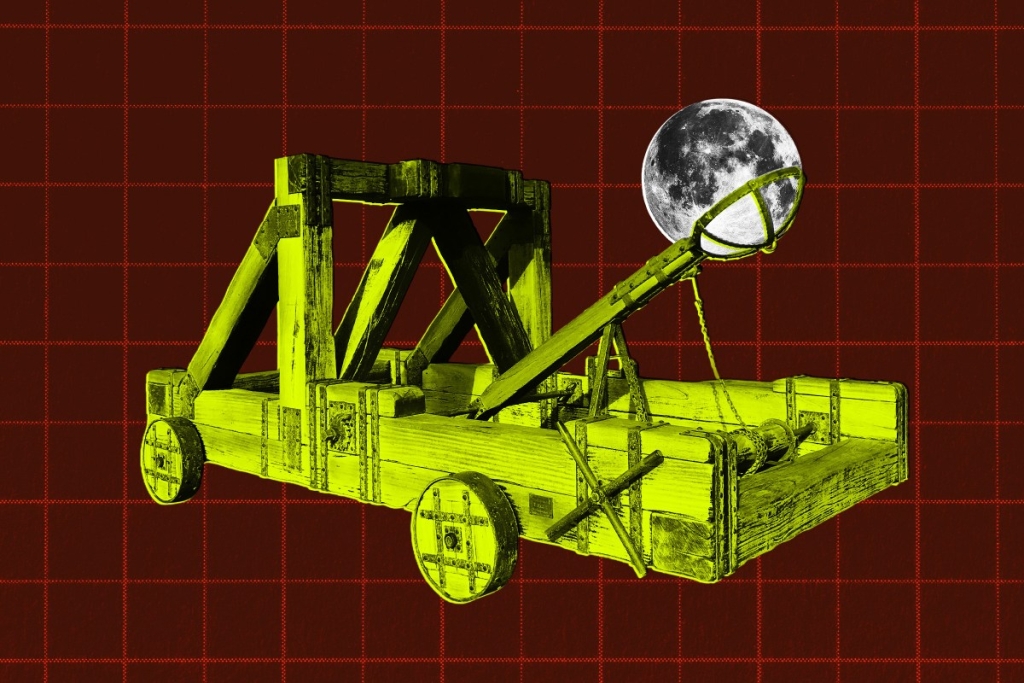
Elon Musk’s Lunar Leap: Moon Factory and Electromagnetic Catapult Plan Revealed
In a stunning pivot that has the tech world buzzing, Elon Musk has unveiled an audacious plan to establish a self-sustaining lunar factory—complete with an enormous electromagnetic catapult designed to launch AI satellites into space. This revelation, reported by the New York Times, marks a dramatic shift in Musk’s space ambitions, moving from his long-standing focus on Mars to a renewed lunar strategy that promises to reshape the future of artificial intelligence and space exploration.
From Mars to Moon: A Strategic About-Face
For years, Musk has championed Mars as humanity’s next frontier, often dismissing lunar missions as distractions from his ultimate goal of making life multiplanetary. However, recent developments suggest a strategic recalibration. During an all-hands meeting at xAI, Musk’s AI company recently acquired by SpaceX, he outlined a vision where the Moon serves as a critical stepping stone toward broader cosmic ambitions.
“We have to go to the Moon,” Musk declared, emphasizing that terrestrial limitations necessitate extraterrestrial expansion for AI infrastructure. This shift comes as SpaceX prepares for what’s anticipated to be a historic IPO, with the acquisition of xAI positioning the company at the forefront of space-based artificial intelligence development.
The Lunar Factory: Manufacturing AI Satellites Beyond Earth
Musk’s lunar vision centers on constructing a factory on the Moon capable of manufacturing AI satellites at scale. This facility would operate in the harsh lunar environment, leveraging the Moon’s unique advantages—particularly its lack of atmosphere and reduced gravity—to facilitate satellite production and deployment.
The factory concept aligns with Musk’s broader strategy of creating space-based AI infrastructure. By moving data centers and computing facilities beyond Earth’s orbit, Musk envisions accessing practically unlimited solar energy while circumventing terrestrial real estate constraints. This approach could revolutionize how we think about computing power and energy consumption in the age of artificial intelligence.
The Electromagnetic Catapult: Sci-Fi Becomes Reality
Perhaps the most eye-catching element of Musk’s plan is the proposed electromagnetic catapult, a technology straight out of science fiction. This massive mass driver would use electromagnetic forces to launch satellites directly from the Moon’s surface into space, bypassing the need for traditional rocket launches.
The concept of a mass driver isn’t new to science fiction enthusiasts, but Musk’s proposal brings it into the realm of serious technological consideration. The Moon’s lower gravity and lack of atmosphere make it an ideal location for such a system, potentially reducing the cost and complexity of satellite deployment while enabling rapid scaling of space-based infrastructure.
AI Satellites and the “Sentient Sun”
Musk’s vision extends beyond simple satellite deployment. He imagines populating Earth’s orbit with a vast constellation of AI satellites, creating what he describes as a “sentient sun.” This network would form the backbone of his space-based AI empire, providing computing power and data processing capabilities that dwarf anything possible on Earth.
The concept suggests a future where artificial intelligence operates on a scale we can barely comprehend, with computational resources distributed across the solar system. Musk’s enthusiasm for this vision is palpable, as he contemplates what an intelligence of such magnitude might think about, calling the prospect “incredibly exciting.”
Timeline and Implementation
Musk has provided specific timelines for his lunar ambitions, suggesting that a self-growing city on the Moon could be achievable in less than 10 years. This represents a significant acceleration compared to his Mars timeline, which he estimates at 20+ years. However, Musk emphasizes that this doesn’t mean abandoning Mars entirely—rather, the Moon serves as a proving ground and stepping stone.
“SpaceX will also strive to build a Mars city and begin doing so in about 5 to 7 years,” Musk explained in a recent tweet, “but the overriding priority is securing the future of civilization, and the Moon is faster.”
Technical and Logistical Challenges
While Musk’s vision is undoubtedly ambitious, it faces numerous technical and logistical challenges. Establishing a factory on the Moon requires solving complex problems related to construction in a vacuum, resource extraction and utilization, and sustainable life support systems. The electromagnetic catapult presents its own set of engineering challenges, including power requirements, precision control, and integration with satellite manufacturing processes.
Additionally, the regulatory and international implications of such a project are significant. The Moon falls under various international treaties and agreements, and any large-scale industrial operation would require careful navigation of legal and diplomatic considerations.
The Broader Context: AI and Space Colonization
Musk’s lunar pivot reflects broader trends in the intersection of artificial intelligence and space exploration. As AI systems become more sophisticated and computationally intensive, the limitations of Earth-based infrastructure become increasingly apparent. Space offers solutions to many of these challenges, from unlimited solar energy to vast expanses for hardware deployment.
Moreover, the concept of a space-based AI infrastructure aligns with Musk’s long-term vision of making humanity multiplanetary. By establishing the technological and operational foundations on the Moon, Musk may be laying the groundwork for more ambitious endeavors, including Mars colonization and beyond.
Industry Reactions and Market Implications
The announcement has sent ripples through the tech and aerospace industries, with analysts speculating about the implications for SpaceX’s valuation ahead of its anticipated IPO. The acquisition of xAI and the pivot to lunar operations suggest a strategic realignment that could position SpaceX as a dominant player in both the space launch and artificial intelligence markets.
Competitors and industry observers are closely watching how this strategy unfolds, with some expressing skepticism about the feasibility of such an ambitious timeline, while others see it as a natural evolution of Musk’s approach to technological innovation.
Conclusion: A New Chapter in Space Exploration
Elon Musk’s lunar factory and electromagnetic catapult plan represents a bold new chapter in space exploration and artificial intelligence development. Whether this vision comes to fruition remains to be seen, but one thing is certain: Musk continues to push the boundaries of what’s possible, challenging conventional thinking about space colonization, computing infrastructure, and the future of human civilization.
As we watch this lunar strategy unfold, we may be witnessing the early stages of a transformation that could redefine our relationship with space, technology, and artificial intelligence. The coming years will reveal whether Musk’s moon shot becomes a reality or joins the long list of ambitious tech predictions that fell short of their lofty goals.
Tags and Viral Phrases:
Elon Musk moon factory, electromagnetic catapult, lunar manufacturing, space-based AI, SpaceX xAI acquisition, sentient sun, mass driver technology, Mars vs Moon debate, space colonization timeline, lunar city construction, AI satellite deployment, space computing infrastructure, electromagnetic launch system, lunar industrial revolution, multiplanetary civilization, orbital data centers, solar energy in space, Moon as Mars stepping stone, space tech innovation, future of artificial intelligence, cosmic computing network, lunar resource utilization, space treaty implications, SpaceX IPO speculation, science fiction becoming reality, technological boundary pushing, extraterrestrial manufacturing, space-based infrastructure, AI empire expansion, lunar gravity advantages, vacuum construction challenges, interplanetary civilization security, space exploration renaissance, Musk’s cosmic vision, technological paradigm shift, space industry disruption, lunar strategic importance, artificial intelligence scaling, extraterrestrial computing, space technology convergence, future of human civilization, cosmic infrastructure development, space-based technological solutions, lunar industrial complex, electromagnetic propulsion, space manufacturing revolution, interplanetary AI network, technological ambition scale, space exploration priorities, lunar economic potential, cosmic technological evolution.
,


Leave a Reply
Want to join the discussion?Feel free to contribute!