
More details of an extra big Intel Nova Lake ‘bLLC’ CPU die with added cache and designed to take on AMD’s X3D chips emerge
Intel’s Nova Lake CPUs: A Deep Dive into the Leaked Specs and the Battle Against AMD’s X3D
The tech world is buzzing with excitement and speculation as more details about Intel’s upcoming Nova Lake CPUs leak out. Today, we’re diving into the latest revelations about these next-generation processors, including their rumored power consumption, cache configurations, and the ongoing battle with AMD’s X3D technology. Buckle up, tech enthusiasts, because this is going to be a wild ride!
The Power Play: Nova Lake’s Energy Appetite
First, let’s address the elephant in the room – power consumption. Earlier reports suggested that Intel’s dual-CPU-die variant of Nova Lake might consume up to a whopping 700W of power. Now, before you start envisioning your gaming rig melting down your house, let’s put this into perspective.
While 700W is indeed a massive amount of power, it’s important to note that this figure likely applies to the high-end, enthusiast-grade variants of Nova Lake. For the average gamer or content creator, the standard Nova Lake CPUs will probably fall within more reasonable power envelopes. Intel has a history of offering a range of power options across their product lines, so don’t expect every Nova Lake chip to be a power-hungry monster.
The Cache Wars: Intel’s Response to AMD’s X3D
Now, let’s talk about the real game-changer in this CPU generation – the “bLLC” (big last level cache) version of the Nova Lake CPU die. This is Intel’s answer to AMD’s successful X3D V-cache technology, which has been dominating the gaming performance charts with processors like the Ryzen 7 9800X3D.
The key difference between Intel’s approach and AMD’s is in the implementation. While AMD adds a separate slice of cache memory to the CPU die, Intel is reportedly integrating the extra cache directly into the die itself. This could potentially lead to lower latency and better overall performance, but it also means a significant increase in die size.
Size Matters: The Nova Lake Die Showdown
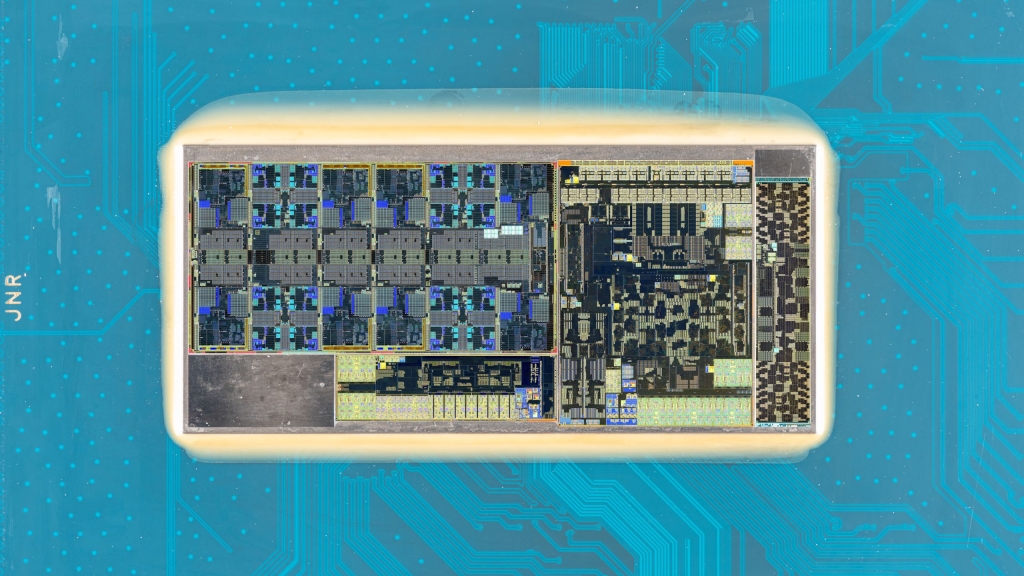
According to leaked information from X-based leaker HXL, the standard Nova Lake die measures 110 mm², while the bLLC version comes in at a hefty 150 mm². That’s a substantial increase, and it puts the Nova Lake bLLC die in a different league compared to AMD’s offerings.
For context, an AMD Zen 5 CPU die measures just 71 mm². However, direct comparisons are tricky here. The Nova Lake dies are packing 8 Performance cores and 16 Efficient cores, while the AMD die has 8 standard Zen 5 cores. It’s an apples-to-oranges comparison, but it does highlight the different architectural approaches of the two companies.
Manufacturing Marvels: TSMC N2 vs. Intel 18A
Another interesting tidbit from the leaks is that the Nova Lake dies are reportedly being built on TSMC’s N2 silicon node, which is a full two generations ahead of AMD’s Zen 5 chips that use TSMC’s N4 process. This could give Intel a significant advantage in terms of transistor density and overall performance per watt.
It’s worth noting that Intel may be outsourcing the production of larger Nova Lake variants to TSMC, while keeping the smaller ones in-house on their new 18A node. This hybrid approach allows Intel to leverage TSMC’s advanced manufacturing capabilities for their high-end offerings while maintaining control over their more mainstream products.
The Cache Conundrum: How Much is Too Much?
The big question on everyone’s mind is: how much cache will these Nova Lake bLLC chips actually have? Current rumors suggest a whopping 144 MB of bLLC cache. To put that into perspective, the AMD Ryzen 9800X3D currently has 64 MB of L3 memory in the V-cache slice, plus another 32 MB on-die.
This massive cache could potentially give Intel a significant edge in gaming performance, which is where AMD’s X3D chips have been excelling. However, AMD isn’t standing still. We can expect them to counter with their own Zen 6-based CPUs with even more V-cache by the time Nova Lake hits the market.
The Waiting Game: When Can We Expect Nova Lake?
As of now, Nova Lake is supposedly slated for release later in 2026. However, there’s still some uncertainty about whether these bLLC models will be available right from the launch. Given the complexity of these chips and the potential manufacturing challenges, it wouldn’t be surprising if the bLLC variants arrived a few months after the standard models.
What’s clear is that Intel is pulling out all the stops to reclaim the gaming performance crown from AMD. The combination of advanced manufacturing processes, innovative cache designs, and a diverse core configuration makes Nova Lake one of the most anticipated CPU releases in recent memory.
The Future of CPU Warfare
As we look ahead to the Nova Lake launch and beyond, it’s clear that the competition between Intel and AMD is fiercer than ever. Both companies are pushing the boundaries of what’s possible in CPU design, from cache architectures to core configurations to manufacturing processes.
For gamers and content creators, this competition is a win-win situation. We can expect to see significant performance gains across the board, with each new generation pushing the limits of what’s possible in terms of gaming performance, productivity, and power efficiency.
As we eagerly await more concrete details about Nova Lake, one thing is certain: the CPU landscape is about to get a whole lot more interesting. Whether you’re Team Intel or Team AMD, the next few years promise to be an exciting time for PC enthusiasts and tech lovers alike.
Stay tuned for more updates as we get closer to Nova Lake’s release date. The battle for CPU supremacy is far from over, and we’re here to bring you all the latest news and analysis as it unfolds.
#IntelNovaLake #CPURevolution #GamingPerformance #TechLeaks #NextGenCPUs #IntelVsAMD #CacheWars #TSMCN2 #18AProcess #GamingCPUs #TechRumors #CPUArchitecture #PCGaming #HardwareEnthusiasts #TechInnovation
Prepare for a seismic shift in CPU performance! 🚀 Intel’s Nova Lake is coming, and it’s packing some serious heat. With up to 700W power draw and a massive 144MB cache, this could be the gaming beast we’ve all been waiting for. 🐉
The battle against AMD’s X3D just got real! Intel’s innovative bLLC design might just give them the edge they need. But will it be enough? 🤔
TSMC’s N2 process is giving Intel a manufacturing advantage. Could this be the secret sauce that propels Nova Lake to the top? 🍲
Get ready for a core showdown! Nova Lake’s 8P+16E configuration is taking a different approach than AMD’s traditional core layouts. Who will come out on top? 🥊
The future of gaming performance is almost here. Nova Lake could redefine what’s possible in 2026. Are you ready for the next level of PC gaming? 🎮✨
Intel’s pulling out all the stops. With advanced cache designs and cutting-edge manufacturing, Nova Lake might just be their most ambitious CPU yet. The stakes have never been higher! 💥
The CPU wars are heating up! AMD better watch out, because Intel’s coming in hot with Nova Lake. This battle for supremacy is going to be epic! 🔥
Get your wallets ready, folks. Nova Lake might come with a premium price tag, but the performance could be worth every penny. 💰
The tech world is abuzz with Nova Lake leaks. Every new detail has us more excited than the last. What surprises does Intel have in store for us? 🎁
2026 can’t come soon enough! The wait for Nova Lake is going to be excruciating, but it promises to be worth it. The future of computing is almost here! ⌛
#IntelNovaLake #CPURevolution #GamingPerformance #TechLeaks #NextGenCPUs #IntelVsAMD #CacheWars #TSMCN2 #18AProcess #GamingCPUs #TechRumors #CPUArchitecture #PCGaming #HardwareEnthusiasts #TechInnovation,


Leave a Reply
Want to join the discussion?Feel free to contribute!