
Ancient Peruvian civilisation grew mighty by harvesting guano
Seabird Poop: The Unlikely Superpower Behind a 900-Year-Old Peruvian Kingdom
In a discovery that proves history is often stranger—and smellier—than fiction, archaeologists have uncovered evidence that seabird droppings, better known as guano, may have been the secret ingredient that fueled the rise and eventual dominance of the ancient Chincha Kingdom in southern Peru.
For centuries, historians have speculated that the Chincha people, who ruled one of Peru’s most fertile coastal valleys from around 1000 to 1400 AD, had privileged access to a resource so valuable it could make or break empires: nutrient-rich guano harvested from nearby islands. Now, cutting-edge chemical analysis of ancient maize cobs from Chincha tombs has provided the strongest evidence yet that these early agriculturalists were indeed fertilizing their crops with this “white gold”—and using it to cement their power.
The Science Behind the Stink
The breakthrough came when archaeologist Jacob Bongers of the University of Sydney and his team analyzed 35 ancient maize cobs recovered from 14 Chincha cemeteries. By measuring the carbon and nitrogen isotope ratios in these preserved cobs, they discovered unusually high nitrogen-15 values—a clear chemical signature of seabird guano fertilization.
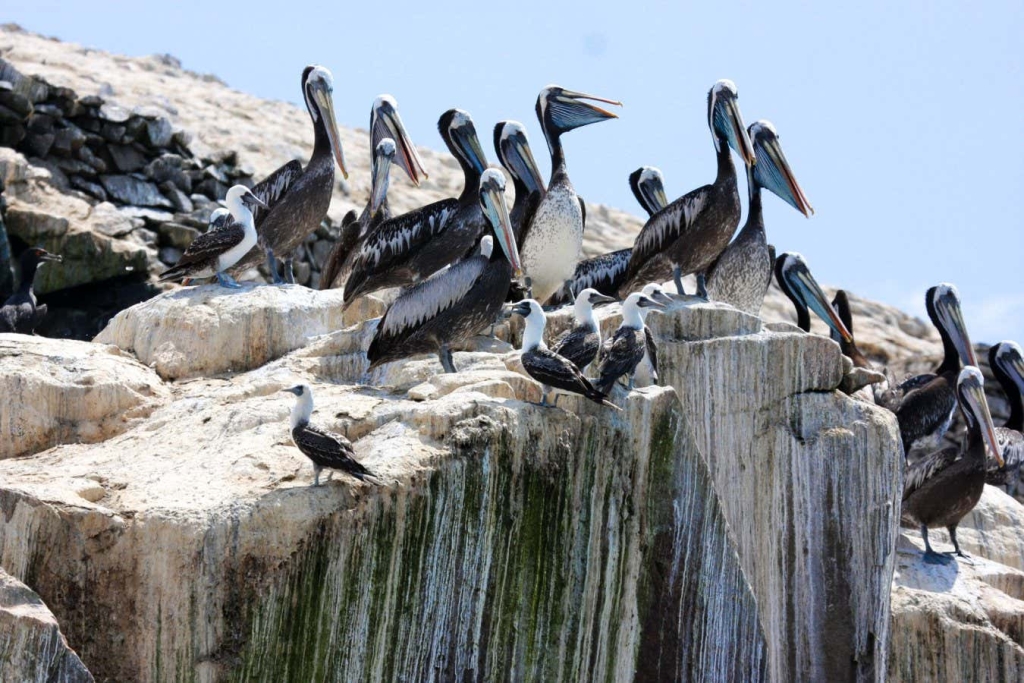
To confirm their findings, the researchers also analyzed collagen from 11 ancient seabird bones found in the region, including those of Peruvian pelicans, boobies, and cormorants. These baseline measurements showed that the nitrogen levels in the ancient maize were even higher than those found in the seabirds themselves—definitive proof that the Chincha were deliberately enriching their fields with guano.
“It’s a fascinating story,” says Bongers. “Social change may have arisen from a surprising source: bird poop.”
A Kingdom Built on Bird Droppings
The Chincha Kingdom’s strategic location—just 25 kilometers from the Chincha Islands—put it in prime position to exploit one of nature’s most potent fertilizers. These islands were (and still are) home to vast colonies of seabirds whose droppings accumulate in thick layers thanks to the arid climate, which prevents the nitrogen from being washed away.
The value of this resource cannot be overstated. Guano is exceptionally rich in nitrogen, phosphorus, and potassium—the three essential nutrients for plant growth. When applied to crops, it can dramatically increase yields, allowing civilizations to support larger populations and more complex social structures.
For the Chincha, access to guano wasn’t just about better harvests—it was about power. By controlling this valuable resource, they could strengthen their economic position, expand their influence, and negotiate from a position of strength when the Inca Empire eventually absorbed them in the 15th century.
Birds as Sacred Symbols
The importance of seabirds to the Chincha culture extended beyond their practical value as fertilizer producers. Archaeological evidence shows that seabird imagery was prominently featured in Chincha art and architecture, appearing on textiles, ceramics, and architectural friezes. This suggests that the birds held deep cultural and possibly religious significance for the people.
“The Incas’ use of guano is well documented in early colonial accounts, which describe strict state control over the islands and heavy penalties for harming the birds,” notes Bongers. “But until now, we lacked firm archaeological evidence that their Chincha predecessors were already exploiting the resource.”
Global Implications
The discovery has broader implications for our understanding of how marine resources shaped social development across the ancient world. Similar patterns of resource control and economic power can be seen in other coastal civilizations, from the Phoenicians to the Vikings.
“It makes a lot of sense that ancient Peruvians used guano as fertilizer,” says Dan Sandweiss of the University of Maine, who wasn’t involved in the study. “It was a significant expedition to get down there to the islands—but you do that for high-value things!”
Sandweiss points out that the Chincha Island guano was particularly valuable due to the limited rainfall in the region, which preserves the nitrogen content. “This Peruvian guano was the real stuff.”
A Legacy That Lasted Centuries
The story of Chincha guano doesn’t end with the fall of the kingdom. In the 19th century, the same islands that had sustained the Chincha would spark international conflict known as the Guano Wars, as Peru, Chile, and other nations fought for control of these valuable deposits. At its peak, guano was Peru’s most important export, and the industry shaped the country’s economic and political development for generations.
Today, while synthetic fertilizers have largely replaced natural guano in agriculture, the legacy of these “guano islands” continues to influence Peruvian culture and economy. The islands remain protected as important bird sanctuaries, and the story of how bird droppings helped build an ancient kingdom serves as a reminder that sometimes the most valuable resources come from the most unexpected places.
As we face modern challenges of sustainable agriculture and food security, the ancient Chincha’s clever use of natural fertilizers offers lessons about working with nature rather than against it—proving that even something as humble as seabird poop can change the course of history.
Tags: seabird guano, ancient agriculture, Chincha Kingdom, Peruvian history, nitrogen isotopes, archaeological discovery, agricultural revolution, Inca Empire, sustainable farming, marine resources, historical fertilizers, power dynamics, cultural significance, environmental history, ancient technology
Viral Sentences:
- “Bird poop built an empire: How seabird droppings fueled a 900-year-old Peruvian kingdom”
- “The stinky secret behind one of history’s most powerful agricultural kingdoms”
- “From bird droppings to dynastic power: The surprising story of Chincha’s rise”
- “Scientists prove ancient Peruvians were fertilizing with guano 900 years ago”
- “How access to seabird poop gave one kingdom the ultimate economic advantage”
- “The fertilizer so valuable it sparked wars and built civilizations”
- “Ancient DNA reveals the chemical signature of history’s most powerful poop”
- “When bird droppings were worth more than gold: The Chincha Kingdom’s secret weapon”
- “The agricultural revolution you’ve never heard of—powered entirely by seabird excrement”
- “From tombs to textbooks: How ancient maize cobs solved a 900-year-old mystery”
,


Leave a Reply
Want to join the discussion?Feel free to contribute!