
Cleveland mayor responds to GeekWire guest column, calls Ohio city a ‘case study of what’s possible’
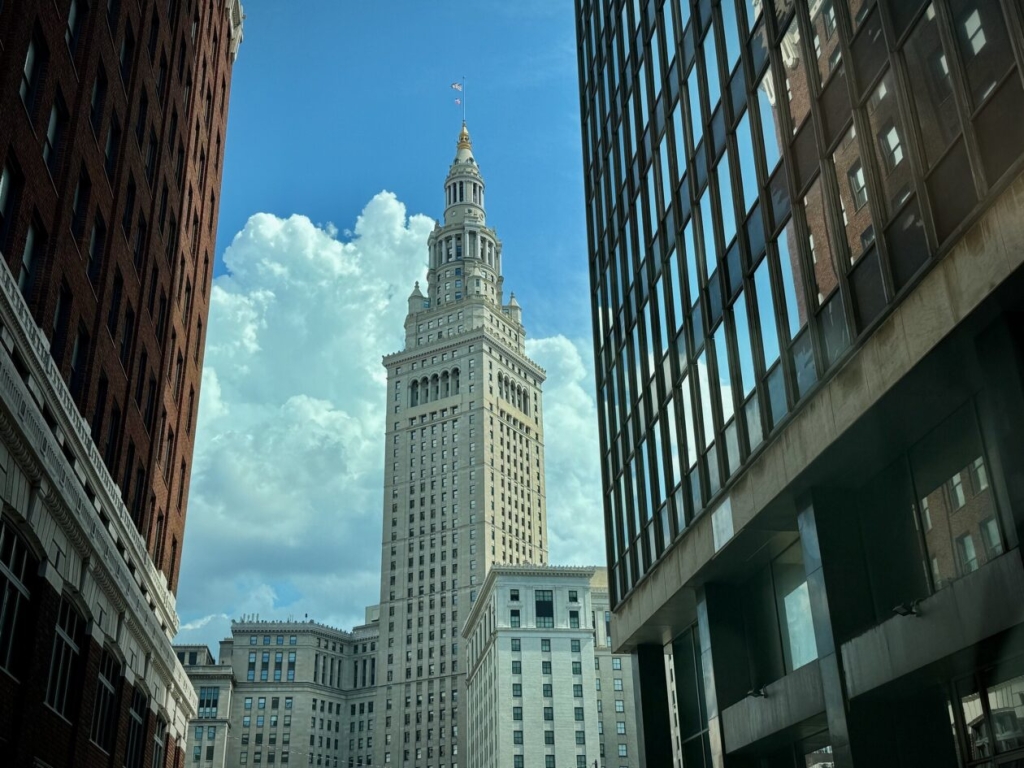
Cleveland Mayor Fires Back at “Don’t Become the Next Cleveland” Warning, Invites Seattle to Study the City’s Comeback
Cleveland Mayor Justin M. Bibb has delivered a pointed response to a Seattle tech veteran’s cautionary column, arguing that the true lesson from Cleveland isn’t its decline but its remarkable resurgence.
In a guest column published earlier this week, Charles Fitzgerald, a Seattle-based angel investor and tech veteran, warned that Seattle risks following Cleveland’s path from industrial powerhouse to cautionary tale. The Pacific Northwest tech hub, he argued, must adapt to the AI era or face a similar fate to the Ohio city that once ranked as America’s seventh-largest metropolis.
Mayor Bibb, however, sees an entirely different narrative—one of resilience, reinvention, and revival.
“For decades, national narratives have framed Cleveland as a cautionary tale,” Bibb wrote on LinkedIn. “But that framing misses the bigger story. Cleveland didn’t quit. Cleveland rebuilt.”
The 38-year-old mayor, who took office in January 2022 and secured reelection last November with nearly 74% of the vote, points to Cleveland’s transformation from industrial decline to innovation hub. He highlights the city’s institutional anchors—the Cleveland Clinic and Case Western Reserve University—as engines driving a growing health-tech and research economy.
“This is the Cleveland ERA,” Bibb declared, citing billions in infrastructure and development investments transforming the city’s landscape.
The mayor’s response comes as cities across America grapple with technological disruption and economic transitions. While Fitzgerald drew parallels between Seattle’s current position and Cleveland’s 1950s prosperity—when median household incomes rivaled New York’s—Bibb sees an opportunity for cross-city learning.
“People in Seattle complain about the problems of being a prosperous city,” Fitzgerald noted in a LinkedIn comment. “They should hear firsthand about what it means to manage a city that was once also very prosperous, but lost that prosperity. You’re playing the game in difficult mode. We can learn from that.”
The numbers tell a stark story of Cleveland’s fall and rise. Once the seventh-largest U.S. city, home to industrial giants like Standard Oil and Republic Steel, Cleveland has since dropped to 56th in population, with median incomes less than half the national average. Yet Mayor Bibb emphasizes the city’s current trajectory over its past struggles.
His administration has spearheaded transformative projects including a $100 million investment to transform 1,000 acres of industrial land, a $1.6 billion airport modernization, and nearly $5 billion reshaping the city’s lakefront and the Cuyahoga River—the waterway famously caught fire multiple times in the 20th century, becoming a symbol of environmental neglect.
Fitzgerald’s original concern centered on Seattle’s potential complacency as the AI era reshapes the tech landscape. He worries that local leaders aren’t paying attention to the fundamental shifts underway, and that legislators in Olympia are treating the tech industry as an endless revenue source rather than nurturing the region’s economic future.
The exchange has sparked intense reactions from both cities. Clevelanders rallied to defend their hometown, with one commenter calling Fitzgerald’s framing “a lazy, outdated trope.” Others highlighted Cleveland’s strengths in healthcare, arts, and cultural diversity.
The dialogue also revealed surprising common ground. Fitzgerald clarified that his warning wasn’t about Cleveland’s current state but about how cities should respond when their economic foundations shift. “Deindustrialization came for Cleveland 75 years ago. Seattle has punched well above its weight in software, but that era is ending,” he explained.
Bibb extended an invitation to Fitzgerald to visit Cleveland and witness the progress firsthand. The Seattle investor, known for his direct style, responded in kind: “I’m waiting for the tickets for my junket to arrive.”
The exchange has captured attention beyond both cities, with many viewing it as a case study in how urban centers can learn from each other’s experiences—both failures and successes.
GeekWire has reached out to Mayor Bibb’s office to arrange a follow-up interview and explore the possibility of including Fitzgerald in the conversation, suggesting this dialogue between two cities at different points in their economic journeys may be just beginning.
Keywords/Trending Tags:
Cleveland comeback, Seattle tech decline, Rust Belt revival, AI era disruption, urban economic transformation, Mayor Justin Bibb, Charles Fitzgerald, Cleveland Clinic innovation, Case Western Reserve, deindustrialization lessons, city resilience, tech industry evolution, cross-city learning, economic adaptation, urban renewal success stories, Cleveland ERA, Pacific Northwest tech hub, Rust Belt to innovation belt, infrastructure investment impact, mayoral leadership in crisis, AI wave adaptation, software industry transition, urban policy lessons, Cleveland-Seattle dialogue, economic reinvention narratives, institutional anchors in recovery, working-class economic expansion, environmental restoration success, political leadership in urban revival
Viral Sentences:
“Cleveland didn’t quit. Cleveland rebuilt.” – Mayor Justin Bibb
“You’re playing the game in difficult mode. We can learn from that.” – Charles Fitzgerald
“My lord, what a lazy, outdated trope.” – Cleveland defender on LinkedIn
“I’m waiting for the tickets for my junket to arrive.” – Charles Fitzgerald’s response to Cleveland invitation
“This is not about Cleveland today.” – Fitzgerald clarifying his warning
“Seattle should study Cleveland as a case study of what’s possible when you confront age-old problems with bold, urgent leadership.” – Mayor Bibb
“The real lesson isn’t in the city’s past but in its ongoing comeback.” – Analysis of Bibb’s response
“Cities should respond when their world changes.” – Fitzgerald’s core message
“The Cleveland ERA is now.” – Mayor Bibb’s declaration of transformation
“People in Seattle complain about the problems of being a prosperous city.” – Fitzgerald’s observation
“You must confront that reality plus, like every city, adapt to the broader AI wave.” – Fitzgerald’s warning to Seattle
“Don’t become the next Cleveland” – Original column headline that sparked the debate
“From industrial decline to innovation hub” – Summary of Cleveland’s transformation
“Playing the game in difficult mode” – Fitzgerald’s metaphor for Cleveland’s challenges
,


Leave a Reply
Want to join the discussion?Feel free to contribute!