
Waymo’s Next-Gen Robotaxis Are Rolling Out. Everything to Know About the Service
Waymo’s Sixth-Generation Self-Driving Tech: A Quantum Leap in Autonomous Mobility
Waymo, Alphabet’s autonomous vehicle subsidiary, has unveiled its sixth-generation Waymo Driver, marking a transformative moment in the evolution of self-driving technology. This latest iteration represents not just incremental improvements, but a fundamental reimagining of how autonomous vehicles perceive, navigate, and operate in complex real-world environments.
The Technology Behind the Revolution
The sixth-generation Waymo Driver builds upon years of accumulated driving data and AI advancements to deliver unprecedented capabilities. At its core, the system features a dramatically enhanced vision system that can now detect critical details in deep shadows and maintain performance when subjected to intense high-beam headlights—a scenario that has historically challenged autonomous systems.
What’s particularly impressive is how Waymo has achieved these capabilities while reducing complexity. The new vision system requires fewer cameras than previous generations, thanks to higher-resolution image sensors that capture more data with greater clarity. This reduction in component count translates directly to improved reliability and reduced manufacturing costs.
The lidar sensors have undergone a similar transformation, with enhanced algorithms that create more accurate 3D representations of the vehicle’s surroundings across diverse weather conditions. Whether facing heavy rain, snow, or fog, the system maintains its ability to construct detailed environmental models essential for safe navigation.
Perhaps most notably, the latest radar sensors employ new algorithms that dramatically improve tracking of object distance, velocity, and size—even in adverse weather conditions that would typically degrade sensor performance. This represents a critical advancement for Waymo’s expansion into cities with challenging climates like Minneapolis, Detroit, and London.
The Vehicle: Introducing the Ojai
Waymo has paired this groundbreaking technology with an all-new vehicle platform called the Ojai, a modified Zeekr RT that serves as the first recipient of the sixth-generation driver. The Ojai represents Waymo’s vision for the future of autonomous transportation—a purpose-built vehicle designed from the ground up to leverage the full capabilities of the latest self-driving technology.
The partnership with Zeekr, a premium electric vehicle brand under Geely, demonstrates Waymo’s commitment to working with innovative manufacturers to create vehicles optimized for autonomous operation. The Ojai’s design incorporates the sensor suite and computing infrastructure necessary to fully utilize the sixth-generation driver’s capabilities.
Following the Ojai, Waymo plans to deploy this technology in Hyundai Ioniq 5 vehicles as part of their existing partnership, with testing already underway and public availability planned for the coming years.
Expansion Strategy: From Sun Belt to Snow Belt
Waymo’s announcement signals a bold expansion strategy that moves beyond the warm, dry climates of its initial deployments into regions with more challenging weather conditions. The company’s testing in Michigan’s Upper Peninsula and upstate New York has informed the development of technology capable of sustaining operations in heavy snow and ice—conditions that have historically posed significant challenges for autonomous vehicles.
The planned expansion to Minneapolis represents Waymo’s first major foray into a true winter climate, while Detroit offers the opportunity to test the technology in an urban environment with complex traffic patterns and variable weather. London presents a different set of challenges, with its narrow streets, heavy pedestrian traffic, and driving on the left side of the road.
This geographic diversification is crucial for Waymo’s long-term vision of creating a truly universal autonomous driving system that can operate safely and reliably anywhere in the world.
Manufacturing Scale and Efficiency
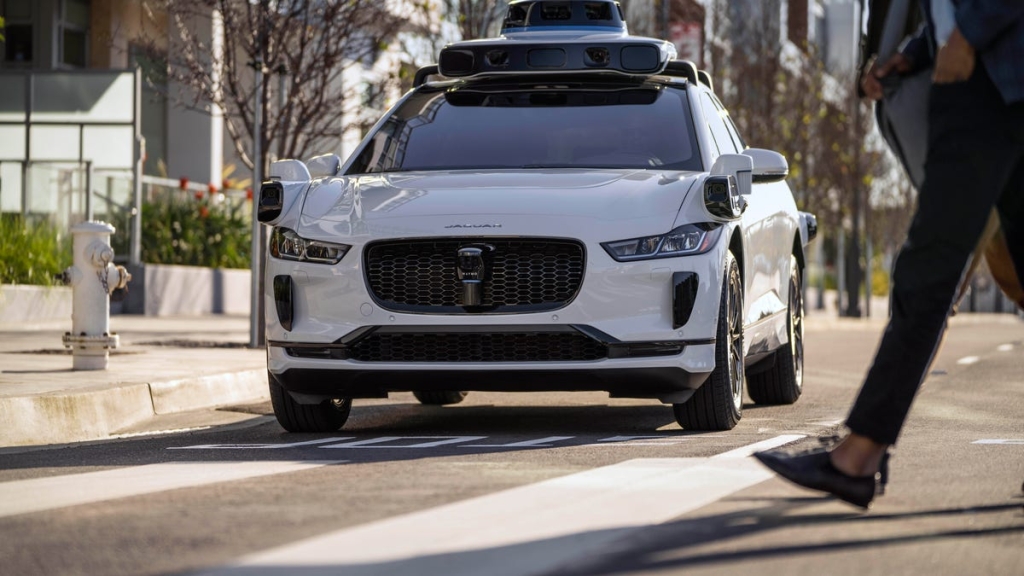
Waymo’s announcement coincides with the opening of a new 239,000-square-foot autonomous vehicle factory in the Phoenix area, designed to add 2,000 more fully autonomous Jaguar I-Pace vehicles to its existing 1,500-vehicle fleet. This facility represents a significant investment in manufacturing capability and demonstrates Waymo’s commitment to scaling its operations.
The factory’s “flexible design” allows for rapid integration of new technology as it becomes available, ensuring that Waymo can continuously upgrade its fleet without lengthy retooling processes. This approach enables the company to deploy improvements to its entire operating fleet more quickly than traditional automotive manufacturers.
Safety Performance and Public Trust
Waymo’s safety record provides compelling evidence for the potential of autonomous vehicles to reduce traffic accidents and save lives. According to the company’s Safety Impact report, over 71 million autonomous miles driven through March 2025, the Waymo Driver technology demonstrated 88% fewer crashes leading to serious injuries or worse, and 78% fewer injury-causing crashes compared to average human drivers over the same distance in operating cities.
The statistics are even more striking for vulnerable road users: 93% fewer crashes with injuries to pedestrians, 81% fewer involving cyclists, and 86% fewer affecting motorcyclists. These numbers suggest that autonomous vehicles may indeed be safer than human drivers, particularly in situations where human error is a significant factor.
However, Waymo’s expansion hasn’t been without challenges. High-profile incidents, including collisions with cyclists and pedestrians, have drawn criticism and regulatory scrutiny. The company’s response—recalling and updating software to address identified issues—demonstrates a commitment to continuous improvement and safety-first principles.
The Business Model Evolution
Waymo’s partnership strategy reveals an evolving business model that balances direct operations with strategic collaborations. The Uber partnership in cities like Phoenix and Austin allows Waymo to reach customers through an existing platform while Uber handles fleet management tasks like cleaning and repair. This arrangement reduces Waymo’s operational overhead while expanding its customer base.
The collaboration with Lyft for Nashville expansion follows a similar model, with Lyft managing the fleet while Waymo focuses on the technology. Meanwhile, the partnership with Avis Budget Group for Dallas, Houston, and San Antonio represents a different approach, leveraging Avis’s expertise in fleet management and infrastructure.
These varied partnerships suggest that Waymo is experimenting with different business models to find the optimal balance between control, scalability, and profitability as it expands into new markets.
The Road Ahead: International Expansion
Waymo’s announcement of expansion to Tokyo and London marks a significant milestone in the company’s international ambitions. These markets present unique challenges: Tokyo’s complex urban environment, heavy pedestrian traffic, and cultural expectations around service quality; London’s historic street layouts, driving on the left, and regulatory environment.
The company’s approach of beginning with manual driving operations to understand local conditions before transitioning to autonomous operation demonstrates a methodical, safety-focused expansion strategy. This gradual approach allows Waymo to adapt its technology to local conditions while building relationships with regulators and communities.
Technological Implications and Industry Impact
The sixth-generation Waymo Driver represents more than just an incremental improvement—it signals a potential inflection point in autonomous vehicle technology. The combination of improved sensor performance, reduced component count, and enhanced AI capabilities suggests that the technology is maturing to the point where it can handle the full complexity of real-world driving across diverse conditions.
This maturation has significant implications for the broader autonomous vehicle industry. As Waymo demonstrates the feasibility of operating in challenging environments like winter climates and complex urban centers, it validates the approach of using advanced sensors and AI rather than relying solely on detailed mapping or controlled environments.
The cost reductions achieved through component optimization also suggest that autonomous vehicles may be approaching economic viability, potentially opening the door for broader commercial deployment and even consumer applications in the future.
Challenges and Considerations
Despite the impressive technological achievements, significant challenges remain. Regulatory approval for fully autonomous operations varies widely by jurisdiction, and public acceptance of driverless vehicles continues to evolve. The high-profile incidents involving Waymo vehicles highlight the importance of transparency and accountability in building public trust.
The technology’s performance in edge cases—rare but critical situations that don’t occur frequently enough to be well-represented in training data—remains an area of active research and development. Waymo’s approach of continuous learning and rapid software updates may prove crucial in addressing these challenges.
Conclusion: A Transformative Moment
Waymo’s sixth-generation technology announcement represents a pivotal moment in the evolution of autonomous vehicles. The combination of improved capabilities, expanded operational environments, and scalable manufacturing suggests that the technology is maturing rapidly and approaching widespread commercial viability.
The company’s methodical expansion strategy, emphasis on safety, and willingness to partner with established players in the mobility ecosystem position it well for continued growth. As Waymo moves from sunny Arizona to snowy Minneapolis and from American cities to international markets like Tokyo and London, it’s demonstrating that autonomous vehicles may indeed be ready for the complexities of real-world operation across diverse conditions.
The next few years will be crucial in determining whether autonomous vehicles can deliver on their promise of safer, more efficient, and more accessible transportation. Waymo’s sixth-generation technology provides compelling evidence that this future may be closer than many people realize.
Tags:
Waymo sixth-generation self-driving technology, autonomous vehicle expansion, Ojai robotaxi, Zeekr partnership, Hyundai Ioniq 5 autonomous, winter weather self-driving, Phoenix autonomous factory, Uber Waymo collaboration, international autonomous expansion, Tokyo London robotaxis, safety autonomous vehicles, lidar radar vision systems, AI autonomous driving, fleet management partnerships, fully driverless rides, autonomous vehicle manufacturing, regulatory autonomous vehicles, vulnerable road users safety, edge case autonomous driving, cost reduction self-driving
Viral Sentences:
Waymo’s sixth-generation tech can now see through shadows and high-beams—fewer cameras, better vision!
From sunny Phoenix to snowy Minneapolis: Waymo conquers winter weather with its latest autonomous breakthrough.
The Ojai is here! Waymo’s new Zeekr-based robotaxi ready to tackle extreme weather conditions.
88% fewer serious injury crashes: Waymo’s safety stats are turning heads in the autonomous vehicle industry.
Waymo’s new factory in Phoenix will build 2,000 more autonomous vehicles—scaling up for global domination!
Uber riders in Austin can now summon a Waymo robotaxi—no separate app needed!
London calling! Waymo becomes first US company to bring fully autonomous rides to the UK capital.
Tokyo or bust! Waymo partners with Japanese taxi giants for its first Asian expansion.
Jaguar delivers final I-Pace to Waymo—new vehicles with sixth-gen tech coming soon!
Waymo’s radar sees through rain and snow—finally cracking the weather challenge that stumped everyone else.
From 1,500 to 3,500 vehicles: Waymo’s fleet is about to double with new manufacturing capacity.
San Francisco riders can now take Waymo to the airport—freeway driving unlocked!
Miami’s first robotaxis are here! Waymo brings autonomous rides to the Sunshine State.
Waymo’s lidar creates 3D maps in any weather—snow, rain, or shine.
The future is electric and autonomous: Waymo’s partnerships with Zeekr, Hyundai, and Toyota signal industry consolidation.
Waymo’s safety record: 93% fewer pedestrian injuries in autonomous mode versus human drivers.
Breaking barriers: Waymo’s technology adapts to left-side driving for London expansion.
Avis Budget Group partners with Waymo for fleet management in Texas cities—rental car companies go autonomous!
Waymo’s sixth-gen tech requires fewer components but delivers better performance—Moore’s Law for self-driving?
From testing to transportation: Waymo’s methodical approach builds trust city by city.
The robotaxi revolution is here: Waymo completes 400,000 autonomous rides weekly across multiple cities.
Waymo’s international expansion proves autonomous tech can cross borders and adapt to local conditions.
The economics of autonomy: Waymo’s cost reductions could finally make robotaxis commercially viable.
Safety first: Waymo’s recall and software update after incidents shows commitment to continuous improvement.
Waymo’s partnerships with Uber, Lyft, and Avis reveal the collaborative future of autonomous mobility.
From Silicon Valley to Motor City: Waymo brings self-driving tech to Detroit’s challenging winter conditions.
The data advantage: Waymo’s 200 million miles of real-world driving fuel its technological superiority.
Waymo’s expansion to 20+ cities shows autonomous vehicles are moving from experiment to everyday reality.
,


Leave a Reply
Want to join the discussion?Feel free to contribute!