
ULA’s Vulcan rocket suffers another booster problem on the way to orbit
Sparks Fly: Vulcan Rocket Survives Booster Anomaly, Delivers Military Satellites to Orbit
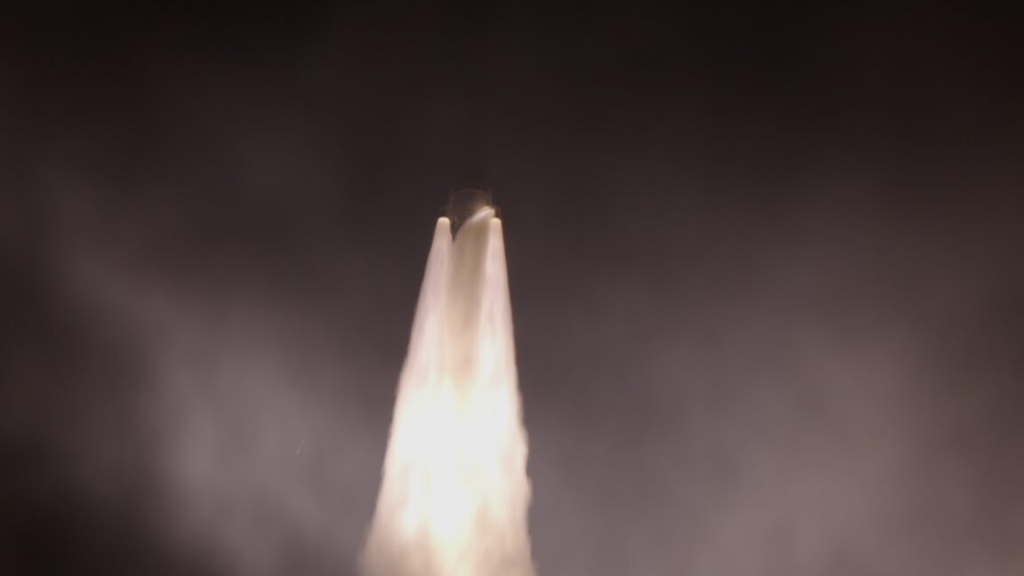
In a dramatic early morning launch from Florida’s Space Coast, United Launch Alliance’s (ULA) Vulcan rocket defied the odds Thursday after suffering a severe booster malfunction just seconds after liftoff. The rocket, carrying a critical payload of US military satellites, twisted wildly in the sky before regaining control and ultimately delivering its cargo to the intended geosynchronous orbit—marking another astonishing demonstration of the Vulcan’s resilience under pressure.
The anomaly occurred at 4:22 am EST (09:22 UTC) when a shower of sparks erupted in the exhaust plume of one of Vulcan’s four solid-fueled boosters. Video footage from the launch reveals a fiery plume near the throat of the affected booster—the critical juncture where the motor’s propellant casing connects to its bell-shaped exhaust nozzle. This throat section is responsible for channeling super-hot gas from burning solid propellant through the nozzle to generate thrust.
What followed was a sequence of events that would have spelled disaster for most rockets. Less than a minute into flight, the vehicle released a cloud of sparks and debris, then suddenly rolled along its long axis in what appeared to be a potentially catastrophic uncontrolled spin. Yet, in a testament to the rocket’s design and engineering, Vulcan recovered from the malfunction and continued its climb into orbit.
The circumstances bear an uncanny resemblance to a similar incident 16 months ago, when a Vulcan rocket lost one of its booster nozzles shortly after launch from Cape Canaveral Space Force Station. In that October 2024 event, the rocket also managed to recover and reach its planned orbit despite the damage. This pattern of survival through adversity is quickly becoming a hallmark of ULA’s new heavy-lift vehicle.
“Early during flight, the team observed a significant performance anomaly on one of the four solid rocket motors,” said Gary Wentz, ULA’s vice president of Atlas and Vulcan programs. “Despite the observation, the Vulcan booster and Centaur performed nominally and delivered the spacecraft directly to geosynchronous orbit.”
The solid rocket boosters eventually burned out and were jettisoned, falling into the Atlantic Ocean as planned. From that point forward, ULA reported that the rest of the mission proceeded without incident, with the upper stage successfully placing the military satellites into their designated orbital positions.
This latest anomaly raises important questions about the reliability of Vulcan’s booster system, particularly given the similarity to the 2024 incident. ULA, a 50-50 joint venture between aerospace giants Boeing and Lockheed Martin, has launched an investigation into the matter. The company stated that an integrated team of US government and contractor personnel is reviewing technical data and available imagery, while also organizing a recovery team to collect any debris from the Atlantic.
The fact that Vulcan can withstand such severe damage and still complete its mission is both reassuring and concerning. On one hand, it demonstrates the rocket’s robust design and built-in redundancies—critical features for a vehicle intended to carry some of the nation’s most valuable and sensitive payloads. On the other hand, the recurrence of booster-related issues suggests potential systemic problems that need to be addressed before they result in a catastrophic failure.
For the US military, whose satellites were aboard this mission, the successful delivery despite the anomaly is undoubtedly welcome news. These satellites likely serve crucial national security functions, and their loss would have been a significant blow to American space-based capabilities. The ability of Vulcan to deliver under duress may actually enhance confidence in the system’s reliability, even as engineers work to eliminate the root cause of these booster malfunctions.
The investigation will likely focus on the throat area where the anomaly first appeared, examining whether there are design flaws, manufacturing defects, or operational procedures that need to be modified. Given that this is the second such incident in less than two years, the pressure to identify and resolve the underlying issue is substantial.
As the aerospace industry watches closely, ULA faces the challenge of balancing the need for thorough investigation and corrective action with the pressure to maintain launch schedules for its government and commercial customers. The company has not announced when the next Vulcan mission will fly, but it’s clear that no launches will proceed until the investigation is complete and any necessary modifications are implemented.
This incident serves as a reminder of the inherent risks and complexities of spaceflight, where even the most advanced engineering can be tested by unexpected challenges. Yet it also showcases the remarkable progress made in rocket design, where vehicles can survive potentially mission-ending anomalies and still achieve their objectives. As ULA works to resolve this latest issue, the Vulcan rocket’s proven ability to overcome adversity may prove to be one of its most valuable characteristics.
tags
VulcanRocket #ULA #SpaceLaunch #RocketAnomaly #MilitarySatellites #SpaceCoast #Boeing #LockheedMartin #SpaceTechnology #RocketScience #AerospaceEngineering #SpaceNews #OrbitalLaunch #GeosynchronousOrbit #SolidRocketBoosters #SpaceCoastLaunch #ThursdayMorningLaunch #SparksInTheSky #RocketRecovery #SpaceResilience
viral
Sparks fly, rocket twists, satellites survive! 🚀🔥
Vulcan beats the odds again! Second booster anomaly, same incredible recovery. 💪
ULA’s Vulcan: The comeback rocket that just won’t quit! 🎯
Military satellites delivered despite fiery drama in the Florida sky. 🇺🇸
Rocket throat problem causes spectacular show, but mission succeeds! 🎆
From sparks to orbit: Vulcan’s wild ride captured on video! 🎥
Boeing and Lockheed’s baby proves it can take a punch and keep climbing. 🥊
Space Coast lights up with another Vulcan thriller! 🌅
Solid rocket booster blues strike twice, but Vulcan dances through the danger. 💃
Investigation underway as Vulcan shows off its survival skills once again. 🔍
Debris in the Atlantic, but satellites safe in geosynchronous glory! 🛰️
Gary Wentz: “The Centaur performed nominally” – understatement of the year! 😂
ULA’s joint venture delivers drama and success in one fiery package. 🎁
Space industry holds breath as Vulcan rolls, recovers, and conquers! 🏆
From Cape Canaveral to orbit: Vulcan’s second act of defiance against physics. 🎭
,


Leave a Reply
Want to join the discussion?Feel free to contribute!