
Elon Musk Says SpaceX Is Pivoting From Mars to the Moon
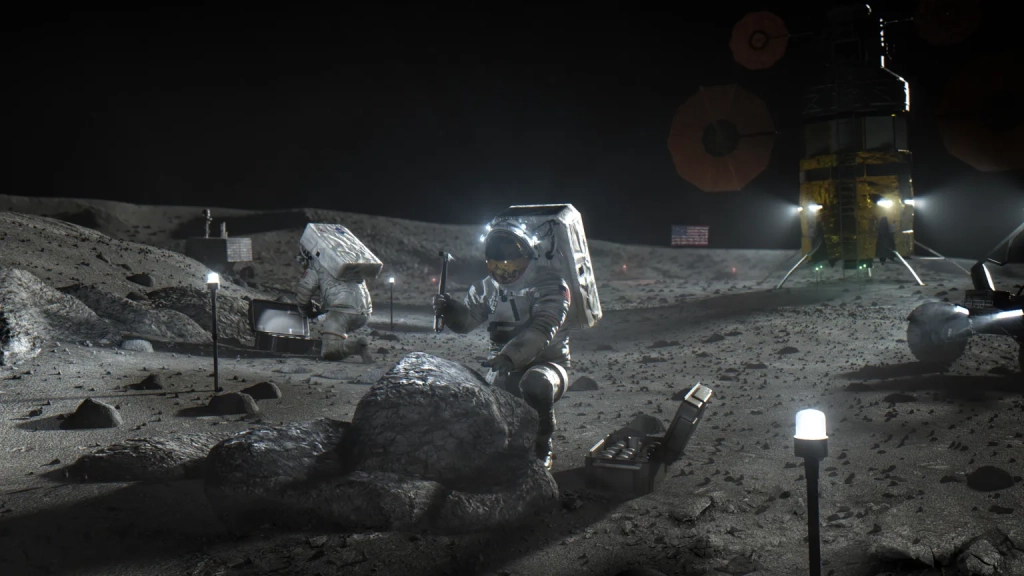
Elon Musk, the world’s richest man and CEO of SpaceX, has made a dramatic pivot in his extraterrestrial ambitions, shifting focus from Mars to the Moon. In a surprise announcement posted to X (formerly Twitter) on Super Bowl Sunday, Musk revealed that SpaceX is now targeting an uncrewed lunar landing in March 2027 and has set its sights on building a “self-growing city” on our nearest celestial neighbor.
This marks a significant departure from Musk’s long-standing goal of establishing a permanent human presence on Mars, which he has framed as a way to ensure humanity’s survival against potential cataclysmic events on Earth. Just a year ago, Musk dismissed lunar missions as “a distraction.” However, the practical advantages of focusing on the Moon are clear: trips can launch every 10 days and take just a few days to arrive, compared to the six-month journeys to Mars that are only possible every 26 months.
The pivot also aligns with SpaceX’s existing commitments, including a $4 billion contract with NASA to return astronauts to the Moon using its Starship rocket. The Artemis III mission aims to land a crew on the Moon in 2028, though it remains uncertain whether SpaceX’s vehicle will be ready in time.
Beyond pragmatism, Musk’s renewed interest in the Moon appears to be intertwined with his growing focus on artificial intelligence. He has suggested that space-based data centers could help address the energy constraints currently limiting AI development. This vision was further underscored by SpaceX’s recent acquisition of Musk’s AI company, xAI, in a merger valuing the new entity at a staggering $1.25 trillion.
At an all-hands meeting at xAI, Musk unveiled an ambitious plan to build a factory for AI data centers on the Moon’s surface. The proposal includes a giant electromagnetic catapult, or “mass driver,” to launch satellites from the lunar surface into space. Musk also reiterated his goal of creating “a self-sustaining city on the Moon,” which he envisions as a stepping stone to Mars.
The shift in focus may also be a response to growing competition from Jeff Bezos, whose rocket company, Blue Origin, is making significant strides with its New Glenn launch vehicle. Unlike SpaceX’s Starship, which requires multiple tanker flights for orbital refueling, Blue Origin’s technology offers a simpler approach to lunar exploration. This could potentially allow Blue Origin to land humans on the Moon before SpaceX.
Despite the refocus on the Moon, Musk insists that SpaceX has not abandoned its plans for Mars. He emphasized that missions to start building a city on the red planet will begin in five to seven years. However, given Musk’s history of overly ambitious timelines, his predictions for both the Moon and Mars should be taken with a grain of skepticism.
Nonetheless, it seems increasingly likely that humanity’s first off-Earth settlement will be much closer to home than previously thought. As Musk continues to push the boundaries of space exploration and AI, the race to establish a presence on the Moon is heating up, with SpaceX and Blue Origin leading the charge.
Tags: Elon Musk, SpaceX, Moon, Mars, lunar landing, self-growing city, artificial intelligence, xAI, data centers, mass driver, Blue Origin, Jeff Bezos, New Glenn, Starship, Artemis III, NASA, space exploration, off-Earth settlement, celestial neighbor, orbital refueling, energy constraints, timeline, competition, technological innovation, extraterrestrial ambitions.
Viral Sentences:
– “Elon Musk shifts focus from Mars to the Moon, targeting a self-growing city on our nearest celestial neighbor.”
– “SpaceX aims for an uncrewed lunar landing in March 2027, marking a dramatic pivot in Musk’s space ambitions.”
– “Musk’s lunar plans include a giant electromagnetic catapult to launch satellites from the Moon’s surface.”
– “The race to the Moon heats up as SpaceX and Blue Origin compete for humanity’s first off-Earth settlement.”
– “Space-based data centers on the Moon could solve AI’s energy constraints, according to Musk’s vision.”
– “Musk insists SpaceX hasn’t abandoned Mars, but the Moon is now the primary focus for the next decade.”
– “Blue Origin’s simpler technology could allow it to land humans on the Moon before SpaceX’s Starship.”
– “The $1.25 trillion merger of SpaceX and xAI signals Musk’s commitment to lunar AI data centers.”
– “Humanity’s first off-Earth settlement may be much closer to home than we thought, thanks to Musk’s pivot.”
– “The practical advantages of lunar missions are clear: shorter travel times and more frequent launch windows.”,

Leave a Reply
Want to join the discussion?Feel free to contribute!