
OpenAI President Defends Trump Donations, Refuses to Comment on ICE
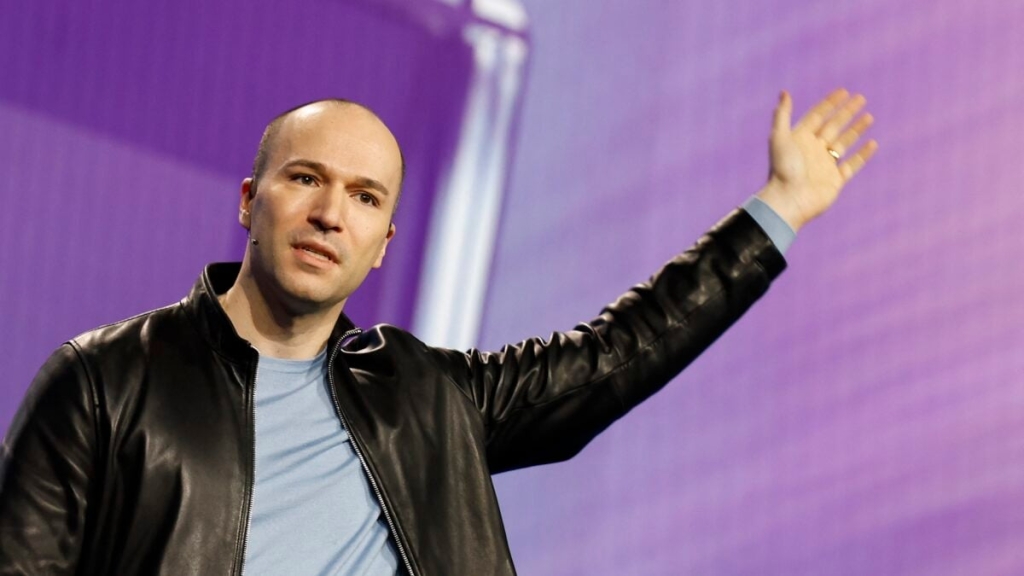
OpenAI President Greg Brockman’s $50 Million Political Gamble: Tech Titan Fuels Trump’s Machine While AI Faces Public Backlash
In a move that has sent shockwaves through Silicon Valley and Washington D.C., OpenAI president Greg Brockman has emerged as one of the tech industry’s most significant financial backers of President Donald Trump’s political machine, contributing a staggering $50 million to pro-Trump and AI advocacy efforts in 2025.
The revelation comes at a critical juncture for artificial intelligence development, as public sentiment toward the technology reaches a tipping point and the federal government grapples with how to regulate—or promote—AI’s rapid advancement. Brockman, who co-founded OpenAI alongside Sam Altman, has positioned himself as a champion of AI’s potential to transform humanity, but his political maneuvering reveals a more complex strategy beneath the technocratic veneer.
The Money Trail: $25 Million to MAGA Inc., $25 Million to AI Advocacy
According to financial disclosure reports obtained by Wired, Brockman and his wife funneled $25 million into MAGA Inc., the primary super PAC supporting President Trump’s political agenda, during the 2025 election cycle. An additional $25 million flowed to Leading the Future, a super PAC that claims to be nonpartisan but has drawn scrutiny for its focus on advancing artificial intelligence policy.
The donor list for Leading the Future reads like a who’s who of Silicon Valley’s most controversial figures. Alongside Brockman sits Marc Andreessen, the billionaire venture capitalist whose recent comments about Hillary Clinton’s presidency have raised eyebrows across the political spectrum. Also contributing is Joe Lonsdale, the far-right Palantir co-founder whose company has become synonymous with government surveillance and data analytics.
Brockman’s political spending represents a dramatic escalation from previous years, when he maintained a relatively low profile in Washington’s corridors of power. His justification for the massive financial commitment centers on what he perceives as a critical moment for AI development—a technology he believes will be “the most impactful thing humanity has ever created.”
“We are embarking on a journey to develop this technology that’s going to be the most impactful thing humanity has ever created,” Brockman told Wired in a revealing interview. “Getting that right and making that benefit everyone, that’s the most important thing.”
Public Opinion Turns Against AI as Tech Leaders Double Down
Brockman’s political calculations appear to be driven by mounting evidence that Americans are increasingly skeptical of artificial intelligence’s promises. A September 2025 Pew Research Center poll found that 53% of Americans believe AI will worsen people’s ability to think creatively, while only 16% think it will improve creativity. The numbers paint an even bleaker picture for AI’s societal impact: just 10% of Americans say they’re more excited than concerned about what AI will do to society, while a staggering 57% rate the societal risks of AI as high.
These polling numbers represent a significant challenge for OpenAI and other AI companies racing to commercialize their technologies. As public anxiety grows over job displacement, privacy concerns, and the potential for AI to spread misinformation, tech leaders like Brockman are increasingly looking to political allies who might shield them from regulatory scrutiny.
The timing of Brockman’s political spending is particularly noteworthy given the Trump administration’s aggressive stance on AI development. The president has repeatedly called for the United States to maintain its technological edge over China in artificial intelligence, viewing the sector as critical to national security and economic competitiveness.
The Minneapolis Connection: ICE Killings and Brockman’s Silence
Perhaps the most troubling aspect of Brockman’s political alignment emerged in the final paragraphs of the Wired interview, though the timing suggests these questions were raised before a series of controversial incidents in Minneapolis that would later dominate national headlines.
In January 2026, federal agents deployed by the Trump administration to Minneapolis killed two individuals—Renee Good on January 7 and Alex Pretti on January 24—in operations targeting immigrant communities. The killings, carried out by masked federal agents from Immigration and Customs Enforcement (ICE), sparked outrage across the political spectrum and raised serious questions about the Trump administration’s tactics.
When Wired reached out to Brockman for comment on the Minneapolis killings, he declined to address the specific incidents directly. Instead, he offered a carefully crafted statement that has since been criticized as corporate PR spin: “AI is a uniting technology, and can be so much bigger than what divides us today.”
Critics have lambasted this response as tone-deaf and evasive, particularly given Brockman’s substantial financial support for an administration whose immigration enforcement policies have drawn widespread condemnation. The statement’s emphasis on AI as a “uniting technology” rings hollow to many observers who see the tech industry’s growing alignment with authoritarian governance as anything but unifying.
Silicon Valley’s MAGA Makeover: A Tech Industry in Transition
Brockman’s political positioning is part of a broader trend that has seen Silicon Valley’s most powerful figures align themselves with the Trump administration, despite—or perhaps because of—the president’s historically low approval ratings. As of January 2026, only 36% of Americans approve of Trump’s job performance, according to a new Associated Press poll, marking one of the steepest declines in presidential popularity in modern history.
Other tech titans have followed similar paths. Meta CEO Mark Zuckerberg has made multiple visits to the White House, reportedly seeking regulatory relief for his company’s various controversies. Amazon founder Jeff Bezos, whose Washington Post has faced criticism for its coverage of the Trump administration, has maintained close ties with administration officials. Apple CEO Tim Cook has engaged in high-level discussions with the president on trade and technology policy.
The motivations behind these alignments are multifaceted. Some tech leaders genuinely support Trump’s deregulatory agenda, viewing it as beneficial to innovation and business growth. Others appear motivated by more transactional concerns: securing lucrative government contracts, smoothing the path for major mergers and acquisitions, or avoiding antitrust scrutiny.
For Brockman and OpenAI, the stakes are particularly high. As one of the leading developers of artificial intelligence technology, the company faces intense scrutiny from regulators, privacy advocates, and competitors. Trump’s administration has signaled a more permissive approach to AI development, emphasizing American competitiveness over European-style regulatory frameworks.
The Health Factor: Trump’s Declining Condition and Political Uncertainty
Brockman’s political investments come against the backdrop of growing concerns about President Trump’s health and political future. At 79 years old, the president has faced mounting speculation about his physical condition, with observers noting slurred speech patterns and apparent fatigue during public appearances.
The Daily Beast reported in late 2025 that Trump’s health has become a subject of increasing concern among political insiders, with some questioning whether he will complete a full term if re-elected. This uncertainty adds another layer of complexity to Brockman’s political calculations. By aligning himself with Trump now, Brockman may be positioning OpenAI to benefit from current administration policies, but he also risks being associated with a political figure whose popularity continues to decline.
The Ethics of Political Spending: When Innovation Meets Authoritarianism
Brockman’s $50 million political investment raises fundamental questions about the relationship between technological innovation and political power. As AI systems become increasingly capable of influencing everything from employment decisions to criminal justice outcomes, the question of who controls these technologies—and whose interests they serve—becomes paramount.
Critics argue that Brockman’s political spending represents a troubling convergence of corporate interests and authoritarian governance. By funneling massive resources to a president whose administration has been marked by attacks on democratic institutions, suppression of dissent, and aggressive immigration enforcement, Brockman appears to be prioritizing regulatory relief and government contracts over ethical considerations.
The contrast between Brockman’s public statements about AI benefiting all of humanity and his private political investments has not gone unnoticed. While he speaks of AI as a force for unity and progress, his financial support for Trump’s political machine suggests a more cynical calculation: that political influence is necessary to protect and advance AI development, regardless of the broader societal costs.
Looking Ahead: The Post-Trump Reckoning
As Trump’s presidency enters what many observers believe will be its final years, questions are already emerging about how history will judge tech leaders who aligned themselves with his administration. The pattern is familiar: business leaders who supported controversial political figures often face significant reputational damage when those figures leave office, particularly if their departure comes amid scandal or declining popularity.
Brockman’s case is particularly complex because it involves not just political alignment but also technological development with far-reaching implications for society. Unlike traditional business leaders whose products and services may be controversial but ultimately benign, AI developers like Brockman are creating technologies that could fundamentally reshape human civilization.
The $50 million question—both literally and figuratively—is whether Brockman’s political investments will be viewed as necessary pragmatism in an era of technological transformation, or as complicity in the erosion of democratic norms and institutions. As public opinion continues to turn against both Trump and, increasingly, the tech industry itself, the answer may determine not just Brockman’s legacy but the future trajectory of artificial intelligence development in the United States.
What remains clear is that Brockman has made his choice. In an era when technology companies increasingly function as political actors, his $50 million investment represents not just a financial commitment but a statement of values—and a bet on the future of American democracy and technological development.
The consequences of that bet, both for Brockman and for the millions of Americans whose lives will be shaped by AI technologies, remain to be seen. But as Trump’s approval ratings continue to plummet and public skepticism of AI grows, the wisdom of Brockman’s political strategy appears increasingly questionable.
In the end, history may judge not just what Brockman built, but what he chose to support—and at what cost to the democratic principles he claims to uphold.
Tags
OpenAI, Greg Brockman, Donald Trump, MAGA Inc, Leading the Future, AI regulation, Silicon Valley politics, tech industry, artificial intelligence, political donations, Marc Andreessen, Joe Lonsdale, ICE, Minneapolis, immigration enforcement, tech ethics, authoritarianism, government contracts, antitrust, Pew Research, public opinion, technological innovation, democracy, political spending, super PACs, tech leaders, Trump administration, AI development, regulatory relief, corporate influence, political alignment, future of technology
Viral Sentences
Greg Brockman gave $50 million to Trump’s political machine while AI faces historic public backlash
OpenAI president’s political spending reveals tech industry’s MAGA makeover
Silicon Valley’s biggest names are lining up to kiss Trump’s ring for government contracts
Brockman’s $25 million to MAGA Inc raises questions about AI ethics and political influence
Public opinion turns against AI as 57% of Americans see high societal risks
Tech billionaire funds Trump while claiming AI will unite humanity
The Minneapolis ICE killings expose the dark side of tech’s political alliances
Trump’s 36% approval rating hasn’t stopped Silicon Valley from backing him
OpenAI president’s silence on immigrant deaths speaks volumes about tech priorities
When innovation meets authoritarianism: the Brockman-Trump connection
$50 million question: Is political influence worth the cost to democracy?
Silicon Valley’s MAGA pivot: Pragmatism or complicity?
The tech industry’s dangerous dance with declining presidential power
Brockman’s political strategy may determine AI’s future in America
History will judge what tech leaders supported, not just what they built
,


Leave a Reply
Want to join the discussion?Feel free to contribute!