
China extracts uranium from seawater, moving closer to the 2050 goal of “unlimited battery life” with oceans full of fuel
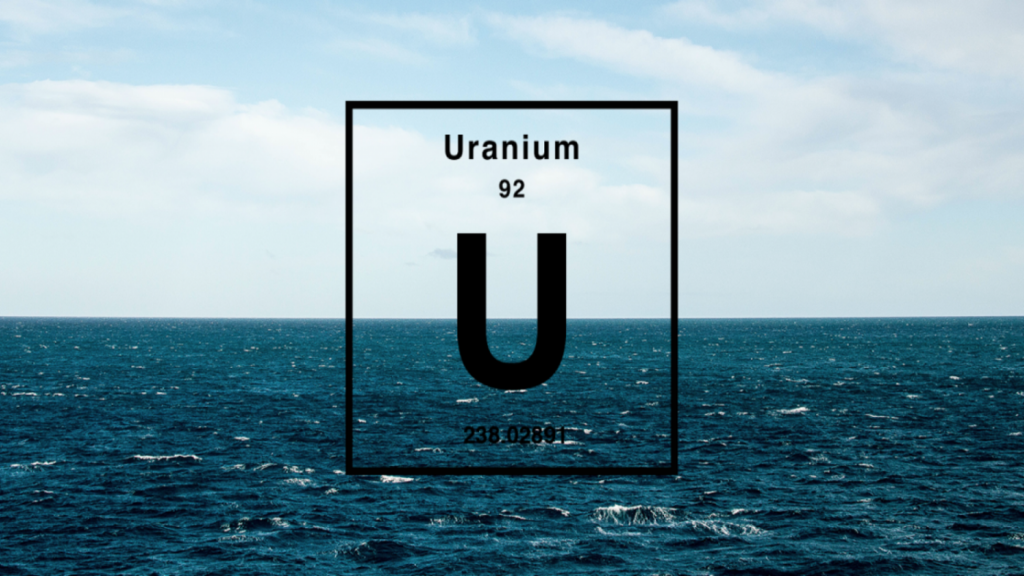
China Achieves Milestone in Seawater Uranium Extraction—Could This Unlock “Unlimited Battery Life” for Nuclear Power?
In a groundbreaking development that could reshape the future of nuclear energy, Chinese scientists have successfully extracted kilogram-level quantities of uranium from seawater under real marine conditions. This achievement, announced through state-linked nuclear institutions, represents a significant leap beyond laboratory experiments and moves the concept closer to practical application.
The Scale of the Oceans: A Vast, Untapped Resource
While seawater contains uranium at an incredibly low concentration of just 0.003 parts per million (ppm), the sheer volume of the world’s oceans means the total uranium content is staggering—far exceeding all known land-based reserves combined. Estimates suggest that seawater holds around 4.5 billion tons of uranium, continuously replenished by natural geological processes. This has made seawater uranium extraction a long-term research focus for scientists worldwide.
A Controlled Demonstration, Not Yet a Commercial Breakthrough
The recent extraction of 1000 grams of uranium from the South China Sea was achieved using a dedicated offshore test platform designed to validate materials under real ocean conditions, including currents, biofouling, and corrosion. Officials described progress in adsorption materials and scale-up experiments, signaling incremental improvements rather than disruptive leaps.
However, several critical questions remain unanswered. No public figures were provided on extraction efficiency, energy return, or projected costs per kilogram—metrics that are central to assessing the feasibility of large-scale operation. Without these, the kilogram figure functions mainly as proof of controlled operation rather than a commercial breakthrough.
The Challenge of Low Concentration and High Costs
Extracting uranium from seawater is technically demanding and energy-intensive due to its extremely low concentration. The process requires repeated deployment, recovery, and chemical processing of absorbent materials, each step carrying energy and maintenance costs. While the oceans offer an immense theoretical resource, translating that into reliable, economical fuel would require breakthroughs not yet shown publicly.
China’s Vision: “Unlimited Battery Life” by 2050
China’s stated ambition to reach what it describes as “unlimited battery life” by 2050 ties to the long-term availability of nuclear fuel rather than short-term technological change. Nuclear power relies on uranium as a primary energy source, and the scale of accessible uranium directly affects how long reactors can operate without supply constraints. If uranium could be extracted from seawater at an industrial scale, nuclear fuel supply would shift from finite terrestrial deposits to a continuously replenished natural resource.
However, international assessments suggest that advanced reactors, recycling, and breeder systems could extend uranium availability even without seawater extraction. Against that backdrop, the seawater effort represents an additional option whose practicality remains unresolved.
The Path Forward: Incremental Progress, Not Disruption
The kilogram extracted marks progress, although its significance depends entirely on whether future data supports claims of sustainable, large-scale operation. This achievement adds valuable data to the global effort but does not resolve the fundamental cost challenge that has long hindered seawater uranium extraction.
As the world watches, the question remains: Can China—or any nation—turn this controlled demonstration into a viable, large-scale solution for nuclear fuel? The answer could determine whether the oceans become the next frontier in energy security.
Tags & Viral Phrases:
- China uranium extraction
- Seawater uranium breakthrough
- Nuclear fuel revolution
- Unlimited battery life
- South China Sea test platform
- Kilogram-scale uranium extraction
- Real marine conditions
- Adsorption materials innovation
- Energy security game-changer
- Nuclear power future
- Low-concentration uranium recovery
- Global uranium reserves
- China’s nuclear ambitions
- Sustainable nuclear fuel
- Breakthrough in nuclear technology
- Seawater as uranium source
- Cost-effective uranium extraction
- Incremental progress in nuclear
- Real-world marine testing
- Proof of concept achieved
,


Leave a Reply
Want to join the discussion?Feel free to contribute!