
4 Smart Home Gadgets Proven To Save You Money
Smart Home Gadgets That Will Save You Serious Money
In today’s world, where every penny counts, smart home technology isn’t just about convenience—it’s about cold, hard cash savings. From detecting leaks before they become disasters to harnessing the power of the sun, these four smart home gadgets have been proven to put money back in your pocket.
1. Smart Water Leak Detectors: Your Home’s Early Warning System
Water damage is one of the most expensive home disasters you can face. A single undetected leak can cost thousands in repairs, not to mention the skyrocketing water bills. Smart water leak detectors are changing that game completely.
These ingenious devices come in various forms—some wrap around pipes like cable sensors, while others sit discreetly under appliances like washing machines and refrigerators. When they detect moisture where it shouldn’t be, they immediately alert your smartphone, allowing you to take action before a small drip becomes a catastrophic flood.
The numbers are staggering. A 2020 study by LexisNexis Risk Solutions found that homes equipped with Flo by Moen Smart Water Shutoff systems experienced up to 96% fewer water leak claims and 72% less severe damage compared to homes without these systems. We’re talking about potential savings of thousands—sometimes tens of thousands—of dollars per incident.
2. Smart Thermostats: The Energy Bill Slasher
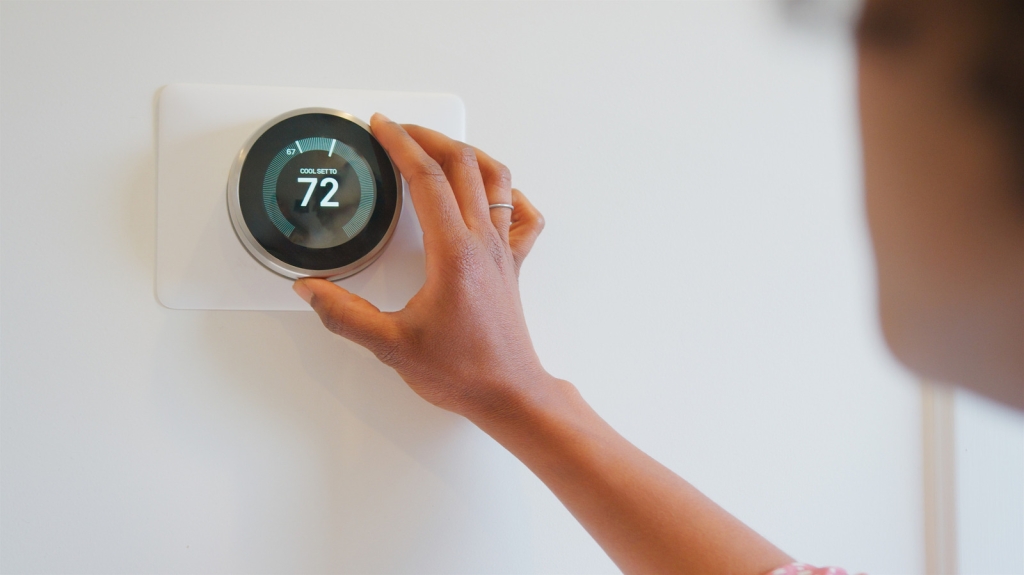
Heating and cooling account for nearly half of the average home’s energy consumption. Smart thermostats are revolutionizing how we manage this massive expense. Take the Google Nest Learning Thermostat, for example—it doesn’t just let you adjust temperatures remotely; it actually learns your household’s patterns and automatically optimizes settings for maximum efficiency.
The results speak for themselves. Google reports that Nest users across 41 U.S. states saved between 10% and 12% on their heating bills. CNET’s testing revealed that Ecobee smart thermostats can save users up to $250 annually—that’s about 26% of average home energy costs.
When shopping for a smart thermostat, look for the Energy Star label. This certification, provided by the U.S. Environmental Protection Agency, guarantees that the product has demonstrated consistent annual savings across American homes.
3. Smart LED Lighting: Bright Ideas for Your Wallet
The shift from incandescent to LED lighting represents one of the most significant energy savings opportunities in modern homes. While LED bulbs cost more upfront—around $6.25 compared to $2.70 for a traditional 60-watt incandescent—they pay for themselves many times over.
Here’s the math: Over a decade of use, including the initial purchase cost, an LED bulb will cost approximately $19.45 to operate (based on 2019 Virginia power rates). That same period would require multiple incandescent bulb replacements, costing around $93 total. The U.S. Department of Energy estimates that LED systems can save the average household about $225 annually in energy bills.
Smart LED lights take this efficiency even further by giving you precise control over brightness, color temperature, and scheduling—all from your smartphone. You’re not just saving energy; you’re customizing your lighting experience while watching your utility bills shrink.
4. Solar Panels: The Ultimate Energy Investment
If you’re serious about slashing your energy costs, solar panels are the gold standard. These photovoltaic systems convert sunlight directly into electricity, potentially eliminating your electric bill entirely. While only 7% of U.S. homeowners have installed solar panels (with another 28% seriously considering it), the financial benefits are undeniable.
The savings potential varies based on your location, but tools like the National Renewable Energy Laboratory’s PVWatts Calculator can give you personalized estimates. EnergySage reports that over a 25-year lifespan, solar panels can save homeowners anywhere from $37,000 to $154,000. Yes, the upfront cost is substantial—around $30,505 before incentives—but this represents one of the highest-return home improvements available.
Why These Four Gadgets Made the Cut
We focused exclusively on devices designed to save money, not just add convenience. Each of these technologies has been rigorously tested and proven to reduce costs through increased efficiency. While individual savings will vary based on your specific situation, the data from trusted sources like the U.S. Department of Energy and industry studies provides a clear picture of their money-saving potential.
The key takeaway? Smart home technology isn’t just about living in the future—it’s about keeping more of your hard-earned money in your pocket today. Whether you start with a simple leak detector or go all-in with solar panels, these investments typically pay for themselves and continue generating savings for years to come.
Tags & Viral Phrases:
- Smart home money hacks
- Slash your energy bills overnight
- Home automation that pays for itself
- The gadgets saving Americans thousands
- Water damage prevention that actually works
- Solar panels: The ultimate home upgrade
- Thermostat technology that learns your habits
- LED lighting: The $225 annual savings secret
- Home tech investments with real ROI
- Energy independence starts here
- The smart home revolution is here
- Stop wasting money on utilities
- Home automation for real people
- Technology that actually saves you cash
- The future of home savings
- Don’t let leaks drain your wallet
- Smart home tech that makes financial sense
- The gadgets your wallet will thank you for
- Home improvements that pay you back
- Energy efficiency made simple
,


Leave a Reply
Want to join the discussion?Feel free to contribute!