
world’s first wheel-legged robot vacuum designed to tackle stairs and multi-level homes · TechNode
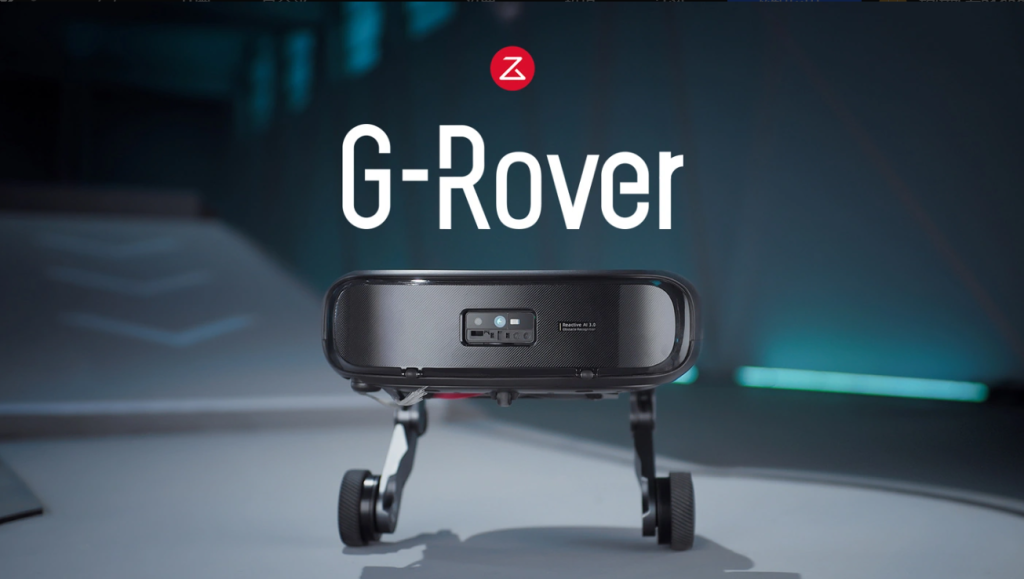
Roborock’s G-Rover Concept: The World’s First Wheel-Legged Robot Vacuum Set to Conquer Stairs and Multi-Level Homes
At CES 2026, Roborock unveiled a groundbreaking concept that could revolutionize home cleaning: the G-Rover, billed as the world’s first wheel-legged robot vacuum. This innovative prototype is designed to tackle one of the most persistent challenges in home robotics—navigating stairs and multi-level homes with ease.
A New Era in Home Cleaning Technology
The G-Rover’s most striking feature is its dual wheel-leg architecture. Unlike traditional robot vacuums that are confined to flat surfaces, the G-Rover’s legs can lift independently and adjust their height dynamically. This allows the robot to climb curved and carpeted staircases autonomously, a feat previously thought impossible for autonomous cleaning devices.
Roborock’s engineers have equipped the G-Rover with advanced AI algorithms and 3D spatial perception technology. These systems work in tandem to enable the robot to assess its environment in real-time, plan its path, and execute complex maneuvers. The result is a robot that can not only climb stairs but also clean each step as it ascends, ensuring no surface is left untouched.
Breaking the 2D Barrier
Traditional robot vacuums operate within a two-dimensional plane, limited by their wheel-based designs. The G-Rover, however, breaks through these constraints with its innovative leg mechanism. Each leg can move independently, allowing the robot to adapt to uneven surfaces, navigate obstacles, and even perform small jumps or sharp turns when necessary.
This whole-body coordinated control system is a significant leap forward in robotics. It enables the G-Rover to maintain dynamic balance while performing complex tasks, such as abrupt stops or navigating tight corners. These capabilities are particularly valuable for multi-storey residences, where conventional robot vacuums often struggle to provide comprehensive cleaning.
The Science Behind the Innovation
The G-Rover’s ability to climb stairs is not just a matter of mechanical design; it’s also a triumph of software engineering. The robot’s AI algorithms are trained to recognize and respond to various stair configurations, from straight flights to spiral designs. The 3D spatial perception system uses a combination of sensors, including cameras and LiDAR, to create a detailed map of the environment.
This mapping capability allows the G-Rover to plan its route in advance, avoiding potential hazards and optimizing its cleaning path. The robot’s ability to clean steps during ascent is particularly noteworthy, as it ensures that every surface is thoroughly cleaned without the need for manual intervention.
A Concept with Real-World Potential
While the G-Rover is currently a concept product, its unveiling at CES 2026 has generated significant excitement in the tech community. Roborock has not yet disclosed any plans for commercialization or pricing, but the potential applications of this technology are vast.
For homeowners with multi-level residences, the G-Rover could eliminate the need for multiple cleaning devices or manual stair cleaning. Its ability to navigate complex environments could also make it a valuable tool in commercial settings, such as hotels or office buildings with multiple floors.
The Future of Home Robotics
The G-Rover represents a significant step forward in the evolution of home robotics. By addressing one of the most challenging aspects of home cleaning—stairs—Roborock has demonstrated the potential for robots to take on increasingly complex tasks.
As AI and robotics technology continue to advance, we can expect to see more innovations like the G-Rover that push the boundaries of what’s possible. Whether it’s cleaning hard-to-reach areas, adapting to unique home layouts, or performing tasks that require a high degree of precision, the future of home robotics is bright.
Conclusion
Roborock’s G-Rover concept is a testament to the power of innovation in addressing real-world challenges. By combining advanced mechanical design with cutting-edge AI and spatial perception technology, the G-Rover has the potential to transform the way we think about home cleaning.
While it remains to be seen whether the G-Rover will make it to market, its unveiling at CES 2026 has certainly set the stage for a new era in home robotics. As we look to the future, one thing is clear: the days of struggling with stairs and multi-level homes may soon be a thing of the past.
Tags:
Roborock, G-Rover, robot vacuum, CES 2026, wheel-legged robot, AI algorithms, 3D spatial perception, multi-level homes, stairs, home cleaning, robotics, innovation, concept device, dynamic balance, whole-body coordinated control, autonomous cleaning, LiDAR, spatial mapping, home robotics, commercial applications, tech innovation, future of cleaning.
Viral Sentences:
- “The G-Rover is set to revolutionize home cleaning by conquering stairs like never before!”
- “Imagine a robot vacuum that can climb stairs and clean steps—Roborock’s G-Rover makes it a reality!”
- “Roborock’s G-Rover: The world’s first wheel-legged robot vacuum is here to tackle multi-level homes!”
- “Say goodbye to manual stair cleaning—G-Rover’s AI and 3D perception are game-changers!”
- “Roborock’s G-Rover concept at CES 2026 is the future of home robotics!”
- “This robot vacuum doesn’t just clean—it climbs, jumps, and navigates like a pro!”
- “The G-Rover’s dual wheel-leg architecture is a breakthrough in robotics technology!”
- “Roborock’s G-Rover: Where innovation meets practicality in home cleaning!”
- “The G-Rover is not just a concept—it’s a glimpse into the future of autonomous cleaning!”
- “Roborock’s G-Rover is the ultimate solution for multi-storey residences!”
,


Leave a Reply
Want to join the discussion?Feel free to contribute!