
A Valentine’s Day homage to Crouching Tiger, Hidden Dragon
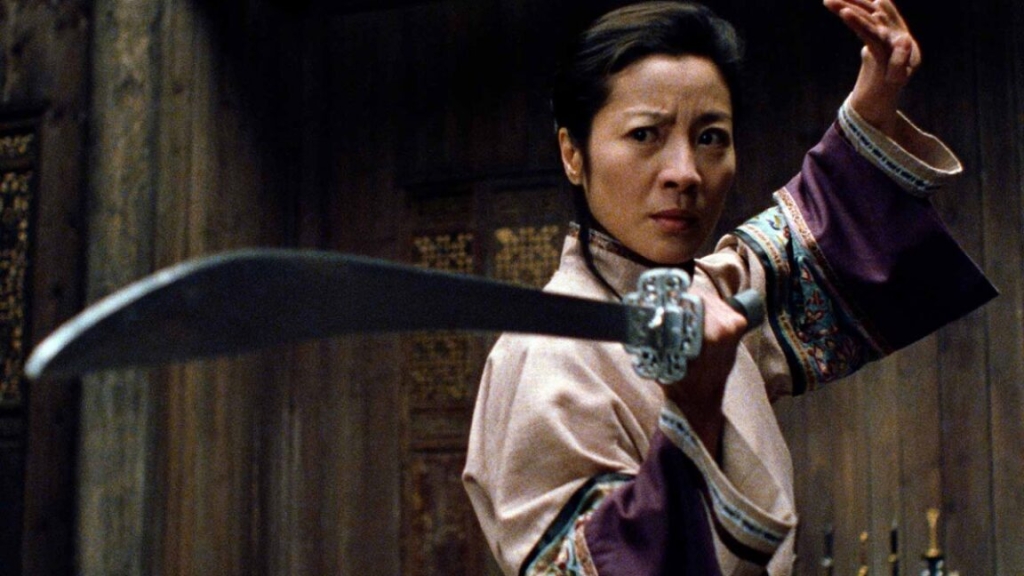
Crouching Tiger, Hidden Dragon: The Martial Arts Masterpiece That Redefined Cinema
In the pantheon of cinematic history, few films have achieved the perfect alchemy of breathtaking action, profound storytelling, and cultural transcendence quite like Ang Lee’s 2000 masterpiece, Crouching Tiger, Hidden Dragon. This isn’t just a movie—it’s a watershed moment that shattered Western perceptions of Asian cinema and proved that martial arts films could be both intellectually stimulating and commercially viable on a global scale.
The Plot That Transcends Time
Set against the backdrop of Qing dynasty China, the film weaves an intricate tapestry of love, betrayal, and destiny. At its heart is the legendary Green Destiny sword, a weapon of unparalleled craftsmanship that becomes the catalyst for a series of events that will change the lives of everyone it touches.
The narrative centers on Li Mu Bai (Chow Yun-fat), a legendary warrior who has renounced violence and seeks spiritual enlightenment. His longtime companion, Shu Lien (Michelle Yeoh), harbors unspoken feelings for him, constrained by respect for her deceased fiancé. Their emotional restraint forms one of the film’s most poignant undercurrents.
But the true emotional core lies with Jen (Zhang Ziyi), a young woman trapped between duty and desire. Trained in secret martial arts by the cunning Jade Fox, Jen is engaged in an arranged marriage she dreads—primarily because her heart belongs to Lo “Dark Cloud” Xiao Hou (Chang Chen), a charismatic desert bandit. Their relationship embodies the film’s central metaphor: Jen as the dynamic yang (the hidden dragon) and Lo as the unchanging yin (the tiger).
The Action That Redefined Physics
What makes Crouching Tiger, Hidden Dragon revolutionary isn’t just its story—it’s the way that story is told through action. The film’s fight choreography, orchestrated by the legendary Yuen Woo-ping (who would later work on The Matrix), elevates martial arts to balletic poetry.
The bamboo forest sequence alone has become the stuff of legend. Watching Li Mu Bai pursue Jen across swaying treetops, defying gravity with every leap and bound, audiences experienced something unprecedented: martial arts as aerial dance. The wire work is so seamless that you forget it’s wire work—you simply accept that these warriors can fly.
Then there’s the iconic battle between Jen and Shu Lien, a masterclass in weapon choreography that transforms combat into conversation. Every parry, thrust, and counter tells us something about the characters’ relationship and their conflicting philosophies.
The Cultural Impact That Echoes Still
When Crouching Tiger, Hidden Dragon premiered, it wasn’t just a hit—it was a phenomenon. It became the highest-grossing foreign-language film in American history, earned ten Academy Award nominations (winning four, including Best Foreign Language Film), and introduced Western audiences to the wuxia genre in a way that hadn’t been seen since Bruce Lee’s heyday.
The film’s success opened doors for Asian cinema globally. Suddenly, directors like Zhang Yimou (Hero, House of Flying Daggers) and John Woo (Red Cliff) found international audiences eager for their work. It proved that subtitled films could achieve mainstream success and that stories rooted in Chinese culture could resonate universally.
The Tragic Beauty of Its Conclusion
Without spoiling too much for the uninitiated, the film’s ending is as devastating as it is beautiful. The deaths of key characters aren’t just plot points—they’re meditations on the nature of love, sacrifice, and the choices that define us.
Jen’s final leap from Mount Wudang remains one of cinema’s most haunting images. Is it suicide? Transcendence? A wish fulfilled? The ambiguity is intentional, leaving viewers to ponder the nature of legend and the price of freedom.
Why It Still Matters Today
Two decades later, Crouching Tiger, Hidden Dragon continues to influence filmmakers and captivate audiences. Its themes of duty versus desire, tradition versus freedom, and the burden of legacy remain as relevant today as they were in 2000.
The film also represents a perfect synthesis of East and West—Ang Lee’s Taiwanese heritage combined with Hollywood sensibilities created something truly global. It’s a reminder that the best art transcends borders and speaks to the universal human experience.
In an era of CGI-heavy blockbusters and formulaic storytelling, Crouching Tiger, Hidden Dragon stands as a testament to the power of practical effects, emotional authenticity, and visual poetry. It’s not just a great martial arts film—it’s one of the greatest films ever made, period.
Whether you’re a longtime fan or discovering it for the first time, this masterpiece continues to soar, reminding us that sometimes the most profound stories are those that teach us how to fly.
Tags: #CrouchingTigerHiddenDragon #AngLee #MartialArtsCinema #Wuxia #MichelleYeoh #ZhangZiyi #ChowYunFat #CulturalPhenomenon #OscarWinner #FilmHistory #ActionChoreography #BambooForestSequence #GreenDestiny #ChineseCinema #GlobalCinema #TimelessClassic #EpicRomance #TragicLoveStory #LegendaryFilm
Viral Phrases: “The film that made martial arts fly”, “When wire work becomes poetry”, “The sword that changed cinema”, “Love that defies gravity”, “A masterpiece that transcends borders”, “The hidden dragon that roared globally”, “Where action meets philosophy”, “The movie that proved subtitles sell”, “A leap of faith that became legend”, “The film that redefined what’s possible”
,

Leave a Reply
Want to join the discussion?Feel free to contribute!