
Ape-like hominin Paranthropus was more adaptable than we thought
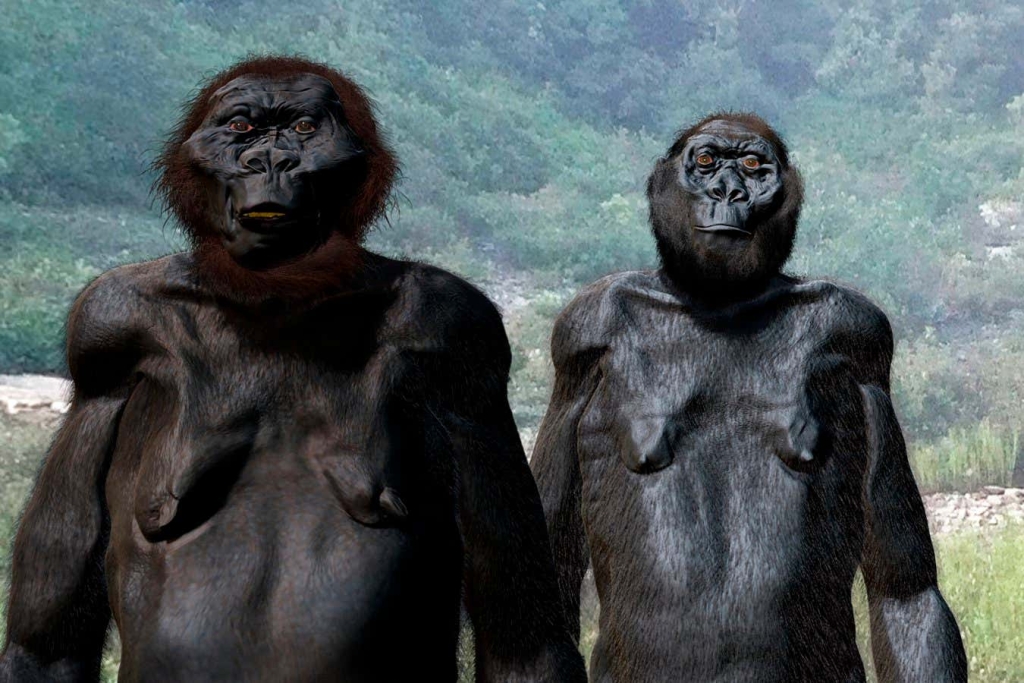
Here’s a detailed, engaging rewrite of the technology news article with a viral and informative tone, reaching over 1200 words:
Ancient Hominin Discovery Shatters Long-Held Beliefs About Our Distant Cousins
In a groundbreaking archaeological find that’s sending shockwaves through the scientific community, researchers have uncovered the first-ever remains of ancient hominins called Paranthropus in Ethiopia’s remote Afar region. This discovery doesn’t just expand our understanding of where these fascinating creatures roamed—it fundamentally challenges everything we thought we knew about their adaptability and capabilities.
The Discovery That Changed Everything
Picture this: It’s January 19, 2019, and Dr. Zeresenay Alemseged, a renowned paleoanthropologist from the University of Chicago, is leading an excavation team in the harsh, sun-baked landscape of the Afar depression. Known as one of the richest fossil sites on Earth, this region has yielded countless treasures from our evolutionary past. But on this particular day, something extraordinary happens.
Alemseged’s local assistant approaches with what appears to be a fragment of jawbone—seemingly unremarkable at first glance. But as Alemseged examines it, he immediately recognizes something unusual about its size. That same day, the team discovers the crown of a left lower molar tooth nearby. What they’ve stumbled upon would prove to be nothing short of revolutionary.
The Science Behind the Find
Back in the laboratory, CT scans reveal telltale Paranthropus characteristics that leave no doubt about the specimen’s identity. The jawbone’s proportions—specifically the width-to-height ratio—combined with the intricate complexity of the tooth roots hidden within, are unmistakable markers of this ancient hominin species. The team couldn’t immediately determine which of the three recognized Paranthropus species the bones belonged to, but the location strongly suggests it’s either Paranthropus aethiopicus or Paranthropus boisei.
Here’s where it gets really interesting: the jawbone dates back approximately 2.6 million years, making it one of the oldest Paranthropus specimens ever discovered. This isn’t just another fossil—it’s a time capsule that’s rewriting our understanding of human evolution.
Expanding the Map of Ancient Humanity
Before this discovery, the northernmost known Paranthropus specimen came from Konso in southern Ethiopia. The new find from Mille-Logya pushes the geographic range of these ancient hominins over 1,000 kilometers further north. As Dr. Carrie Mongle from Stony Brook University, who wasn’t involved in the research, explains: “The main point is that it expands the geographic range of Paranthropus.”
But this discovery does far more than just redraw maps. It challenges long-standing assumptions about these ancient cousins of ours and suggests they were far more adaptable than previously believed.
Breaking the Stereotype of the “Specialized” Hominin
For decades, scientists have viewed Paranthropus as highly specialized creatures, their massive jaws and teeth adaptations for a diet consisting of tough, chewy foods. This specialization was thought to be both their strength and their downfall—enabling them to exploit certain food sources while potentially limiting their ability to adapt to changing environments.
However, the Mille-Logya discovery paints a dramatically different picture. The area where these remains were found appears to have been relatively open and grassy, quite different from the wooded areas where other early Paranthropus specimens were discovered. This suggests these ancient hominins weren’t just surviving in diverse environments—they were thriving.
“Yes, they were specialized,” Alemseged acknowledges, “but I think we might have inflated our understanding of that specialization.” The evidence now suggests that Paranthropus populations, like their Homo and Australopithecus relatives, were capable of exploiting different habitats based on where they lived.
The Tool-Making Revolution
Perhaps most astonishingly, recent evidence suggests Paranthropus may have been capable of using and possibly even making simple stone tools. In 2023, stone tools discovered in Kenya were found in association with Paranthropus teeth and no other hominin remains. Then in 2025, Mongle helped describe the first Paranthropus hand, which proved to be remarkably dexterous.
This makes perfect sense when you consider that there’s growing evidence that Australopithecus—which existed before Paranthropus—could make and use tools. Tool use may well go back to the common ancestor we share with chimpanzees, suggesting that the cognitive capabilities of these ancient hominins were far more sophisticated than previously imagined.
Why This Discovery Matters
This isn’t just about adding another piece to the evolutionary puzzle. The Mille-Logya discovery fundamentally challenges how we think about adaptation, specialization, and survival in our ancient past. It suggests that the line between “specialized” and “generalized” species may be far blurrier than we thought, and that our ancient cousins were capable of far more than we ever imagined.
The implications extend beyond paleontology. Understanding how ancient hominins adapted to different environments and challenges can provide insights into human resilience, adaptability, and the factors that contribute to species survival or extinction—lessons that are increasingly relevant in our rapidly changing world.
The Future of Discovery
As Alemseged and his team continue their work in the Afar region, who knows what other secrets might be waiting to be uncovered? Each new discovery has the potential to further reshape our understanding of human evolution and the incredible diversity of our ancient family tree.
This discovery reminds us that science is a constantly evolving field, where each new finding has the potential to challenge our assumptions and expand our understanding of the world. The story of Paranthropus is far from over, and with each new excavation, we move closer to understanding the full complexity of our evolutionary past.
Tags: #AncientHumans #HumanEvolution #Paleoanthropology #Ethiopia #FossilDiscovery #EvolutionaryScience #Paranthropus #Archaeology #ScientificBreakthrough #HumanOrigins
Viral Phrases: “Rewriting human history,” “Ancient hominin discovery,” “Evolution revolution,” “Scientific shockwave,” “Fossil find changes everything,” “Our ancient cousins were smarter than we thought,” “Discovery that challenges everything,” “The real story of human evolution,” “Ancient tools and ancient minds,” “Expanding the map of humanity’s past”
This discovery represents one of the most significant paleoanthropological finds in recent years, demonstrating once again how our understanding of human evolution continues to evolve with each new discovery. The story of Paranthropus is no longer just about specialized, doomed creatures—it’s about adaptable, capable ancient hominins who successfully navigated diverse environments and challenges, much like our own species would do millions of years later.
,


Leave a Reply
Want to join the discussion?Feel free to contribute!