
What if riders don’t close a robotaxi door after a ride? Try DoorDash.
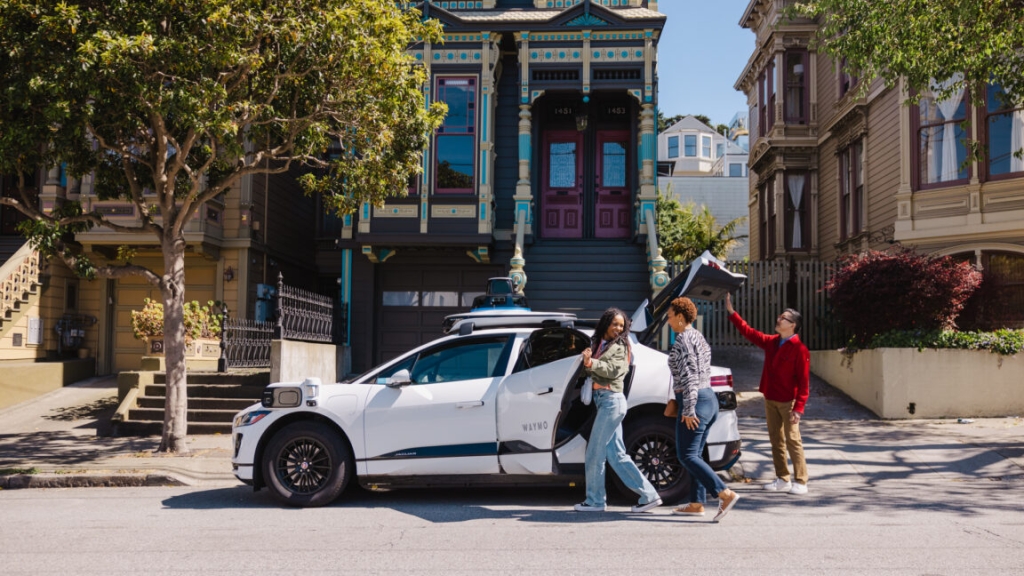
Waymo’s Next-Gen Driver Gets Smarter, But Still Can’t Close Your Door
In the fast-evolving world of autonomous vehicles, progress often comes in small but significant steps. Waymo, the Alphabet-owned leader in self-driving technology, is once again pushing the envelope with its latest hardware upgrade—but even the most advanced robotaxi still has its limitations.
Autonomous vehicles promise a future free from human error: no speeding, no reckless driving, no distractions, and certainly no DUIs. And while the technology has matured considerably, the road to widespread adoption has been anything but smooth. The initial hype has cooled, and several high-profile startups have shuttered operations, unable to turn a profit. General Motors, for example, recently pulled the plug on its Cruise division after a series of setbacks, marking a sobering moment for the industry.
Yet Waymo continues to charge ahead. The company now operates commercially in six U.S. cities—Phoenix, San Francisco, Los Angeles, Austin, Atlanta, and Miami—with plans to expand to a dozen more cities plus London in the near future. In Phoenix and San Francisco, Waymo vehicles can even navigate to and from airports, offering a glimpse into a future where autonomous rides are as commonplace as hailing an Uber.
Now, Waymo is preparing to roll out its sixth-generation “Waymo Driver,” the AI-powered system that controls its fleet. This new iteration will be deployed in Zeekr Oravida minivans, complementing the Jaguar I-Pace SUVs already roaming San Francisco streets and the Hyundai Ioniq 5 EVs in other markets.
The upgrades are more than skin-deep. Waymo has significantly enhanced its sensor suite—upgraded cameras, lidar, and radar now allow the vehicles to better perceive their surroundings, especially at night and in bad weather. There’s even a new microphone system designed to detect emergency vehicle sirens, helping the car determine the direction of approaching first responders.
These improvements represent years of refinement since Waymo’s early days. The company’s first public prototype was a pod-like two-seater that hit the roads in 2015, predating even the Waymo brand itself, which spun out of Google’s self-driving car project in 2016. Since then, the technology has grown exponentially more capable—but not without limitations.
Despite all the sophisticated hardware and software, there remains at least one task that continues to stump even the smartest autonomous vehicle: closing a door left ajar by a departing passenger. It’s a seemingly trivial issue, but in the world of robotics, it’s a reminder that not everything is within reach—yet. All the sensors, algorithms, and computing power in the world can’t help if the car can’t move until the door is shut and there’s no human around to lend a hand.
This quirk highlights an ongoing challenge in the field: while autonomous vehicles excel at navigating complex traffic environments, they still struggle with the small, unpredictable interactions that humans handle effortlessly. For now, that means a human safety driver or roadside assistance may still be needed to resolve such minor but critical issues.
Still, Waymo’s relentless innovation keeps the dream of a fully driverless future alive. With each generation, the Waymo Driver gets closer to mastering the chaos of the real world—even if it can’t yet close a door.
Tags: Waymo, autonomous vehicles, self-driving cars, robotaxis, Zeekr Oravida, Jaguar I-Pace, Hyundai Ioniq 5, lidar, radar, AI, Alphabet, Cruise, GM, San Francisco, Phoenix, London, future of transportation, driverless technology, transportation innovation, tech news
Viral Sentences:
- Waymo’s next-gen Driver can detect sirens—but still can’t close your door.
- The future of self-driving cars is here, but it still needs a human to shut the door.
- Waymo expands to new cities as it unveils its most advanced robotaxi yet.
- From pod-like prototypes to airport pickups—Waymo’s journey is just getting started.
- Even the smartest AI can’t fix a door left open. Yet.
- Waymo’s sixth-gen Driver: smarter sensors, better night vision, same door problem.
- The robotaxi revolution is coming—one open door at a time.
- Waymo leads the autonomous race, but humans still have the edge in door-closing.
- Autonomous vehicles are getting smarter, but some tasks remain stubbornly human.
- Waymo’s latest upgrade brings us one step closer to a driverless future—almost.
,

Leave a Reply
Want to join the discussion?Feel free to contribute!