
Shares jump for Chinese AI start-up Zhipu after GLM-5 launch
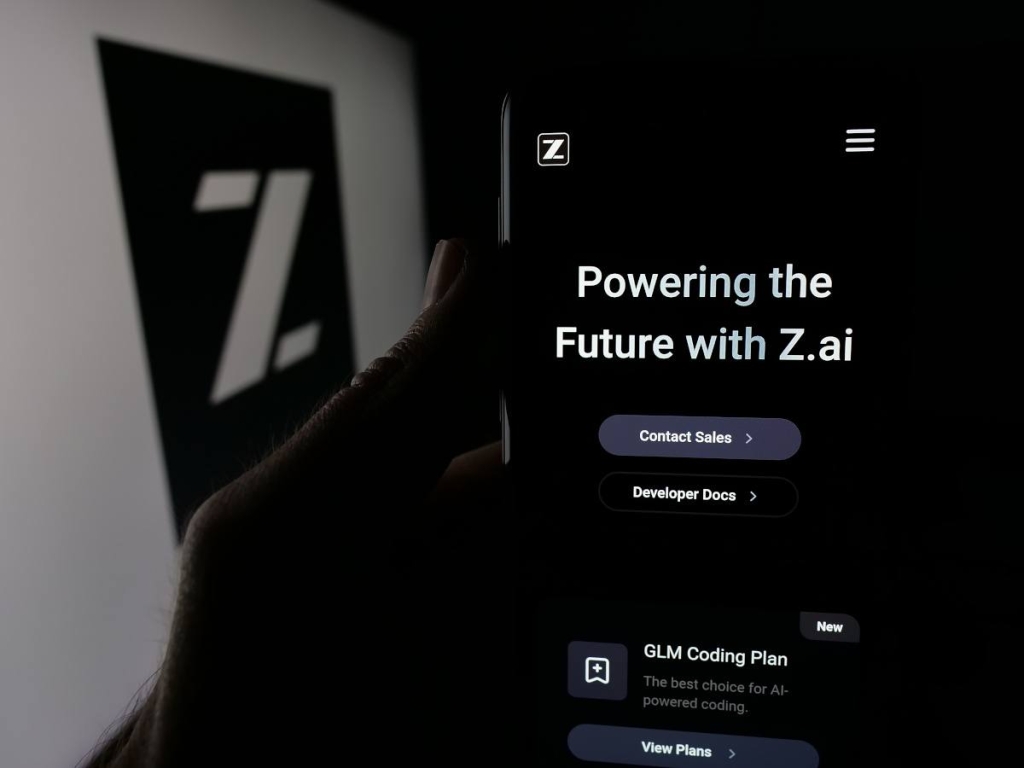
China’s AI Revolution: Zhipu’s GLM-5 Launches with Huawei Chips, Igniting Tech War
In a bold technological statement that could reshape the global AI landscape, Chinese startup Zhipu AI has unveiled its fifth-generation large language model, GLM-5, marking what industry observers are calling a “generational leap in AI capability.” The launch, which sent Zhipu’s shares soaring by as much as 34%, represents more than just another model release—it’s a declaration of technological independence that could have far-reaching implications for the future of artificial intelligence.
The Hardware Revolution Behind the Software
What makes GLM-5 truly remarkable isn’t just its impressive specifications—though they are certainly noteworthy. With approximately 745 billion total parameters and 44 billion active parameters per inference, GLM-5 sits comfortably alongside industry heavyweights like OpenAI’s GPT-5.2 and Anthropic’s Claude Opus 4.5. But the real story lies in how it was built.
For the first time, a major AI model of this scale has been trained entirely using Chinese-made hardware. Every single computation that went into training GLM-5 was performed on Huawei Ascend chips, representing a complete break from the US-dominated semiconductor supply chain that has long been the backbone of advanced AI development.
“This isn’t just about creating another competitive model,” explains Dr. Wei Zhang, an AI infrastructure analyst at Beijing’s Tsinghua University. “This is about proving that China can build frontier AI systems without relying on American technology. It’s a proof of concept for technological sovereignty.”
Agentic Intelligence: The Next Frontier
GLM-5 isn’t just another language model—it’s engineered specifically for what Zhipu calls “agentic intelligence.” This means the model is designed to handle multi-step reasoning, complex problem-solving, and autonomous decision-making in ways that go beyond simple text generation.
The agentic capabilities of GLM-5 are particularly evident in its coding performance. Zhipu has positioned GLM-5 as a direct competitor to tools like Anthropic’s Claude Code, though with a crucial difference: Claude Code isn’t available in China due to regulatory restrictions. This gives GLM-5 a significant first-mover advantage in the world’s largest developer market.
Early benchmarks suggest GLM-5 excels at tasks requiring sustained logical reasoning and creative problem-solving. In coding challenges, the model demonstrates an ability to understand complex requirements, break them down into manageable components, and generate working solutions with minimal human intervention.
The Competitive Landscape Heats Up
Zhipu’s launch comes at a particularly interesting moment in the Chinese AI ecosystem. Just days earlier, rival company MiniMax unveiled its updated M2.5 model, sending its share price up 13%. Meanwhile, Alibaba-backed Moonshot AI recently launched Kimi K2.5, which GLM-5 has reportedly surpassed in various benchmark ratings.
This flurry of activity suggests we’re witnessing the emergence of a genuinely competitive AI market in China, one that’s developing largely independently of Western tech giants. The timing is particularly significant given the ongoing tensions between the US and China over technology transfer and semiconductor exports.
“Chinese AI companies are no longer just trying to catch up to Western models,” notes technology analyst Michael Chen. “They’re building their own ecosystem with distinct advantages and characteristics. The question isn’t whether they can compete—it’s whether they’ll develop capabilities that the West hasn’t even considered yet.”
The Business Model Evolution
Perhaps most tellingly, Zhipu has used GLM-5’s launch to implement a 30% price increase on its GLM Coding Plan. This move suggests confidence in the model’s capabilities and hints at a maturing market where premium AI services can command premium prices.
The pricing strategy also reflects a broader trend in the Chinese AI market: companies are increasingly willing to monetize their models directly rather than relying solely on government contracts or venture capital funding. This shift toward sustainable business models could prove crucial for long-term competitiveness.
Investment Frenzy and Market Validation
The market’s enthusiastic response to GLM-5—with shares jumping as much as 34%—reflects broader investor confidence in China’s AI sector. This enthusiasm is backed by substantial capital inflows. Last December, Zhipu announced a $560 million share sale, while MiniMax raised approximately $619 million in its recent public offering.
Even more striking are the valuations being placed on these companies. Moonshot AI reportedly raised $500 million from investors including Alibaba and IDG, seeking a valuation of up to $4.3 billion. These figures suggest that investors see Chinese AI companies not as copycats but as genuine innovators with the potential for significant returns.
The DeepSeek Wildcard
Looking ahead, all eyes are on DeepSeek, another major Chinese AI player expected to release its V4 model later this month. According to reports, DeepSeek’s new offering could outperform rivals like ChatGPT and Claude, particularly on tasks involving long coding prompts.
If DeepSeek’s V4 lives up to the hype, it could signal that China’s AI ecosystem is maturing faster than many Western observers anticipated. The simultaneous development of multiple competitive models suggests a level of innovation and investment that could soon make China a true peer competitor to Silicon Valley in AI development.
Geopolitical Implications
Beyond the technical achievements and market dynamics, GLM-5’s launch carries significant geopolitical weight. In an era of increasing technological decoupling between the US and China, the ability to develop cutting-edge AI systems using domestic hardware represents a major strategic advantage.
“This is about more than just economics,” argues Professor Li Na of Fudan University’s International Relations Department. “It’s about technological sovereignty. China is demonstrating that it can build the AI systems of the future on its own terms, using its own infrastructure.”
The implications extend far beyond China’s borders. As other nations watch Beijing’s success with domestic AI development, we may see a broader trend toward technological nationalism, with countries seeking to build their own AI capabilities rather than relying on American or Chinese models.
Looking Forward: The Road Ahead
As impressive as GLM-5 is, it’s important to remember that the AI field moves at breakneck speed. What’s cutting-edge today may be obsolete tomorrow. The real question is whether China’s AI ecosystem can maintain this pace of innovation while building the kind of sustainable, self-reliant infrastructure that GLM-5 represents.
The next few months will be crucial. DeepSeek’s V4 launch, potential responses from Western companies, and the evolution of China’s domestic AI market will all shape the trajectory of this technological competition. One thing is certain: the AI race has entered a new, more complex phase where technological prowess, business acumen, and geopolitical strategy are all equally important.
For now, Zhipu’s GLM-5 stands as a powerful symbol of what’s possible when technological ambition meets national purpose. Whether it represents the beginning of a new era of Chinese technological leadership or just another milestone in an ongoing competition remains to be seen. But one thing is clear: the world of AI will never be the same.
Tags: China AI breakthrough, Zhipu GLM-5 launch, Huawei Ascend chips, agentic intelligence, Chinese tech independence, AI semiconductor revolution, DeepSeek V4 anticipation, Moonshot AI competition, MiniMax M2.5, technological sovereignty, US-China tech war, AI market evolution, domestic AI infrastructure, large language model innovation, coding AI advancement
Viral Sentences:
Zhipu’s GLM-5 trained entirely on Chinese-made chips, breaking US tech dependence forever.
34% share surge proves investors betting big on China’s AI future.
Huawei Ascend chips power the next generation of intelligent agents.
China’s AI ecosystem now rivals Silicon Valley’s best, but with home-grown tech.
GLM-5 represents more than a model—it’s a statement of technological independence.
The race for agentic AI supremacy heats up with Zhipu’s bold move.
Chinese startups raising billions prove the AI gold rush is global.
DeepSeek’s V4 could be the model that changes everything in AI competition.
Coding capabilities reach new heights as GLM-5 challenges Western dominance.
China proves it can build frontier AI without American semiconductors.
The future of AI might be written in Chinese code, powered by Chinese chips.
Investors see China’s AI sector not as copycats but as genuine innovators.
Technological sovereignty becomes reality as GLM-5 launches without US hardware.
The AI arms race enters a new phase of domestic capability building.
China’s AI revolution is happening now, and the world is watching closely.
,

Leave a Reply
Want to join the discussion?Feel free to contribute!