
Octopuses prompt rethink of why animals evolve big brains
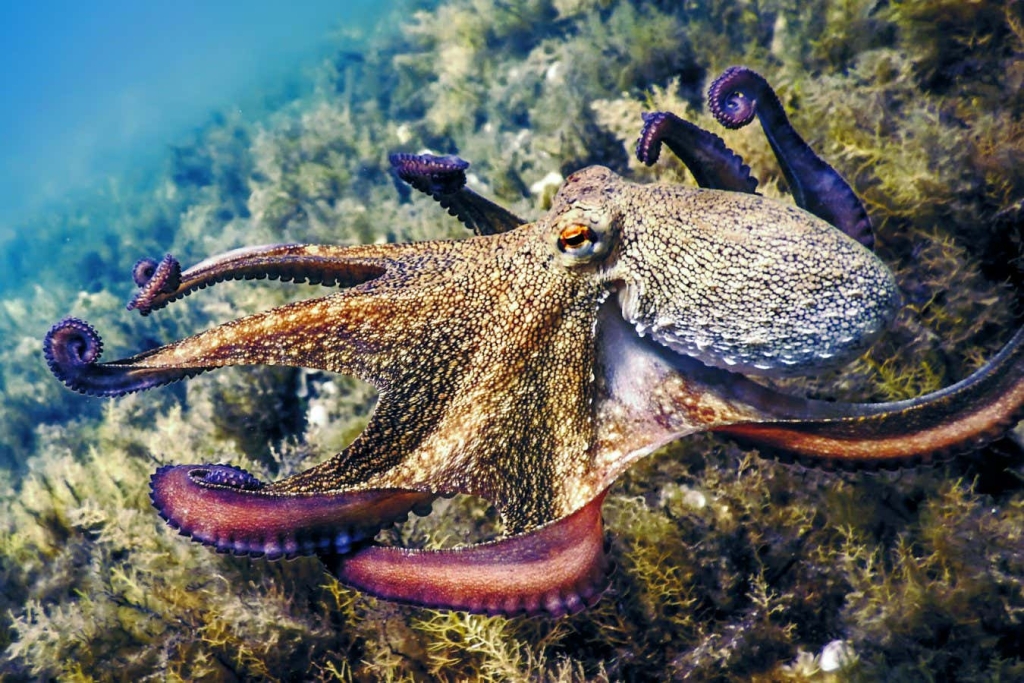
Octopuses May Have Evolved Massive Brains for the Environment, Not Social Life
By Tech Insight Daily Staff • January 20, 2026
In a groundbreaking study that challenges long-held assumptions about brain evolution, researchers have discovered that octopuses and their cephalopod relatives may have developed their famously large brains not because of social complexity, but due to the demands of their physical environments.
The research, led by Michael Muthukrishna at the London School of Economics, examined data from 79 cephalopod species and found no correlation between brain size and social behavior—a finding that upends the widely accepted “social brain hypothesis” that has dominated neuroscience for decades.
“What could be more different from humans than this kind of alien species on our planet, with its wacky multi-appendage brain with arms?” Muthukrishna remarked, highlighting the unique nature of cephalopod neurology. Unlike mammals with centralized brains, octopuses possess nine brains total: one central brain and eight smaller semi-independent ones in each arm.
The study revealed that cephalopods living in shallower, seafloor habitats tend to have significantly larger brains compared to their deep-sea counterparts. These environments offer greater diversity of objects to manipulate, potential tools to use, and richer calorie sources. The research team even documented octopuses using coconut shells as portable shelters—demonstrating sophisticated problem-solving abilities.
“This relationship is quite robust,” Muthukrishna stated, though he cautioned that brain data exists for only about 10% of the 800 known cephalopod species, making the findings preliminary.
Robin Dunbar, the University of Oxford researcher who originally proposed the social brain hypothesis, acknowledged the results weren’t entirely surprising. “It’s interesting that there’s no social brain effect in octopuses, but it is not surprising,” he said. “As octopuses don’t live in coherent social groups, their brains don’t need to do the additional work that entails.”
The findings support what Muthukrishna calls the “cultural brain hypothesis”—the idea that environmental pressures and information processing demands, rather than purely social factors, drive brain evolution. This pattern appears consistent across vastly different species, from whales and dolphins to humans and now cephalopods, despite their evolutionary divergence over 500 million years ago.
Paul Katz from the University of Massachusetts Amherst noted the complexity of drawing conclusions about ancient evolutionary pressures. “It’s like every time you see animal species that get stuck on islands, they get smaller. There’s an island phenomenon, so there could be a deep-sea phenomenon, too,” he explained, suggesting that deep-sea environments might naturally select for smaller brains.
The research also highlights the energy demands of maintaining large brains. Dunbar emphasized that “you can’t increase the size of your brain unless you solve the energy problem. Once you’ve got the big brain in place, you can use it for many different things.”
This discovery has profound implications for our understanding of intelligence and brain evolution. It suggests that complex cognition can arise from environmental challenges rather than social ones, opening new avenues for studying intelligence across the animal kingdom—and perhaps even in artificial systems.
As we continue to unravel the mysteries of cephalopod intelligence, one thing becomes clear: these remarkable creatures may hold the key to understanding alternative paths to cognitive complexity in nature.
Tags: octopus intelligence, cephalopod brains, social brain hypothesis, environmental evolution, marine biology breakthrough, deep-sea adaptation, animal cognition, neuroscience revolution, evolutionary biology, underwater intelligence, brain size correlation, tool-using octopuses, cultural brain hypothesis, marine neuroscience, evolutionary mystery solved
Viral Sentences: Octopuses have nine brains and use coconut shells as tools. Cephalopods evolved massive brains for the environment, not social life. The social brain hypothesis just got debunked by alien-like sea creatures. Deep-sea octopuses have smaller brains—island effect in the ocean? Octopuses challenge everything we thought we knew about intelligence. Nine brains, eight arms, zero social skills—yet genius-level problem solving. Environmental complexity, not social drama, built the octopus mind. These underwater aliens evolved intelligence on a completely different path than humans. The octopus brain revolution: it’s not about who you know, it’s about where you live.
,


Leave a Reply
Want to join the discussion?Feel free to contribute!