
Scientists investigate ‘dark oxygen’ in deep-sea mining zone
Scientists Return to the Abyss to Unravel the Mystery of “Dark Oxygen”
In a groundbreaking expedition that could reshape our understanding of deep-sea ecosystems and the future of resource extraction, researchers are plunging once again into the inky depths of the Pacific Ocean to investigate a phenomenon that has stunned the scientific community and ignited fierce debate over the ethics of deep-sea mining.
Last year, a team led by Andrew Sweetman of the Scottish Association for Marine Science made a discovery that defied conventional wisdom: metallic nodules scattered across the abyssal plains of the Pacific and Indian Oceans were producing oxygen—without sunlight, without photosynthesis, and in complete darkness. This revelation, dubbed “dark oxygen,” challenges fundamental assumptions about how life-sustaining elements are generated in Earth’s most remote environments.
The Unexpected Discovery That Shook Oceanography
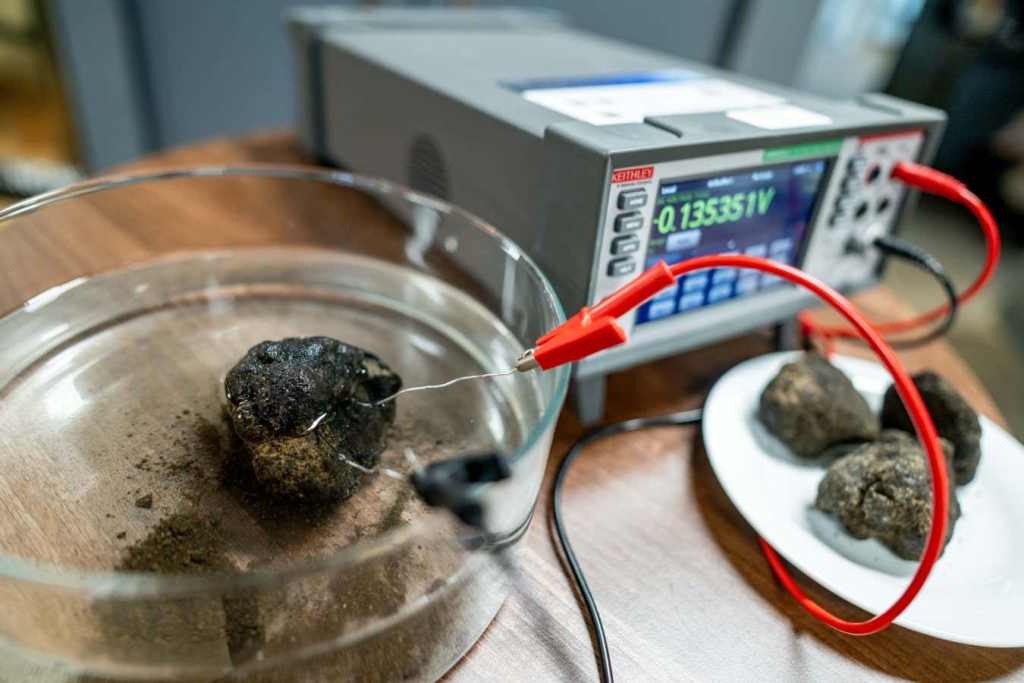
Imagine descending thousands of meters into the ocean’s midnight zone, where sunlight never penetrates and pressure could crush a submarine like a soda can. In this alien world, scientists found something extraordinary: potato-sized metallic nodules were acting like natural batteries, generating enough electrical current to split seawater molecules and release oxygen.
“We were completely shocked,” Sweetman admitted at a recent press briefing. “The idea that oxygen could be produced in complete darkness, where we thought only consumption occurred, turned our understanding of deep-sea chemistry upside down.”
The implications are staggering. If these nodules are indeed producing oxygen in the abyss, they could be supporting entire ecosystems of creatures adapted to perpetual darkness—from microscopic microbes to bizarre deep-sea cucumbers and carnivorous anemones that drift through the black water like ghostly flowers.
The Controversy That Follows Discovery
But not everyone is celebrating this scientific breakthrough. The discovery has thrown a wrench into the plans of deep-sea mining companies eager to vacuum up these valuable nodules from the seafloor. Rich in cobalt, nickel, and manganese—essential metals for electric vehicle batteries and renewable energy technologies—these nodules represent a potential treasure trove worth billions.
The Canadian firm The Metals Company has already applied to the US government for permits to begin extraction operations, and former President Donald Trump pushed aggressively for deep-sea mining to commence. However, Sweetman’s findings suggest that removing these nodules could devastate unique ecosystems that depend on the oxygen they produce.
“The commercial interest to try to silence this area of work is definitely there,” Sweetman acknowledged, referring to the fierce pushback from mining interests. “But we have a responsibility to understand what we’re potentially destroying before we destroy it.”
The Scientific Mission: Probing the Abyss
Now, Sweetman and his international team are returning to the Clarion-Clipperton Zone, the most promising area for deep-sea mining and the site of their initial discovery. Armed with sophisticated landers—essentially high-tech metal frames packed with instruments—they’ll descend to depths of up to 10,000 meters to measure oxygen production, pH levels, and electrical currents with unprecedented precision.
Their hypothesis is both elegant and revolutionary: the layered metals within each nodule—primarily manganese and iron—may be generating electric currents of up to 0.95 volts, nearly enough to split water molecules through electrolysis. While this falls short of the theoretical 1.23 volts typically required, the researchers believe that individual nodules or clusters working together could generate sufficient voltage.
“We’re essentially looking at nature’s batteries operating at the bottom of the ocean,” explained Franz Geiger of Northwestern University. “The question is whether this process can occur under the extreme pressures found at these depths—pressures that would implode a submarine like the Titan.”
The Microbial Mystery
Adding another layer of complexity, each nodule harbors up to 100 million microbes, creating miniature ecosystems within the metallic spheres. The team will use DNA and RNA sequencing, along with fluorescence microscopy, to identify these organisms and determine whether they’re actively participating in the oxygen production process.
“The vast diversity of these microbes remains a moving target,” said Jeff Marlow of Boston University. “We’re constantly discovering new species. Are they merely passengers, or are they actively shaping their environment in ways we don’t yet understand?”
The Pressure Challenge
To test their theories, the researchers will recreate abyssal conditions in a high-pressure reactor capable of simulating 400 atmospheres of pressure—the same crushing force that doomed the Titan submersible. This will allow them to observe electrolysis reactions under realistic deep-sea conditions and determine whether the process can occur at such extreme pressures.
“The ultimate goal is to run the electrochemical reaction under an electron microscope while keeping the microbes alive,” Geiger revealed. “That’s an enormous technical challenge, but it’s essential if we want to understand the full picture.”
The Political and Environmental Stakes
While the United Nations’ International Seabed Authority has yet to rule on whether deep-sea mining should be permitted in international waters, the debate has intensified. Environmental groups argue that the potential ecological damage could be catastrophic and irreversible, while mining companies insist that extracting these metals from the ocean floor is more environmentally friendly than terrestrial mining operations.
Sweetman’s team has already addressed some of the criticisms leveled by The Metals Company, submitting a detailed rebuttal to Nature Geosciences that demonstrates how water oxidation can occur at the lower voltages measured on the nodules. They’ve also shown that their landers effectively flush out any surface air during descent, and that oxygen production has been consistently observed across dozens of experiments in the Clarion-Clipperton Zone.
Why This Matters for Humanity
This research transcends academic curiosity. The metals contained in these nodules are critical for the transition to clean energy technologies. Electric vehicle batteries, wind turbines, and solar panels all require cobalt, nickel, and manganese—metals that are currently concentrated in a few geopolitically sensitive regions on land.
However, the discovery of dark oxygen raises profound questions about our responsibility to protect ecosystems we’re only beginning to understand. If these nodules are indeed supporting life in the abyss through oxygen production, then deep-sea mining could have consequences far beyond the immediate destruction of habitat.
“We need to proceed with extreme caution,” Marlow emphasized. “Regardless of the source and motivation of the comments from mining companies, they need to be addressed. That’s what we’re in the process of doing.”
The Next Chapter in Ocean Exploration
As the research vessel prepares to depart for the Clarion-Clipperton Zone, the scientific community watches with bated breath. Will the team confirm their initial findings? Will they unlock the mechanism behind dark oxygen production? And most importantly, will their discoveries influence the global debate over deep-sea mining?
What’s certain is that this expedition represents a pivotal moment in our relationship with the deep ocean. For centuries, we’ve treated the abyss as a barren wasteland, a place where nothing could survive without energy from the surface. Sweetman’s discovery suggests we were wrong—that life has found ways to thrive in complete darkness, powered by processes we’re only beginning to comprehend.
As we stand on the brink of potentially exploiting these resources, we would do well to remember that the ocean still holds secrets that could change everything we thought we knew about life on Earth. The question is whether we’ll take the time to understand them before we risk losing them forever.
Tags: #DarkOxygen #DeepSeaMining #OceanScience #ClimateChange #SustainableMining #MarineBiology #OceanConservation #ScientificDiscovery #EnvironmentalProtection #DeepSeaExploration #ClimateTech #Oceanography #MarineEcosystems #SustainableResources #OceanResearch
Viral Phrases: “Nature’s batteries at the bottom of the ocean,” “Oxygen production in complete darkness,” “The abyss holds secrets that could change everything,” “Are we destroying ecosystems we don’t yet understand?” “The pressure that crushed the Titan,” “100 million microbes per nodule,” “The debate that could shape our clean energy future,” “A discovery that defied conventional wisdom,” “The treasure trove beneath the waves,” “Probing the deepest depths of the Pacific.”
,


Leave a Reply
Want to join the discussion?Feel free to contribute!