
First Solid Evidence of Hannibal’s Infamous War Elephants Discovered in Spain : ScienceAlert
Ancient Elephant Bone Discovery Could Be First Physical Evidence of Hannibal’s Legendary War Elephants
In a groundbreaking archaeological find that reads like a page from history books, researchers have uncovered what could be the first tangible evidence of Hannibal’s legendary war elephants in Europe. The discovery, made at an Iron Age site in Spain, has sent ripples through the archaeological community and reignited fascination with one of antiquity’s most famous military campaigns.
The bone in question—a 10-centimeter carpal (knuckle) bone—was unearthed at the Colina de los Quemados site, a location already suspected to have been a Punic battlefield during the Second Punic War. What makes this discovery extraordinary is not just the bone itself, but the story it might tell about Hannibal’s audacious crossing of the Alps with his army, including the famed elephants, in 218 BCE.
“We knew immediately this could be something special,” said Dr. Rafael Martínez Sánchez, lead archaeologist from the University of Cordoba. “Elephants are not exactly commonplace in the European landscape, and finding elephant remains from this precise historical period is unprecedented.”
The bone underwent rigorous analysis, including radiocarbon dating, which placed the animal’s death between the late 4th and early 3rd century BCE—perfectly aligning with the timeframe of Hannibal’s campaign against Rome. Researchers compared the bone with those of modern elephants and even steppe mammoths to confirm its identity.
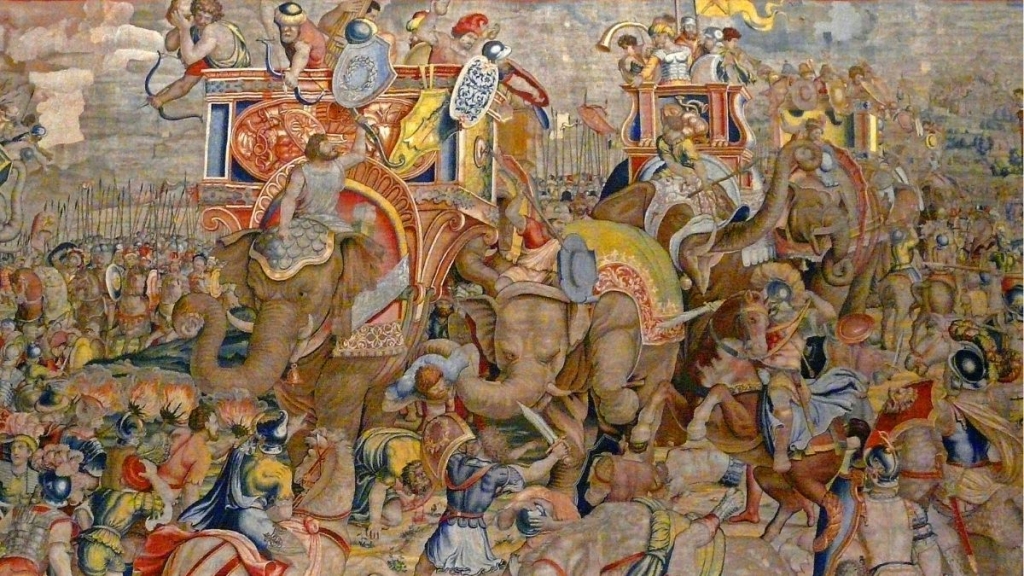
While the bone is too degraded for DNA analysis or species-level identification, its implications are profound. Hannibal is said to have led 37 elephants across the Alps during his invasion of Italy, a feat that has captivated imaginations for centuries. The Carthaginians’ use of elephants as “war machines” left an indelible mark on Western art, literature, and culture, but until now, no skeletal evidence had ever been found.
The Colina de los Quemados site has yielded other compelling evidence of its military past, including artillery projectiles, coins, and ceramics from the period. The destruction layer documented at the site fits perfectly with patterns associated with the Second Punic War, strengthening the case for the bone’s historical significance.
“This modest anatomical portion grants the find an exceptional importance,” the research team noted in their published paper. “While it would not represent one of the mythical specimens Hannibal took across the Alps, it could potentially embody the first known relic of the animals used in the Punic Roman wars for the control of the Mediterranean.”
The discovery has sparked renewed interest in Hannibal’s campaign, which remains one of the most daring military maneuvers in history. Crossing the treacherous Alpine terrain with an army and elephants was a feat of logistics and bravery that continues to inspire awe.
However, researchers caution that while the evidence strongly suggests a connection to Hannibal’s war elephants, alternative explanations cannot be entirely ruled out. The Romans’ Numidian allies may have used African elephants during later conquests, or the bone could be from animals used in gladiator games during the early Roman Imperial period. Yet, these scenarios don’t align as neatly with the bone’s age as the Second Punic War context does.
The research, published in the Journal of Archaeological Science: Reports, marks a significant milestone in our understanding of ancient warfare and the historical reality behind the legends. As Dr. Martínez Sánchez put it, “This discovery is not just about a bone—it’s about connecting with a moment in history that has shaped our collective imagination for over two millennia.”
Tags: Hannibal, war elephants, Punic Wars, archaeology, Spain, ancient history, Roman Republic, Carthaginian, Iron Age, radiocarbon dating, Colina de los Quemados, military history, Alps crossing, ancient warfare, historical discovery, Mediterranean history
Viral Sentences:
- “This could be the first physical evidence of Hannibal’s legendary war elephants!”
- “Archaeologists uncover ancient elephant bone that might rewrite history books.”
- “The bone that bridges myth and reality: Hannibal’s elephants finally found?”
- “From legend to lab: How a single bone could confirm one of history’s greatest military feats.”
- “The discovery that has historians and archaeologists buzzing worldwide.”
- “Hannibal’s elephants: From battlefield to bone, the story comes alive.”
- “A 2,000-year-old mystery might finally have a tangible clue.”
- “The archaeological find that connects us to one of antiquity’s most daring campaigns.”
- “This bone isn’t just old—it’s historic. And it might belong to a war elephant.”
- “The past roars back to life with this incredible discovery.”
,


Leave a Reply
Want to join the discussion?Feel free to contribute!