
Ancient Mars was warm and wet, not cold and icy
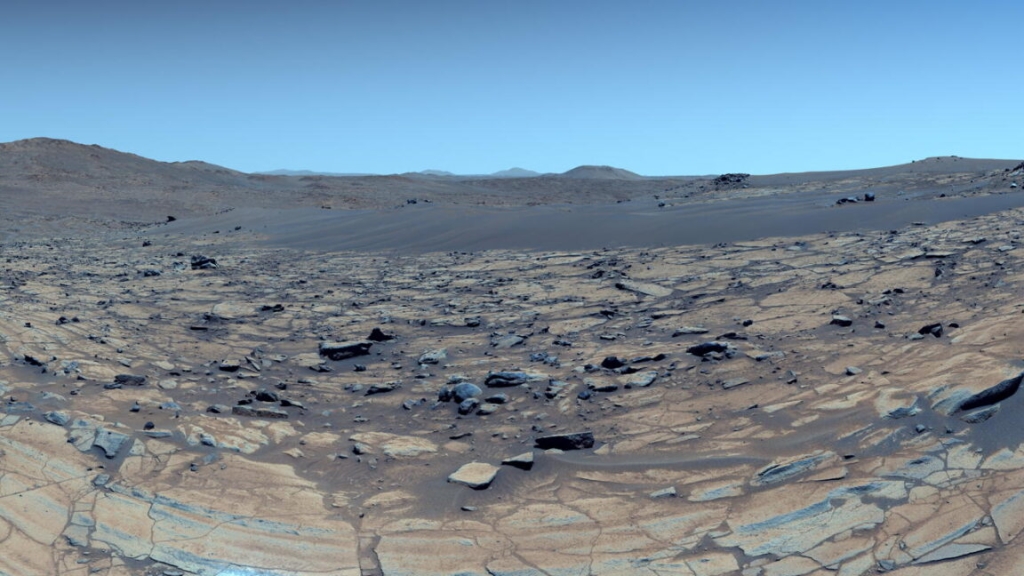
Perseverance Rover Uncovers Evidence of Ancient Tropical Mars: A Wet, Warm, and Possibly Habitable World
In a groundbreaking revelation that could reshape our understanding of the Red Planet, NASA’s Perseverance rover has uncovered compelling evidence suggesting that Mars was once a warm, wet, and potentially habitable world. The discovery, made in Jezero Crater, points to a time billions of years ago when the Martian landscape resembled a tropical paradise rather than the barren, icy desert we see today.
The findings, detailed in a recent study, focus on the analysis of clay pebbles found within the crater. These pebbles, composed primarily of kaolinite, were altered under conditions of persistent heavy rainfall and modest temperatures—conditions strikingly similar to Earth’s greenhouse climates. This discovery challenges previous theories that Mars was predominantly cold and icy, instead painting a picture of a planet with a dynamic and life-friendly climate.
A Window into Mars’ Ancient Past
Jezero Crater, the current exploration site of Perseverance, is believed to have once been a lakebed fed by a river delta. The rover’s instruments have been meticulously analyzing the geological features of the area, and the results are nothing short of astonishing. The clay pebbles, which show minimal signs of alteration by hydrothermal activity (such as scalding hot water from volcanic eruptions or meteorite impacts), suggest that they were shaped by consistent rainfall over extended periods.
Dr. Gareth Dorrian, a Post Doctoral Research Fellow in Space Science at the University of Birmingham, explains, “These kaolinite pebbles were altered under high rainfall conditions comparable to past greenhouse climates on Earth. They likely represent some of the wettest intervals and possibly the most habitable portions of Mars’ history.”
Implications for Habitability and Life
The implications of this discovery are profound. If Mars experienced prolonged periods of warm, wet conditions, it raises the tantalizing possibility that life could have emerged on the planet. The study suggests that these conditions may have persisted for thousands to millions of years—ample time for microbial life to potentially take hold.
Adding to the excitement, Perseverance recently made headlines for the discovery of possible biosignatures in samples collected from Jezero Crater. These samples, now securely stored in sealed containers on the rover, are awaiting retrieval by a future Mars sample return mission. However, the mission’s recent cancellation by NASA has cast uncertainty over when these samples will be analyzed in Earth-based laboratories.
The Knoll Criterion: A Key to Unlocking Mars’ Secrets
Central to the analysis of these samples is the “Knoll criterion,” a concept formulated by astrobiologist Andrew Knoll. This criterion states that for something to be considered evidence of life, it must not only be explicable by biology but also inexplicable without it. Whether the samples collected by Perseverance satisfy this criterion remains to be seen, but their analysis could provide unprecedented insights into Mars’ potential for hosting life.
A Glimpse into a Lost World
As we reflect on these findings, it’s hard not to be captivated by the idea of a tropical Mars—a world teeming with rivers, lakes, and possibly even life. Billions of years before humans walked the Earth, Jezero Crater may have been a thriving ecosystem, a stark contrast to the desolate, wind-swept landscape we see today.
This discovery not only deepens our understanding of Mars’ geological history but also fuels the ongoing quest to answer one of humanity’s most profound questions: Are we alone in the universe? While the answers may still be elusive, Perseverance’s findings bring us one step closer to unraveling the mysteries of the Red Planet.
Tags: Mars, Perseverance rover, Jezero Crater, ancient Mars, tropical Mars, habitability, biosignatures, NASA, space exploration, astrobiology, Knoll criterion, greenhouse climates, clay pebbles, kaolinite, planetary science, Mars sample return mission, extraterrestrial life, Martian geology, climate history, water on Mars, volcanic activity, meteorite impacts, hydrothermal environments, microbial life, Earth-like conditions, space science, University of Birmingham, The Conversation.
Viral Sentences:
- “Mars was once a tropical paradise, not a frozen desert!”
- “Perseverance uncovers evidence of ancient Martian rainfall—could life have existed?”
- “NASA’s rover finds clues to Mars’ warm, wet past in Jezero Crater.”
- “Clay pebbles reveal Mars’ hidden history of persistent heavy rainfall.”
- “The Red Planet’s secrets are slowly being unveiled by Perseverance.”
- “Ancient Mars: A world of rivers, lakes, and possibly life.”
- “Could Mars have been Earth’s twin billions of years ago?”
- “Perseverance’s discovery challenges everything we thought we knew about Mars.”
- “The quest for life on Mars just got a major boost!”
- “Jezero Crater: A window into Mars’ tropical past.”
,

Leave a Reply
Want to join the discussion?Feel free to contribute!