
Scientists Just Found a Way to Predict Where Deadly Scorpions Will Strike
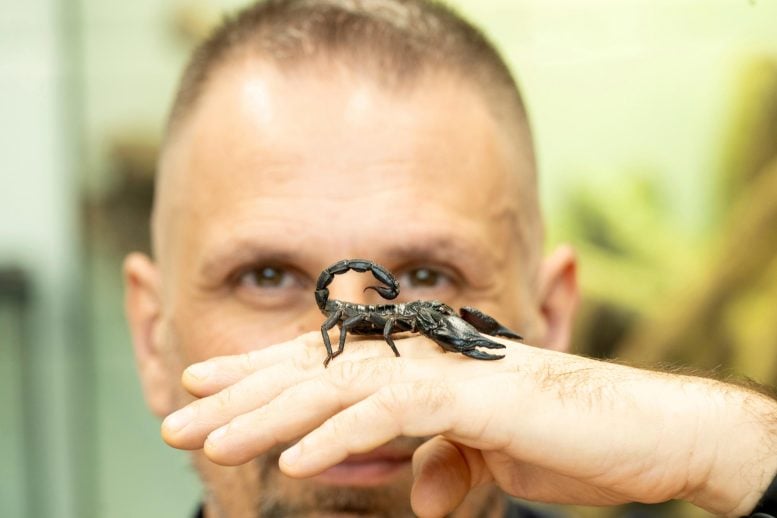
Deadly Scorpions: Scientists Unveil Groundbreaking Tool to Predict Where They Will Strike
In a landmark breakthrough for tropical public health, an international team of scientists has developed an innovative predictive mapping system capable of identifying and forecasting the locations of some of the world’s most lethal scorpion species. This pioneering research, recently published in a leading scientific journal, offers a new and powerful weapon in the ongoing battle against one of the tropics’ most underestimated and deadly threats: venomous scorpions.
Venomous scorpions are responsible for thousands of deaths and tens of thousands of severe envenomations every year, particularly in rural and underserved tropical regions where access to medical care is limited. Despite their lethality, scorpion stings have historically received far less attention and funding than other tropical diseases. This new research, however, promises to shift the paradigm, offering communities, health officials, and researchers a proactive tool to anticipate and mitigate scorpion-related risks.
The Science Behind the Prediction
The research team, led by renowned scorpion expert Michel Dugon, combined advanced environmental modeling with extensive field data to create a predictive framework for scorpion distribution. By analyzing a suite of environmental variables—including temperature, humidity, vegetation cover, soil type, and human population density—the scientists were able to identify the precise conditions that favor the proliferation of highly venomous scorpion species.
The study focused on several notorious species, including the deathstalker (Leiurus quinquestriatus) of North Africa and the Middle East, the Brazilian yellow scorpion (Tityus serrulatus) of South America, and the Indian red scorpion (Hottentotta tamulus), all of which are responsible for the majority of scorpion-related fatalities worldwide.
Using machine learning algorithms and geographic information systems (GIS), the researchers mapped current and future scorpion hotspots with unprecedented accuracy. Their models not only pinpoint where these dangerous arachnids are likely to be found today but also forecast how climate change and human activity may shift their distribution in the coming decades.
Why This Matters
The implications of this research are profound. By identifying high-risk areas before outbreaks occur, health authorities can better allocate resources, educate at-risk communities, and deploy antivenom supplies where they are needed most. For rural populations—often the hardest hit by scorpion stings—this could mean the difference between life and death.
Moreover, the predictive maps can guide urban planning and housing development, helping to minimize human-scorpion encounters in rapidly expanding tropical cities. The models also offer valuable insights for researchers studying the ecological and evolutionary drivers of scorpion venom potency and distribution.
A New Era in Scorpion Risk Management
“This is a game-changer,” said Michel Dugon, the study’s lead author. “For the first time, we have a scientifically robust tool to anticipate where deadly scorpions will strike. This allows us to move from a reactive to a proactive approach in managing scorpion risks.”
The research team is now working with local governments and international health organizations to integrate their predictive maps into national and regional health strategies. Pilot programs are already underway in parts of Africa and Latin America, with early results showing promising reductions in scorpion sting incidents.
Looking Ahead
As climate change continues to alter ecosystems and human populations grow, the threat posed by venomous scorpions is likely to increase. However, with tools like these predictive maps, the global community is better equipped than ever to confront this hidden danger.
The scientists behind this breakthrough hope their work will inspire further investment in scorpion research and public health initiatives, ultimately saving thousands of lives each year. Their findings underscore the importance of interdisciplinary collaboration, combining ecology, technology, and public health to tackle some of the world’s most pressing challenges.
Tags and Viral Phrases:
- Deadly scorpion hotspots
- Scientists predict scorpion strikes
- Venomous scorpions mapped
- Tropical public health breakthrough
- Scorpion sting prevention
- Climate change and scorpion distribution
- Machine learning for scorpion risk
- Scorpion venom research
- Life-saving scorpion maps
- Global health innovation
- Scorpion envenomation forecast
- Rural health and scorpions
- Scorpion risk management tool
- Predictive scorpion mapping
- Scorpion sting fatalities
- Antivenom deployment strategy
- Scorpion ecology and climate
- Urban planning and scorpions
- Hidden tropical health threats
- Scorpion species distribution
- Proactive scorpion control
- Scorpion research game-changer
- Michel Dugon scorpion study
- Scorpion bite prevention
- Scorpion sting hotspots
- Scorpion venom potency
- Scorpion-human encounters
- Scorpion sting statistics
- Scorpion sting survival
- Scorpion sting treatment
- Scorpion sting awareness
- Scorpion sting education
- Scorpion sting first aid
- Scorpion sting emergency
- Scorpion sting danger zones
- Scorpion sting risk areas
- Scorpion sting predictions
- Scorpion sting mapping
- Scorpion sting forecasting
- Scorpion sting climate impact
- Scorpion sting global health
- Scorpion sting tropical regions
- Scorpion sting rural communities
- Scorpion sting health authorities
- Scorpion sting public health
- Scorpion sting lifesaving tool
- Scorpion sting research breakthrough
- Scorpion sting interdisciplinary collaboration
- Scorpion sting future threats
,


Leave a Reply
Want to join the discussion?Feel free to contribute!