
Flapping Airplanes on the future of AI: ‘We want to try really radically different things’
Flapping Airplanes: The Bold New AI Lab Betting Big on Brain-Inspired Efficiency
In a tech landscape dominated by trillion-parameter models and data-hungry giants, a new player has emerged with a radically different vision. Flapping Airplanes, a freshly funded AI research lab, just secured $180 million in seed funding to pursue a question that could reshape the future of artificial intelligence: why do we need the entire internet to train AI when humans can learn with far less?
The $180 Million Question
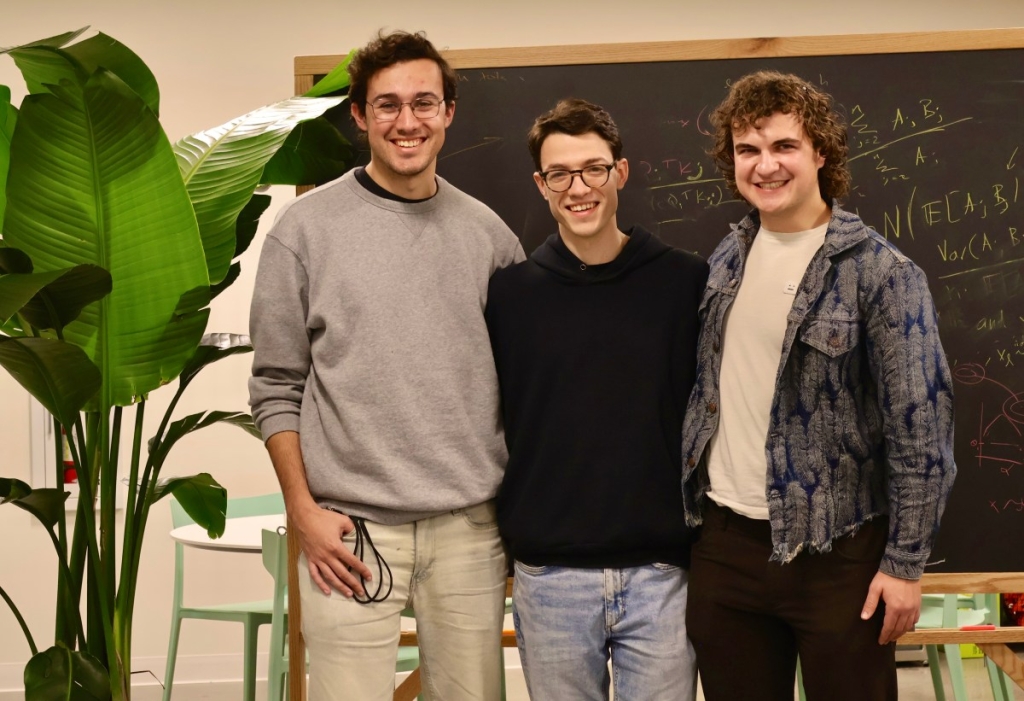
The lab, founded by three young innovators—Ben and Asher Spector, along with Aidan Smith—represents a growing trend of research-focused AI labs that are betting on fundamental breakthroughs rather than incremental improvements. Their mission? To develop AI systems that learn more like humans do, potentially unlocking capabilities we’ve only dreamed of.
“We’re not trying to build birds,” explains Ben Spector. “We’re trying to build some kind of flapping airplane.”
This philosophy—taking inspiration from nature without being constrained by it—captures the essence of what makes Flapping Airplanes so intriguing. They’re not trying to recreate the human brain, but rather to understand why it’s so efficient and apply those principles to create something entirely new.
Why Now? The Perfect Storm for AI Innovation
The timing for Flapping Airplanes couldn’t be better. While labs like OpenAI and DeepMind have demonstrated the power of scaling models to unprecedented sizes, they’ve also highlighted the limitations of this approach. Training frontier models requires massive computational resources, vast amounts of data, and comes with significant environmental costs.
“We love the tools,” says Ben. “We use them every day. But the question is, is this the whole universe of things that needs to happen? Our answer was no, there’s a lot more to do.”
The team identifies data efficiency as the critical bottleneck. Current AI models are trained on the “sum totality of human knowledge,” yet humans can obviously make do with far less. This gap represents not just a technical challenge, but a fundamental question about how intelligence works.
Brain-Inspired, Not Brain-Limited
Aidan Smith brings a unique perspective to the team, having come from Neuralink. But don’t expect Flapping Airplanes to be building digital brains. Instead, they view the human brain as an “existence proof”—evidence that alternative learning algorithms exist beyond the transformer architectures that dominate today’s AI landscape.
“The brain has some crazy constraints,” Aidan notes. “It takes a millisecond to fire an action potential. In that time, your computer can do just so many operations.” This suggests that AI systems could potentially be vastly more efficient than biological brains, but would need to take fundamentally different approaches.
Ben elaborates on their name choice: “Think of the current systems as big Boeing 787s. We’re not trying to build birds. That’s a step too far. We’re trying to build some kind of a flapping airplane.”
The Economics of Radical Research
One of the most striking aspects of Flapping Airplanes is their funding approach. $180 million in seed funding for a company full of young researchers—some still in college or even high school—represents a significant vote of confidence in their vision.
The economics work in their favor. “One of the advantages of doing deep, fundamental research is that, somewhat paradoxically, it is much cheaper to do really crazy, radical ideas than it is to do incremental work,” Ben explains. When you’re trying something completely new, you often fail quickly and cheaply, rather than needing to scale up to massive computational resources to test incremental improvements.
This approach allows them to explore multiple avenues simultaneously, increasing their chances of finding breakthrough approaches to data efficiency.
What Becomes Possible?
The implications of more data-efficient AI systems are profound. Beyond the obvious economic benefits—models that are “a million times easier to put into the economy”—the team sees potential for unlocking entirely new applications.
Asher outlines three key hypotheses: First, that forcing models to learn from less data might push them toward “deep understanding” rather than pattern matching. Second, that it could revolutionize post-training adaptation, allowing models to learn new capabilities from just a handful of examples. Third, that it could unlock entirely new verticals like advanced robotics or scientific discovery.
Perhaps most excitingly, the team sees potential for AI to contribute to scientific breakthroughs that humans alone couldn’t achieve. “The most exciting vision of AI is one where there’s all kinds of new science and technologies that we can construct that humans aren’t smart enough to come up with, but other systems can,” Ben says.
Hiring for Creativity, Not Credentials
Flapping Airplanes has made waves with its unconventional hiring approach, bringing on exceptionally young talent. But this isn’t about age—it’s about mindset.
“We look for people who dazzle us,” Aidan says. “They have so many new ideas and they think about things in a way that many established researchers just can’t because they haven’t been polluted by the context of thousands and thousands of papers.”
The emphasis is on creativity and the ability to teach the team something new. As Ben puts it, “If they teach me something new, the odds that they’re going to teach us something new about what we’re working on is also pretty good.”
The Future: Weird, Wonderful, and Unknown
When asked about the end result of their research, the team is refreshingly honest about uncertainty. They’re not trying to make incremental improvements—they’re looking for “1000x wins in data efficiency.”
This suggests the resulting systems could be profoundly different from what we’re used to. Asher notes that current models already demonstrate “strange emerging capabilities” that hint at intelligence in ways we can’t fully comprehend. Future models could be even weirder.
“We should expect the future to be really weird and the architectures to be even weirder,” Asher says. “We’re looking for 1000x wins in data efficiency. We’re not trying to make incremental change.”
Get Involved
Flapping Airplanes is actively engaging with the community. They welcome feedback through [email protected] and even encourage disagreement through [email protected]. They’re also hiring, specifically looking for “exceptional people who are trying to change the field and change the world.”
As Ben emphasizes, “If you have another unorthodox background, it’s okay. You don’t need two PhDs. We really are looking for folks who think differently.”
Tags: AI research, data efficiency, brain-inspired AI, foundation models, machine learning breakthrough, neuromorphic computing, AI economics, scientific discovery, robotics, AGI, artificial general intelligence, AI hiring, young innovators, tech startup funding, AI paradigm shift, computational efficiency, learning algorithms, AI capabilities, emerging technologies
Viral Sentences: “We’re not trying to build birds. We’re trying to build some kind of flapping airplane.” “The brain is the floor, not the ceiling.” “Companies are at their best when they’re really focused on doing something well.” “Young people can absolutely compete in the very highest echelons of industry.” “The future is going to be really weird and the architectures are going to be even weirder.” “We’re looking for 1000x wins in data efficiency. We’re not trying to make incremental change.” “If you teach me something new, the odds that you’ll teach us something new about what we’re working on is also pretty good.” “You shouldn’t need to use all the internet to get human-level intelligence.” “The most exciting vision of AI is one where there’s all kinds of new science and technologies that humans aren’t smart enough to come up with.”
,


Leave a Reply
Want to join the discussion?Feel free to contribute!