
The Download: Unraveling a death threat mystery, and AI voice recreation for musicians
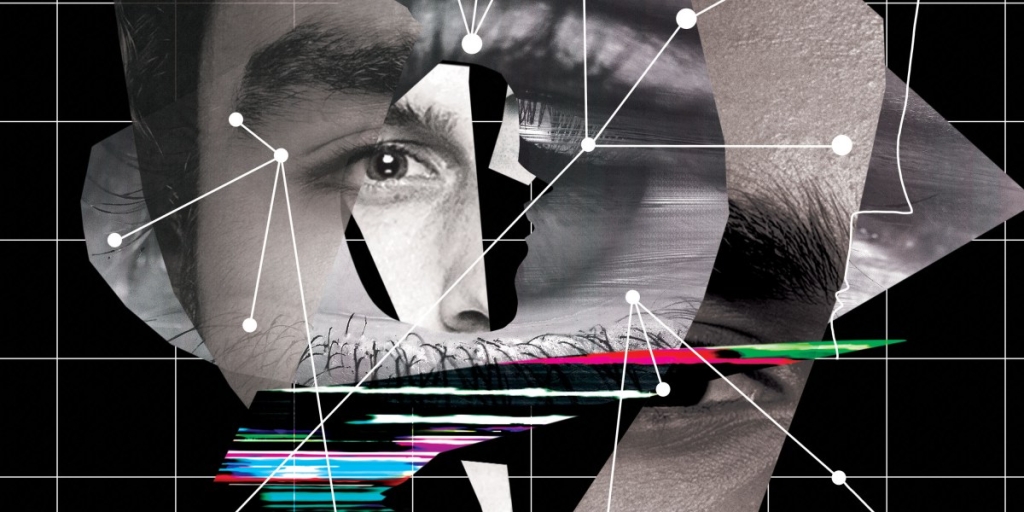
The Hunt for Waifu: How a Cybersecurity Sleuth Turned the Tables on Her Cyberstalkers
In April 2024, the digital underworld collided with real-world danger when Allison Nixon, a veteran cybersecurity researcher and chief research officer at Unit 221B (named after Sherlock Holmes’s legendary apartment), began receiving death threats across Telegram and Discord. The mysterious perpetrator operated under two aliases: “Waifu” and “Judische” — names that would soon become infamous in cybersecurity circles.
What made these threats particularly chilling wasn’t just their violent nature, but the fact that Nixon had been tracking Waifu’s digital footprints for years. As one of the most formidable investigators in the field, she had built her career unmasking cybercriminals and facilitating their arrests. Her reputation had made her a target, but this escalation felt different — personal, calculated, and deeply unsettling.
The irony wasn’t lost on Nixon. She had profiled Waifu years earlier when he brazenly boasted about his criminal exploits online. At that time, he was just another entry in her vast database of digital miscreants. But as her investigative focus shifted to other high-priority targets, Waifu had faded from her immediate radar — until he reemerged with deadly intent.
The threats arrived systematically, each message more menacing than the last. They appeared across multiple platforms, suggesting sophisticated operational security and intimate knowledge of Nixon’s digital presence. The attacker knew her schedule, her speaking engagements, even details about her personal life that shouldn’t have been publicly accessible.
For Nixon, this wasn’t just another case to close. This was war.
The Investigator Becomes the Investigated
Nixon’s response was characteristically methodical. She treated the threats as she would any complex cybercrime investigation, but with one crucial difference: she was both the detective and the victim. The psychological toll was immense, but her professional training kicked in immediately.
She began by mapping the threat landscape. Who had the technical capability to orchestrate such a campaign? Who harbored enough animosity to escalate from online harassment to death threats? The list was longer than she cared to admit in her line of work.
Her investigation revealed something disturbing: Waifu and Judische weren’t just random aliases. They represented a coordinated effort, likely involving multiple individuals with deep technical expertise. The operational security was exceptional — messages routed through encrypted channels, IP addresses masked through sophisticated VPN networks, cryptocurrency payments to maintain anonymity.
But Nixon knew that even the most careful criminals leave traces. Her expertise in digital forensics meant she understood the subtle artifacts that sophisticated attackers often overlook: timing patterns in message delivery, linguistic fingerprints in written communications, and the inevitable human errors that occur even in the most carefully planned operations.
The Psychology of Digital Vengeance
What drove someone to target a researcher who had never personally wronged them? Nixon’s investigation uncovered a pattern of behavior that cybersecurity experts call “vigilante justice” — where criminals target those they perceive as threats to their illicit activities.
Waifu’s digital history revealed a pattern of retaliation against anyone who challenged his operations. He had previously targeted other researchers, journalists, and even competitors within the cybercrime ecosystem. His attacks weren’t just about silencing opposition; they were about establishing dominance and sending a message to others who might consider crossing him.
The use of multiple personas suggested either a group operation or a single individual sophisticated enough to maintain separate digital identities. The name “Waifu,” referencing anime culture, hinted at a younger perpetrator or someone deliberately cultivating a specific online persona. “Judische,” the German word for Jewish, added another layer of complexity — was this an attempt at misdirection, a cultural reference, or something more sinister?
The Technology of Terror
The platforms chosen for the threats — Telegram and Discord — weren’t coincidental. Both offer end-to-end encryption and have become havens for various online communities, including those engaged in illicit activities. Telegram’s self-destructing messages and Discord’s private servers provided perfect cover for coordinating harassment campaigns.
But these same technologies that enabled the threats also provided the evidence Nixon needed. Every digital interaction leaves a trace, even on supposedly secure platforms. Metadata, message timing, connection patterns — these digital breadcrumbs formed the foundation of her investigation.
Nixon’s approach combined traditional investigative techniques with cutting-edge digital forensics. She analyzed message metadata, traced cryptocurrency transactions, and even employed behavioral analysis to identify patterns in the attacker’s online activity. Her team at Unit 221B worked around the clock, treating this as the highest priority case in the company’s history.
The Human Cost of Digital Warfare
While Nixon maintained her professional composure, the emotional toll was significant. Death threats aren’t something one simply shrugs off, even for someone trained to handle cyber threats. The constant vigilance, the fear of physical harm, the psychological impact of knowing someone wanted you dead — these were burdens Nixon carried while simultaneously conducting one of the most complex investigations of her career.
Her colleagues at Unit 221B rallied around her, but they all understood the unique pressure she faced. This wasn’t just about catching a criminal; it was about survival. Every lead, every piece of evidence, every breakthrough carried the weight of personal safety.
The investigation also raised broader questions about the nature of online threats and the real-world consequences of digital harassment. When does online rhetoric cross the line into criminal territory? How do we protect those who protect us from cyber threats? And what responsibility do platform providers have when their technologies are used to facilitate violence?
The Turning Point
The breakthrough came unexpectedly. In analyzing the linguistic patterns across Waifu and Judische’s communications, Nixon’s team noticed subtle inconsistencies. The writing style, the timing of messages, even the choice of platforms — these weren’t matching up with what they knew about Waifu’s established patterns.
Further investigation revealed that the threats weren’t coming from Waifu at all. They were coming from someone impersonating him, likely someone who knew about Nixon’s previous interest in the persona and wanted to exploit that connection. The real Waifu had been in prison during the period the threats were issued.
This revelation shifted the entire investigation. Instead of tracking a sophisticated cybercriminal, Nixon was now hunting an impersonator — someone with intimate knowledge of her work, her targets, and her methods. The pool of suspects suddenly became much smaller and more dangerous.
Justice in the Digital Age
Nixon’s investigation ultimately led to the identification and arrest of the perpetrators. The case became a landmark in cybersecurity, demonstrating both the sophistication of modern cyber threats and the equally sophisticated methods available to combat them.
But perhaps more importantly, it highlighted the human element in digital warfare. Behind every screen name, every anonymous threat, every encrypted message, there are real people with real motivations, capabilities, and vulnerabilities.
For Nixon, the case was both professionally satisfying and personally cathartic. She had faced down her attackers and emerged victorious, but the experience had changed her. She understood now more than ever the real-world consequences of digital actions and the importance of holding cybercriminals accountable, no matter how sophisticated their operations might be.
The story of Allison Nixon and the Waifu threats serves as a powerful reminder that in our increasingly digital world, the line between online and offline threats has never been thinner. It takes investigators like Nixon — part detective, part technologist, part warrior — to navigate this complex landscape and ensure that justice prevails, even in the darkest corners of the internet.
Tags & Viral Phrases: cybersecurity researcher stalked, digital detective thriller, online death threats investigation, Unit 221B mystery, Waifu cybercriminal unmasked, digital forensics breakthrough, Telegram Discord threats, anonymous online harassment, cybersecurity vigilante justice, digital impersonation crime, online safety investigator, cyberstalking investigation, technology crime drama, internet security expert targeted, digital warfare personal, anonymous threats real consequences, cybersecurity hero story, online criminal psychology, digital threat investigation, internet safety pioneer, cyber forensic investigation, online anonymity exposed, digital security breakthrough, internet crime investigation, cybersecurity justice served, online threat tracking, digital detective work, internet safety champion, cybercriminal unmasked, online harassment investigation, digital threat response, internet security breakthrough, cybersecurity investigation success, online criminal caught, digital safety expert, internet threat investigation, cybersecurity case study, online security pioneer, digital crime solving, internet safety investigation, cybersecurity victory, online threat neutralized, digital security success, internet crime solved, cybersecurity triumph, online safety achieved
When AI Gave a Musician His Voice Back: The Story of Patrick Darling and the Technology That Defied ALS
There’s a moment in every great comeback story where the audience realizes they’re witnessing something extraordinary. For Patrick Darling, that moment came on a stage bathed in warm light, his bandmates surrounding him, as the first notes of a song he wrote for his great-grandfather filled the room. But this wasn’t just another performance — it was a resurrection.
The 32-year-old musician stood before an audience that included people who had watched him lose everything to amyotrophic lateral sclerosis (ALS) — a cruel disease that had stolen his ability to stand, to play his instruments, and eventually, to speak. Two years had passed since his last performance, two years of watching a vibrant artist become trapped in a body that no longer obeyed his commands.
The Silent Thief
ALS is merciless in its progression. Like other motor neuron diseases, it systematically destroys the nerves that control muscles throughout the body. For Darling, the diagnosis at age 29 was a death sentence — not just for his life, but for his identity as a musician. Music wasn’t just what he did; it was who he was.
The early symptoms were subtle at first. A slight weakness in his fingers, a momentary hesitation when reaching for a chord. But ALS accelerates with terrifying speed. Within months, Darling couldn’t stand for a full set. Then he couldn’t hold his guitar properly. Then the singing became labored, each note a struggle against muscles that refused to cooperate.
His last performance was a bittersweet farewell. He could barely stand, his voice was fading, but he gave everything he had left. The audience didn’t know it was goodbye — neither did he, really. But as he struggled through the final song, something fundamental changed. The music that had defined his life was slipping away, and with it, a piece of his soul.
The Digital Phoenix
Two years later, Darling wasn’t just making music again — he was making it better than ever. The transformation came through artificial intelligence, but not in the way most people think. This wasn’t about replacing human creativity with algorithms. It was about using technology to restore what disease had taken away.
The process began with voice cloning. AI systems trained on recordings of Darling’s past performances analyzed every nuance of his vocal patterns — the timbre, the vibrato, the subtle inflections that made his voice uniquely his. The technology wasn’t new, but the application was revolutionary. Instead of creating a synthetic voice from scratch, the AI was reconstructing Darling’s authentic voice from fragments of his musical history.
But voice cloning was just the beginning. Darling needed to compose new music, to create something that reflected who he was now, not just who he had been. Another AI system stepped in — not to write the songs for him, but to translate his thoughts into musical notation, to bridge the gap between his creative vision and his physical limitations.
The Technology Behind the Miracle
The AI tools that brought Darling’s music back to life represent the cutting edge of assistive technology. Voice cloning has existed for years, but applying it to restore a musician’s creative expression required unprecedented sophistication. The system had to understand not just the technical aspects of Darling’s voice, but the emotional content, the subtle variations that conveyed feeling and meaning.
The composition AI worked differently. It wasn’t generating music autonomously; it was serving as an interface between Darling’s creative intentions and the physical act of composition. Through eye-tracking technology and a simplified interface, Darling could select chords, arrange melodies, and structure songs despite his inability to play traditional instruments.
The integration of these technologies was seamless. Darling would hum a melody (as much as his compromised voice would allow), the AI would interpret it, and then he could refine it using the composition interface. The result was music that was authentically his — not AI-generated content, but AI-facilitated expression.
The Emotional Resonance
When Darling finally took the stage again, the audience didn’t just hear music; they witnessed a miracle. The tears weren’t just for the beauty of the performance, but for what it represented. Every note was a victory over a disease that had tried to silence him permanently.
The song he performed — written for his great-grandfather, someone he’d never met — took on new meaning. It wasn’t just about connecting with a family member from the past; it was about connecting with the person Darling had been before ALS, and the person he was becoming through technology.
The performance was more than entertainment; it was testimony. It demonstrated that technology, when applied with compassion and creativity, could restore not just function, but identity. Darling wasn’t just singing again; he was being himself again.
The Future of Musical Expression
Darling’s story represents a paradigm shift in how we think about disability, creativity, and technology. His experience suggests a future where AI doesn’t replace human artists but empowers them, where technological limitations become creative opportunities, and where diseases like ALS become challenges to overcome rather than sentences to accept.
The implications extend far beyond individual musicians. If AI can restore a singer’s voice and a composer’s ability to create, what else might it restore? What other forms of expression, communication, and creativity might become accessible to those who’ve lost them to disease, injury, or circumstance?
The Human Element
What makes Darling’s story truly remarkable isn’t the technology — impressive as it is — but the humanity behind it. The AI tools were developed by teams who understood that they weren’t just solving technical problems; they were addressing human needs. They weren’t just coding algorithms; they were crafting possibilities for people whose worlds had been narrowed by circumstance.
Darling’s bandmates played a crucial role too. They didn’t treat him differently; they integrated the technology into their performance organically, treating the AI-enhanced voice as simply another instrument in their ensemble. This acceptance, this normalization of technological assistance, speaks to a future where such tools become commonplace rather than exceptional.
The Broader Impact
The story of Patrick Darling and his AI-assisted musical comeback resonates far beyond the music industry. It speaks to anyone who’s faced the loss of a fundamental part of their identity — whether through disease, injury, aging, or circumstance. It offers hope that technology might not just compensate for our limitations but help us transcend them.
For the ALS community, Darling’s story is particularly powerful. ALS affects tens of thousands of people worldwide, and while there’s no cure, stories like this suggest that technology might offer something equally valuable: the ability to maintain one’s sense of self even as the body fails.
For the music industry, it raises fascinating questions about authenticity, creativity, and the role of technology in artistic expression. If an AI helps a paralyzed musician create a song, who “owns” that song? Is it less authentic because technology facilitated its creation? Darling’s performances suggest the answer is no — the authenticity comes from the artist’s vision and emotion, not the specific mechanics of execution.
A New Chapter
Today, Patrick Darling continues to make music, his voice — both literally and figuratively — stronger than ever. The AI tools that restored his ability to sing have become integrated into his creative process, not as crutches but as extensions of his artistic vision.
His story has inspired other musicians with disabilities to explore similar technologies, creating a community of artists who are redefining what’s possible in musical expression. Recording studios, instrument manufacturers, and technology companies are taking notice, investing in research and development that could make these tools more accessible to artists worldwide.
But perhaps the most profound impact of Darling’s journey is the message it sends to anyone facing seemingly insurmountable obstacles. Technology alone didn’t give Darling his voice back — determination, creativity, and the support of a community did that. The AI was simply the tool that made it possible.
In a world where technology often feels like it’s driving us apart, Darling’s story reminds us of its potential to bring us together, to restore what’s been lost, and to help us become more fully ourselves. It’s not just a story about a musician who got his voice back; it’s a story about the human spirit’s capacity to adapt, to overcome, and to create beauty even in the face of profound adversity.
As Darling takes the stage night after night, his voice filling venues with songs that once existed only in his imagination, he’s not just performing — he’s proving that with the right combination of human determination and technological innovation, even the most devastating losses can become the foundation for something extraordinary.
Tags & Viral Phrases: ALS musician AI voice, technology restores singing ability, artificial intelligence music creation, paralyzed artist comeback story, voice cloning breakthrough, assistive technology music, ALS survival story, AI helps disabled musicians, technology gives voice back, musical resurrection technology, AI composition tools, disabled artist empowerment, technology overcomes disability, music industry innovation, AI creative assistance, ALS patient triumph, voice restoration technology, musical AI revolution, technology gives second chance, AI helps artists create, music technology breakthrough, disabled musician success, AI artistic collaboration, technology restores identity, music creation AI, ALS technology solution, AI musical expression, technology gives hope, music industry transformation, AI creative tools, technology artistic freedom, music AI innovation, technology human potential, AI artistic empowerment, technology creative expression, music technology accessibility, AI artistic possibility, technology artistic vision, music AI collaboration, technology artistic breakthrough, AI creative potential, music technology future, technology artistic achievement, AI artistic expression, music technology revolution, technology artistic success, AI creative innovation, music technology empowerment, technology artistic triumph
,


Leave a Reply
Want to join the discussion?Feel free to contribute!