
The scientist using AI to hunt for antibiotics just about everywhere
AI-Driven Antibiotic Discovery: A New Frontier in the Fight Against Superbugs
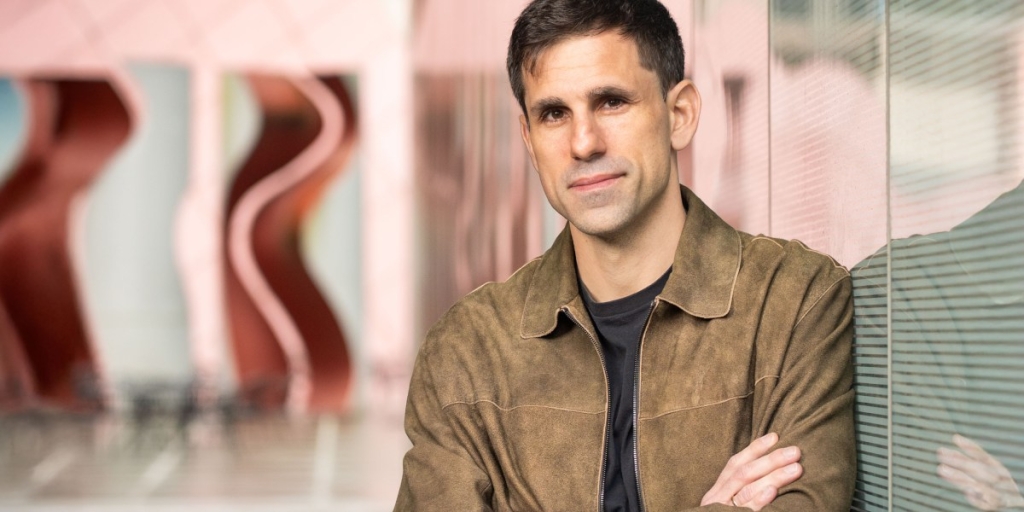
In an era where antibiotic resistance threatens to unravel decades of medical progress, one scientist is betting on artificial intelligence to rewrite the rules of drug discovery. César de la Fuente, a professor at the University of Pennsylvania, is pioneering a bold new approach: using machine learning to scour the genetic blueprints of life—past and present—for hidden molecules capable of combating the world’s most dangerous pathogens.
At the heart of de la Fuente’s work is a deceptively simple idea: nature has already solved many of the problems we face. The challenge is finding those solutions buried deep within the vast, chaotic expanse of genomic data. His team at Penn’s Machine Biology Group has trained AI models to sift through millions of genetic sequences, hunting for peptides—short chains of amino acids that can act as potent antimicrobial agents.
The results have been nothing short of astonishing. In August 2025, de la Fuente’s team published a groundbreaking study in Nature Microbiology, revealing peptides hidden within the DNA of archaea—ancient single-celled organisms that thrive in extreme environments. These peptides, previously overlooked by traditional drug discovery methods, showed promising antibiotic properties.
But the surprises didn’t stop there. The team has also mined the venom of snakes, wasps, and spiders for antimicrobial candidates. And in a project de la Fuente calls “molecular de-extinction,” they’ve resurrected genetic sequences from extinct species—woolly mammoths, giant sloths, ancient zebras, and even Neanderthals—to synthesize novel compounds like mammuthusin-2, mylodonin-2, and hydrodamin-1. These molecules, absent from the modern world for millennia, may hold the key to defeating antibiotic-resistant bacteria.
“We’re not just looking for new drugs,” de la Fuente explains. “We’re looking for new ways to think about drug discovery. The history of life on Earth is a treasure trove of molecular solutions. AI allows us to access that treasure in ways we never could before.”
De la Fuente’s work has earned him widespread acclaim. At just 40 years old, he’s been honored by the American Society for Microbiology, the American Chemical Society, and other leading organizations. In 2019, MIT Technology Review named him one of its “35 Innovators Under 35” for his pioneering use of computational methods in antibiotic discovery. His mentor and collaborator, James Collins of MIT, calls him “marvelously talented” and “very innovative,” crediting his work with pushing the field forward.
The stakes couldn’t be higher. Antibiotic resistance is one of the most pressing public health crises of our time. The overuse and misuse of antibiotics have accelerated the evolution of drug-resistant bacteria, rendering many traditional treatments ineffective. Yet, developing new antibiotics has become increasingly difficult. The process is expensive, time-consuming, and often ends in failure. As a result, many pharmaceutical companies have abandoned antibiotic research altogether.
De la Fuente sees AI as a way to break this deadlock. By automating the search for promising molecules, machine learning can dramatically accelerate the discovery process. It can also uncover candidates that would be impossible to find through conventional methods. “Drug discovery is a statistics game,” says Jonathan Stokes, a chemical biologist at McMaster University who has collaborated with Collins on AI-driven antibiotic research. “You need enough shots on goal to happen to get one. AI gives us more shots.”
The approach is not without its challenges. Antibiotic discovery has always been a messy, noisy endeavor, driven by serendipity and fraught with uncertainty. Traditional methods involve sifting through soil, water, and other organic matter in search of antimicrobial molecules—a process that is both labor-intensive and inefficient. The number of possible organic combinations that could be synthesized is estimated at around 10^60, a staggering figure that underscores the enormity of the task.
But de la Fuente is undeterred. For him, the word “almost” in the phrase “almost impossible” is an invitation to explore. “I like challenges,” he says, “and I think this is the ultimate challenge.” His work represents a paradigm shift in how we approach drug discovery—one that leverages the power of AI to unlock nature’s secrets and confront one of humanity’s greatest threats.
As de la Fuente’s library of genetic recipes grows—now numbering over a million—the potential for breakthroughs increases exponentially. His vision is not just to find new antibiotics, but to reimagine the entire process of drug discovery. In doing so, he hopes to turn the tide against antibiotic resistance and usher in a new era of medicine.
The fight against superbugs is far from over, but with pioneers like César de la Fuente leading the charge, the future looks a little less daunting. By combining the ingenuity of human scientists with the computational power of AI, we may finally have the tools we need to outsmart the microbes that threaten our survival.
Tags:
AI in drug discovery, antibiotic resistance, machine learning, peptides, antimicrobial peptides, molecular de-extinction, woolly mammoth DNA, giant sloth, ancient DNA, archaea, venom peptides, James Collins, César de la Fuente, MIT Technology Review, Nature Microbiology, antibiotic development, superbugs, genetic sequences, computational biology, drug discovery innovation, AI-driven medicine
Viral Sentences:
“AI is unlocking nature’s hidden arsenal against superbugs.”
“Resurrecting molecules from extinct species to fight modern diseases.”
“The future of antibiotics lies in the past—and in artificial intelligence.”
“Nature has already solved the problem; we just need to find the solution.”
“Antibiotic discovery is a statistics game—and AI is changing the odds.”
“From woolly mammoths to modern medicine: the power of molecular de-extinction.”
“AI-driven drug discovery: the ultimate challenge in the fight against resistance.”
“Peptides from ancient DNA: the next frontier in antibiotic research.”
“Breaking the deadlock: how AI is revolutionizing antibiotic development.”
“The messy, noisy world of drug discovery—now powered by machine learning.”
,
Leave a Reply
Want to join the discussion?Feel free to contribute!