
Scientists Found a Massive Lava Tube Hiding Beneath the Surface of Venus
Venus Just Revealed Its First Underground Tunnel—And It Could Rewrite Everything We Know About Earth’s Mysterious Twin
In a discovery that feels straight out of a sci-fi epic, scientists have uncovered what appears to be the first-ever confirmed underground lava tunnel on Venus—an ancient volcanic passageway lurking beneath the planet’s hellish surface.
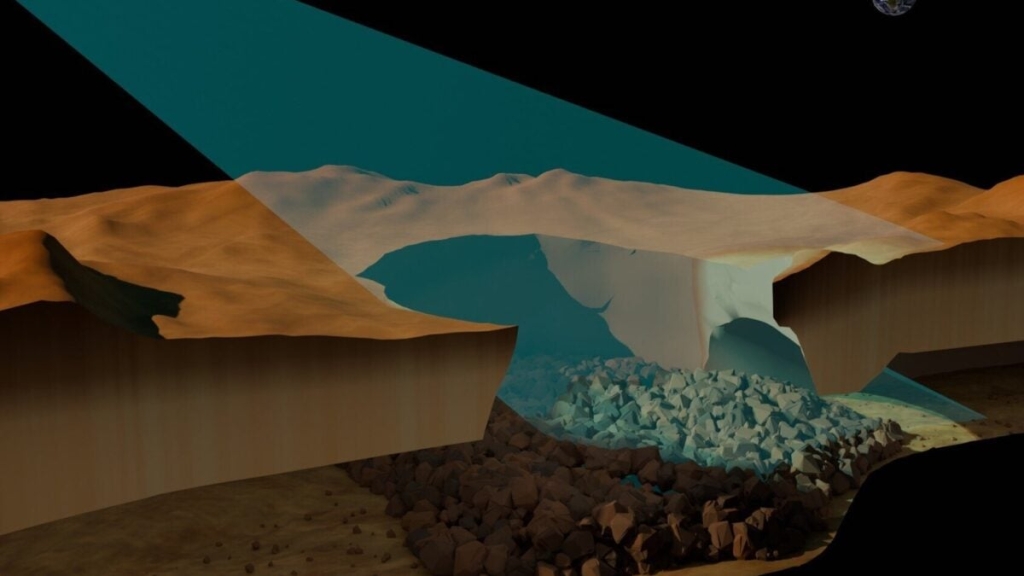
The groundbreaking finding, led by researchers at the University of Trento and published in Nature, offers a tantalizing glimpse into the hidden geology of Earth’s closest planetary neighbor. Using decades-old radar data from NASA’s Magellan mission, the team identified a massive subsurface cavity near Venus’ Nux Mons volcano—a structure so large it could swallow entire city blocks.
“This is the first direct evidence of a process occurring beneath the surface of Earth’s twin planet,” said Lorenzo Bruzzone, professor at the University of Trento and co-author of the study. “For years, we’ve only hypothesized the existence of these features. Now, we have proof.”
A Secret Beneath the Clouds
Venus, often called Earth’s twin due to its similar size and composition, is a world of extremes. Its surface is hotter than a pizza oven, its atmosphere is thick enough to crush a submarine, and its volcanic activity is off the charts. Yet, beneath this inferno, something extraordinary may be hiding.
The researchers analyzed radar images from Magellan’s 1990-1992 mission, which used synthetic aperture radar to peer through Venus’ dense, sulfuric acid-laden clouds. What they found was a collapsed roof of what appears to be an ancient lava tube—a tunnel formed by flowing lava that hardened on the surface while molten rock continued to flow beneath.
This particular tube is a monster: about 0.6 miles (1 kilometer) wide, with a roof thickness of 490 feet (150 meters) and an empty cavity stretching at least 0.25 miles (375 meters) high. For context, that’s larger than most lava tubes found on Earth or Mars.
How Venus’ Volcanic Fury Carved the Underworld
Lava tubes are a common feature on volcanically active worlds. On Earth, they form when low-viscosity basaltic lava flows beneath a cooling surface, creating a hollow tunnel. Mars has them too, and now Venus joins the club—but on a much grander scale.
Venus is the most volcanically active planet in our solar system, with thousands of volcanoes and vast lava plains covering its surface. Scientists have long suspected that this volcanic fury might have created an extensive network of underground tunnels, but Venus’ crushing atmosphere and opaque clouds made it nearly impossible to confirm—until now.
“This discovery validates theories that have been around for decades,” Bruzzone explained. “It’s a game-changer for understanding how Venus evolved and how its surface and subsurface are connected.”
What’s Next? Peering Deeper into Venus’ Secrets
The discovery of this single lava tube raises an exciting question: Are there more? If one exists, it’s likely that others do too, potentially forming an underground labyrinth carved by ancient volcanic flows.
To find out, scientists are turning to upcoming missions like NASA’s VERITAS (Venus Emissivity, Radio Science, InSAR, Topography, and Spectroscopy) and the European Space Agency’s EnVision, both set to launch in 2031. These missions will carry advanced radar systems capable of penetrating deeper into Venus’ surface, potentially uncovering a hidden world beneath the planet’s oppressive clouds.
“This is just the beginning,” said Bruzzone. “With new technology, we’ll be able to map Venus’ subsurface in unprecedented detail, opening up entirely new perspectives on the planet’s geology and evolution.”
Why This Matters: Venus as a Window to Earth’s Past—and Future
Venus is more than just a hellish curiosity; it’s a cautionary tale and a scientific treasure trove. Once thought to be Earth-like, Venus underwent a runaway greenhouse effect that transformed it into the inferno it is today. By studying its volcanic history and subsurface features, scientists hope to better understand how planets evolve—and what might happen to Earth if climate change spirals out of control.
The discovery of lava tubes also has implications for future exploration. If these tunnels are stable and extensive, they could one day serve as natural shelters for human missions to Venus, protecting astronauts from the planet’s extreme surface conditions.
For now, though, the focus is on unraveling the mysteries of this alien world. As Bruzzone put it, “Our knowledge of Venus is still limited, but discoveries like this bring us one step closer to understanding our twin planet—and ourselves.”
Tags: Venus, lava tubes, volcanic tunnels, planetary science, Magellan mission, VERITAS, EnVision, space exploration, geology, Earth’s twin, underground caves, NASA, ESA, Nature study, planetary evolution, volcanic activity, subsurface features, alien worlds, space discovery, cosmic mysteries, interplanetary exploration.
Viral Sentences:
- Scientists just found the first underground tunnel on Venus—and it’s massive!
- Venus’ hidden lava tubes could be the key to understanding Earth’s future.
- Ancient volcanic tunnels on Venus: The next frontier in space exploration.
- This discovery changes everything we thought we knew about Earth’s twin planet.
- Could Venus’ underground caves one day shelter human explorers?
- The most volcanically active planet in the solar system just revealed its secrets.
- Venus’ lava tubes are bigger than anything we’ve seen on Earth or Mars.
- New missions in 2031 could uncover a hidden world beneath Venus’ clouds.
- This is the first direct evidence of subsurface activity on Venus—ever.
- Venus’ volcanic fury carved an underground labyrinth we’re only beginning to understand.
,


Leave a Reply
Want to join the discussion?Feel free to contribute!