
NASA confirms target date for crewed Artemis II lunar flight
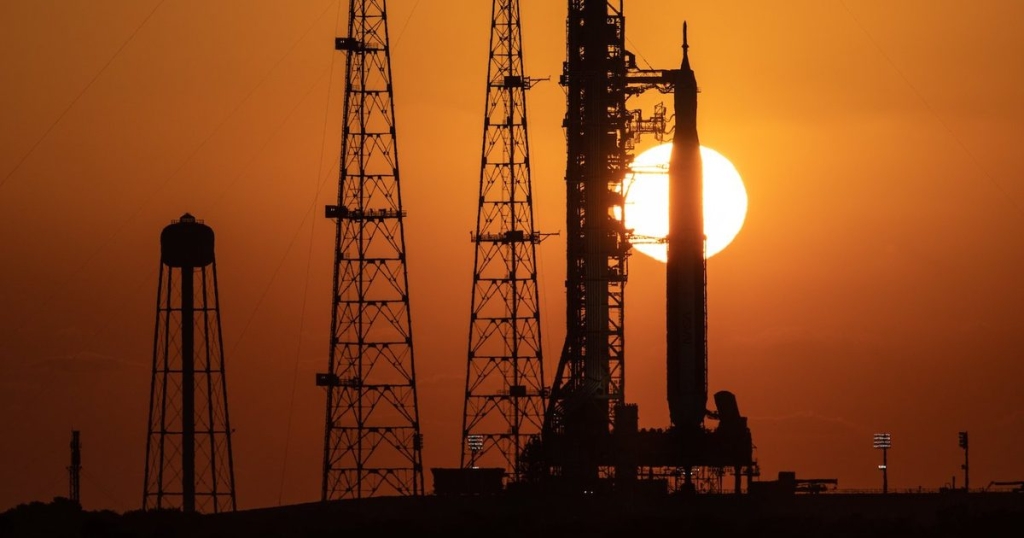
NASA Sets New Timeline for Artemis II Rocket Testing Ahead of Historic Moon Mission
In a major development for NASA’s Artemis program, the space agency has announced a revised schedule for the second wet dress rehearsal of the Space Launch System (SLS) rocket—a critical milestone on the path to humanity’s return to the lunar surface after more than half a century.
The SLS, NASA’s most powerful rocket ever built, is slated to carry four astronauts on a historic journey around the Moon during the Artemis II mission, marking the first crewed lunar mission since Apollo 17 in 1972. With excitement building across the aerospace community and among space enthusiasts worldwide, NASA has now confirmed that the earliest possible launch date is Friday, March 6, 2024.
Critical Testing Phase Moves Forward
NASA has targeted Thursday, February 19, for the fueling portion of the wet dress rehearsal at Kennedy Space Center’s Launch Complex 39B in Florida. This rehearsal represents one of the final major tests before the actual launch, simulating every step of the countdown process except for the actual ignition of the rocket’s engines.
During the initial wet dress rehearsal conducted earlier this month, engineers encountered a hydrogen leak at the base of the SLS rocket. This technical challenge forced NASA to postpone the originally planned launch date of February 8 while the team worked to diagnose and resolve the issue. Such setbacks, while frustrating, are not uncommon in the complex world of spaceflight testing, where safety and precision take absolute precedence.
“The wet dress rehearsal will run the launch team as well as supporting teams through a full range of operations, including loading cryogenic liquid propellant into the SLS rocket’s tanks, conducting a launch countdown, demonstrating the ability to recycle the countdown clock, and draining the tanks to practice scrub procedures,” NASA explained in a statement released Monday.
Countdown to Countdown: The Technical Details
The rehearsal process is extraordinarily intricate, involving nearly 50 hours of continuous operations. Launch controllers are scheduled to take their positions at consoles in the Launch Control Center at Kennedy Space Center beginning at 6:40 p.m. Eastern Time on Tuesday. The simulated launch itself is set for 8:30 p.m. on Thursday, though this will conclude with the rocket remaining firmly on the launchpad.
This comprehensive testing protocol allows NASA to validate countless systems and procedures that must function flawlessly during an actual mission. The ability to practice “scrub” procedures—what to do if a launch must be called off at the last minute—is particularly crucial for mission safety and operational readiness.
NASA has emphasized that no new launch date will be announced until the results of the second wet dress rehearsal have been thoroughly analyzed and assessed. This methodical approach underscores the agency’s commitment to ensuring every system operates at peak performance before committing to the historic Artemis II mission.
The Artemis II Crew: Making History
When the Artemis II mission finally launches, it will carry an international crew of four exceptional astronauts on a 10-day journey that will take them farther from Earth than any humans have traveled in over 50 years. The crew represents both NASA and the Canadian Space Agency, highlighting the collaborative nature of modern space exploration.
NASA astronauts Victor Glover, Reid Wiseman, and Christina Koch will be joined by Canadian astronaut Jeremy Hansen for this groundbreaking mission. Each brings unique expertise and experience to the crew:
- Victor Glover, a Navy commander and test pilot, previously served as pilot on the first operational flight of SpaceX’s Crew Dragon to the International Space Station.
- Reid Wiseman, a former Navy test pilot and chief of the Astronaut Office, has extensive experience in spaceflight operations.
- Christina Koch holds the record for the longest single spaceflight by a woman and participated in the first all-female spacewalk.
- Jeremy Hansen, representing the Canadian Space Agency, is a former fighter pilot and has been integral to NASA’s astronaut training programs.
Their mission aboard the Orion spacecraft will test critical systems and deep-space operations that must be validated before NASA can proceed with future crewed missions to the lunar surface and, eventually, to Mars.
Significance for Space Exploration
The Artemis II mission represents far more than a symbolic return to the Moon. It serves as a crucial proving ground for technologies and procedures that will enable sustainable lunar exploration and establish the foundation for humanity’s expansion into the solar system.
The mission will validate the performance of the SLS rocket, Orion spacecraft, and associated ground systems under actual flight conditions. Data collected during the mission will inform the development of spacesuits, habitats, rovers, and other equipment necessary for extended lunar surface operations.
Furthermore, Artemis II will help NASA refine deep-space navigation techniques, radiation protection strategies, and operational protocols for missions lasting weeks rather than days. These capabilities are essential not only for returning astronauts to the Moon but also for the eventual journey to Mars, which will require months of transit time each way.
Looking Ahead
As NASA continues its methodical preparation for Artemis II, the global space community watches with anticipation. The mission represents a pivotal moment in space exploration—a bridge between the Apollo era and a new age of sustained lunar presence and interplanetary exploration.
The successful completion of the wet dress rehearsal will bring NASA one step closer to achieving this historic milestone. When the four astronauts finally launch on their lunar journey, they will carry with them the aspirations of a generation that has waited decades to witness humans venture beyond low Earth orbit once again.
The countdown to March 6 has begun, but as NASA’s careful approach demonstrates, in space exploration, patience and precision are the ultimate virtues. The world will be watching as the next chapter in humanity’s exploration of the cosmos unfolds.
Tags & Viral Phrases
Artemis II, NASA Moon mission, SLS rocket, Space Launch System, Orion spacecraft, Victor Glover, Reid Wiseman, Christina Koch, Jeremy Hansen, lunar exploration, Kennedy Space Center, wet dress rehearsal, hydrogen leak, cryogenic propellant, deep space operations, Moon landing, Artemis program, space technology, NASA astronauts, Canadian Space Agency, space countdown, launch preparation, space testing, Moon orbit, historic space mission, space exploration, SLS testing, NASA announcement, space launch date, lunar mission 2024, space countdown clock, space scrub procedures, space countdown 2024, NASA space news, Moon mission crew, space history, space technology 2024, space viral news, trending space, space mission update, NASA space update, space exploration news, space mission March 2024, space mission testing, space mission preparation, space mission announcement, space mission timeline, space mission details, space mission crew, space mission significance, space mission future, space mission legacy, space mission excitement, space mission anticipation, space mission worldwide, space mission humanity, space mission inspiration, space mission achievement, space mission milestone, space mission breakthrough, space mission advancement, space mission innovation, space mission progress, space mission development, space mission evolution, space mission transformation, space mission revolution, space mission next chapter, space mission new era, space mission golden age, space mission renaissance, space mission rebirth, space mission comeback, space mission return, space mission revival, space mission resurgence, space mission restoration, space mission renewal, space mission regeneration, space mission rejuvenation, space mission renaissance, space mission rebirth, space mission revival, space mission resurgence, space mission restoration, space mission renewal, space mission regeneration, space mission rejuvenation
,
Leave a Reply
Want to join the discussion?Feel free to contribute!