
Nova Lake S Support Added To Intel LPSS Driver In Linux 7.0
Intel Nova Lake S Support Lands in Linux 7.0 Kernel with LPSS Driver Enablement
The open-source Linux kernel continues its relentless march toward supporting next-generation hardware, and the latest milestone is particularly significant for Intel’s upcoming Nova Lake platform. In a development that underscores Linux’s position as the backbone of modern computing, the Linux 7.0 kernel has received comprehensive support for Nova Lake S platforms through the Intel Low Power Subsystem (LPSS) driver.
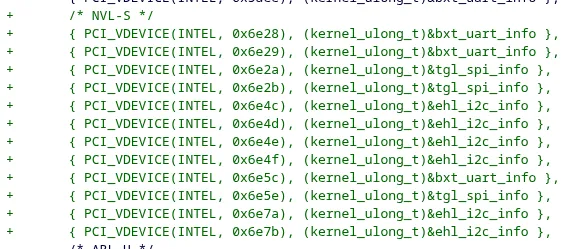
The Intel LPSS driver, which serves as the critical bridge for managing low-power interfaces including SPI (Serial Peripheral Interface) and HS-UART (High-Speed Universal Asynchronous Receiver-Transmitter), has been updated to recognize and properly handle the unique hardware identifiers (IDs) associated with Nova Lake S systems. This update represents more than just incremental progress—it’s a fundamental enabler for the next generation of Intel-powered devices that will rely on efficient power management and robust peripheral communication.
What makes this development particularly noteworthy is its elegance and efficiency. Unlike many kernel updates that require extensive code modifications across multiple subsystems, the Nova Lake S enablement for the LPSS driver required only the addition of new hardware IDs. No other driver changes were necessary, demonstrating the maturity and forward-thinking design of both Intel’s hardware architecture and the Linux kernel’s driver framework.
The implementation arrived through the multi-function device (MFD) pull request for Linux 7.0, a mechanism that allows for coordinated updates to related device drivers. This particular pull request was notably comprehensive, bundling several other important hardware enablements alongside the Nova Lake S support.
Among the other significant additions in the same pull request were support for several power management integrated circuits (PMICs) that will power future devices. These include the ROHM BD72720 PMIC, Rockchip RK801 PMIC, and ROHM BD73900 PMIC—each representing critical components in the power management ecosystems of various embedded and mobile platforms. Additionally, support was added for the Delta Networks TN48M and the TS133 variant for the QNAP MCU, expanding Linux’s compatibility with network-attached storage and embedded computing solutions.
However, the MFD pull request’s significance extends beyond mere hardware enumeration. One of its most technically interesting aspects involves the Apple System Management Controller (MACSMC) driver. The update now properly wires up the Real-Time Clock (RTC), Hardware Monitoring (HWMON), and input sub-devices for this driver. This enhancement is particularly relevant for Apple hardware running Linux, ensuring that essential system management functions operate correctly and efficiently.
The timing of this development is strategic, as Nova Lake represents Intel’s next major architectural leap. While Intel has not yet officially announced Nova Lake’s release timeline, the presence of comprehensive Linux kernel support suggests that the platform is approaching maturity. This proactive approach to driver development—enabling support before hardware reaches consumers—has become a hallmark of the Linux development community and a key factor in Linux’s dominance in enterprise, cloud, and embedded computing environments.
For developers and system administrators, this update means that when Nova Lake S hardware eventually ships, Linux systems will be ready to leverage its capabilities from day one. This includes optimized power management through the LPSS driver, ensuring that the low-power interfaces critical to mobile and embedded applications function seamlessly.
The technical elegance of this solution—requiring only ID additions rather than extensive code rewrites—also speaks to the robustness of the Linux driver model. It demonstrates how well-architected interfaces can accommodate future hardware without requiring disruptive changes to existing codebases, a principle that has allowed Linux to maintain backward compatibility while continuously evolving to support new technologies.
As the Linux 7.0 kernel moves toward its final release, these enablement patches represent the kind of foundational work that, while often invisible to end users, is crucial for maintaining Linux’s position as the operating system of choice for cutting-edge hardware. The Nova Lake S support through the LPSS driver is just one example of how the Linux community stays ahead of the curve, ensuring that when the next generation of hardware arrives, the software ecosystem is ready to support it fully.
This development also highlights the collaborative nature of modern computing, where hardware vendors like Intel work closely with open-source communities to ensure their platforms are well-supported. It’s a symbiotic relationship that benefits everyone: hardware manufacturers get broader software support, developers gain access to new capabilities, and end users receive systems that are both powerful and well-maintained.
The Linux kernel’s ability to support emerging hardware like Nova Lake S while maintaining stability and performance across millions of existing systems remains one of its greatest strengths. As computing continues to evolve toward more efficient, specialized hardware designs, this flexibility and forward compatibility will only become more valuable.
With Linux 7.0’s Nova Lake S support now in place, the stage is set for the next generation of Intel-powered devices to run Linux with full hardware optimization from their very first boot.
Tags: Linux 7.0, Nova Lake S, Intel LPSS, kernel development, hardware enablement, SPI, HS-UART, MFD pull request, power management, open source, system management controller, MACSMC, RTC, HWMON, embedded systems, mobile computing, Intel architecture, driver support, hardware IDs, PMIC, ROHM, Rockchip, Delta Networks, QNAP, kernel update, Linux kernel, open source software, hardware compatibility, system administration, developer tools, computing innovation, next-gen hardware, power efficiency, peripheral management
Viral Sentences:
Linux 7.0 just got a major upgrade for Intel’s Nova Lake S—and it’s all about efficiency and power management.
The Intel LPSS driver just got Nova Lake S support with zero major code changes—just pure ID magic.
Nova Lake S support in Linux 7.0 means next-gen Intel hardware will run smoother than ever from day one.
Linux kernel developers are already prepping for Intel’s Nova Lake S—talk about staying ahead of the curve.
The MFD pull request for Linux 7.0 is a powerhouse—Nova Lake S, Apple SMC, and more all in one go.
Intel’s Nova Lake S is coming, and Linux is ready with full LPSS driver support for SPI and HS-UART.
Power management just got a boost—Nova Lake S support in Linux 7.0 includes PMIC updates for ROHM and Rockchip.
Apple’s MACSMC driver gets a major upgrade in Linux 7.0—RTC, HWMON, and input sub-devices are now fully wired.
Linux 7.0 is shaping up to be a game-changer for next-gen hardware support, starting with Nova Lake S.
The Linux kernel continues to prove why it’s the backbone of modern computing—Nova Lake S support is just the latest example.
,


Leave a Reply
Want to join the discussion?Feel free to contribute!