
Could Water Be the Future of Space Propulsion? This Startup Thinks So
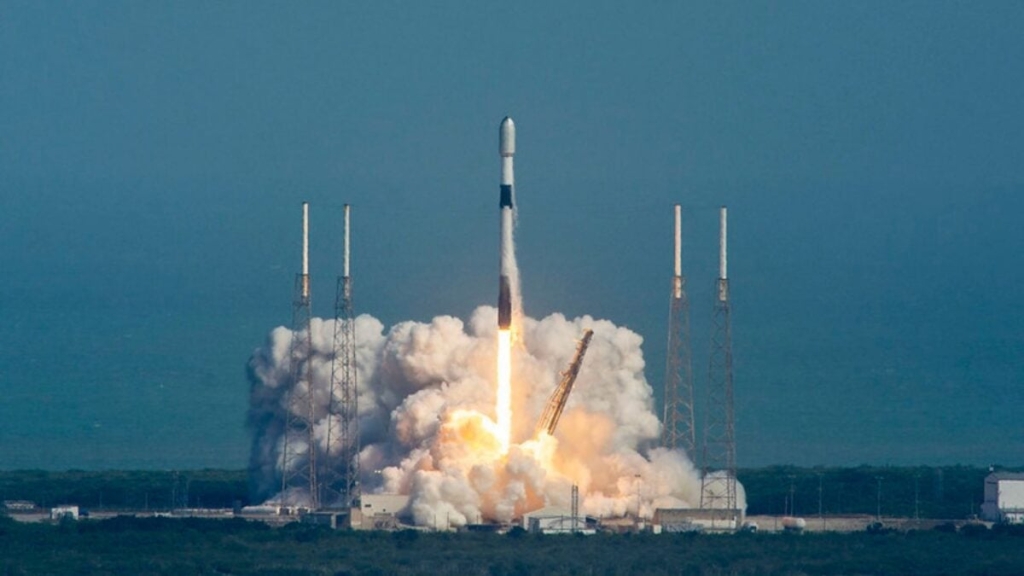
Water-Powered Space Travel Inches Closer to Reality as Startup Prepares Historic Satellite Test
In a bold leap toward revolutionizing deep-space exploration, California-based startup General Galactic is preparing to launch a satellite that could change how humanity fuels its journey beyond Earth’s orbit. The company’s ambitious plan—to propel a spacecraft using nothing more than water—represents one of the most intriguing technological experiments in modern aerospace.
Scheduled for launch aboard a SpaceX Falcon 9 rocket this October, General Galactic’s 1,200-pound satellite will carry what could become the first practical water-electrolysis propulsion system ever tested in space. If successful, the demonstration could unlock a new paradigm in space travel, one where water serves as both life-sustaining resource and rocket fuel.
The Promise of Water as Fuel
The concept behind water propulsion is elegantly simple yet technologically complex. Water molecules consist of hydrogen and oxygen—the same elements that have powered rockets since the dawn of the space age. Hydrogen provides the highest exhaust velocity of any known propellant, while oxygen serves as the essential oxidizer that enables combustion.
The challenge has always been the separation process. Engineers must split water molecules into their constituent elements through electrolysis, then either burn them together or convert them into plasma for propulsion. General Galactic’s satellite will test both approaches simultaneously, evaluating electrical propulsion that converts oxygen to plasma and chemical propulsion that burns hydrogen with oxygen.
“We can provide both the long-efficiency maneuver, but also sometimes folks need to get somewhere fast or respond really quickly to a dramatic event in the orbital environment,” explained Luke Neise, co-founder of General Galactic and former engineer at Varda Space Industries. This dual capability could prove invaluable for various space operations, from station-keeping to rapid orbital adjustments.
The Technical Challenge
Despite water’s apparent advantages, no company has successfully developed a practical water-electrolysis engine for space applications. The technical hurdles are substantial. High-temperature steam propulsion risks corroding sensitive spacecraft electronics, while water electrolysis systems add significant weight to already mass-constrained spacecraft. Additionally, water-based propulsion typically generates lower exhaust velocities compared to conventional chemical propellants.
The upcoming test represents years of research and development aimed at overcoming these obstacles. General Galactic’s satellite will demonstrate whether modern materials science and engineering can tame water’s potential as a propellant while mitigating its drawbacks. The company’s approach involves sophisticated electrolysis systems that can operate reliably in the harsh environment of space, along with propulsion mechanisms that can harness the resulting gases efficiently.
Implications for Deep Space Exploration
The potential implications extend far beyond satellite maneuvering. Water is abundant throughout the solar system—locked in lunar polar ice, embedded in Martian soil, and present in asteroids. A spacecraft capable of refueling with locally sourced water could theoretically travel indefinitely, harvesting fuel at each destination rather than carrying all propellant from Earth.
This capability could dramatically reduce the cost and complexity of deep-space missions. Instead of launching massive rockets laden with fuel, spacecraft could carry minimal propellant, refueling at orbital depots or planetary bodies. General Galactic envisions eventually establishing refueling stations for Mars-bound missions and even propellant production facilities on the Red Planet itself.
The technology also offers practical advantages for near-Earth applications. Water is non-toxic, non-explosive, and safe to transport, unlike many conventional spacecraft propellants. This safety factor could reduce launch costs and simplify ground operations. For satellite operators, water propulsion could provide a reliable, long-duration propulsion option for maintaining orbital positions or adjusting trajectories.
The October Launch: A Critical Test
The upcoming demonstration represents more than just a technical experiment—it’s a potential inflection point for space propulsion technology. Success would validate years of theoretical work and provide concrete data on water propulsion’s viability. Failure, while disappointing, would still advance understanding of the challenges involved.
The satellite’s dual-propulsion approach allows for direct comparison between electrical and chemical water-based systems under identical conditions. This side-by-side testing could reveal which approach offers the best balance of efficiency, reliability, and performance for different mission profiles.
Industry observers note that General Galactic’s progress comes at a time of renewed interest in sustainable space technologies. As satellite constellations proliferate and deep-space exploration accelerates, the need for efficient, safe, and sustainable propulsion systems becomes increasingly urgent.
The Road Ahead
Whether the October test succeeds or faces challenges, it represents a crucial step toward answering fundamental questions about water’s role in space travel. The aerospace community has long recognized water’s theoretical potential; General Galactic’s experiment could determine whether that potential translates into practical reality.
If successful, the technology could accelerate timelines for lunar bases, Mars missions, and asteroid mining operations. The ability to refuel using water found in space would effectively extend spacecraft range from hundreds of millions of miles to billions, constrained only by human endurance and life support systems rather than fuel capacity.
The test also highlights the growing role of private companies in advancing space technology traditionally dominated by government agencies. General Galactic’s innovative approach demonstrates how entrepreneurial risk-taking can drive progress in fundamental aerospace challenges.
As the October launch window approaches, the aerospace world watches with anticipation. A small satellite carrying water and sophisticated electrolysis equipment may soon prove that the most abundant substance on Earth could become the key to unlocking the solar system.
Tags
water propulsion, space fuel, electrolysis engine, General Galactic, SpaceX Falcon 9, deep space travel, satellite technology, hydrogen fuel, oxygen oxidizer, sustainable space travel, lunar exploration, Mars missions, asteroid mining, orbital refueling, plasma propulsion, chemical propulsion, aerospace innovation, space technology startup, water as fuel, space exploration
Viral Sentences
Water could be the gasoline of the space age. General Galactic is about to prove it. The future of space travel might just be H2O. This California startup wants to turn water into rocket fuel. Water propulsion could change everything we know about space exploration. The key to Mars might be floating in your glass right now. General Galactic’s water-powered satellite could revolutionize space travel. Water: the ultimate space fuel waiting to be unlocked. This October, water takes flight in the most important space test of the decade. The solar system’s most abundant resource could become its most valuable fuel.
,


Leave a Reply
Want to join the discussion?Feel free to contribute!