
What Are Those Tall Concrete Walls Along The Highway Actually For?
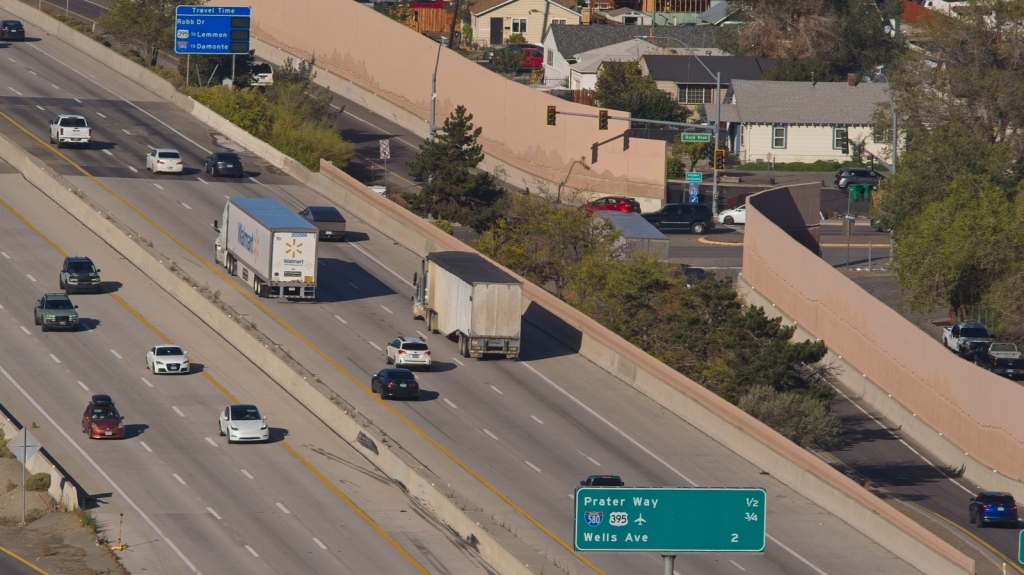
The Untold Story Behind Highway Concrete Walls: Why They’re More Than Just Barriers
You’ve probably driven past them countless times—those tall, imposing concrete walls lining highways. But have you ever wondered what they’re really for? These structures, known as highway traffic noise barriers, are far more than just aesthetic additions to our roadways. They play a crucial role in reducing noise pollution and improving the quality of life for millions of Americans living near busy highways.
What Are Highway Traffic Noise Barriers?
Highway traffic noise barriers are designed to mitigate the noise generated by vehicles on highways. According to the Federal Highway Administration (FHWA), these barriers can reduce traffic noise by up to 50%. The most noticeable benefits are felt within 200 feet of the highway, typically affecting the first row of homes adjacent to the road. However, it’s important to note that while these barriers significantly reduce noise, they don’t eliminate it entirely.
These barriers are often confused with the green structures seen on highway dividers, but they serve a completely different purpose. The green dividers are typically used for safety and to prevent vehicles from crossing into oncoming traffic lanes.
The Origins of Highway Noise Barriers
The push for highway noise barriers stems from the Noise Control Act of 1972, which aimed to create a quieter environment for all Americans. The Environmental Protection Agency (EPA) states that the act “establishes a national policy to promote an environment for all Americans free from noise that jeopardizes their health and welfare.”
Highway noise is composed of three main elements: the sound of tires on the road, engine and exhaust noises, and the noise produced by vehicles moving through the air. States use complex models to calculate current and future noise levels on highways and determine whether noise mitigation is necessary. If so, barriers are built—but only if the local community agrees.
Are There Any Serious Issues Related to Highway Traffic Noise Barriers?
While highway traffic noise barriers are effective, they come with their own set of challenges. One major issue is that the Federal Government transferred responsibility for noise regulation to state and local governments in 1982, even though the Noise Control Act of 1972 remains in effect. This decentralization leaves decisions up to each state’s transportation department, which must identify potential noise-related impacts and take action where necessary.
Another significant concern is the cost. Building these barriers can exceed $2 million per mile of highway, which is a substantial investment that could be allocated to other transportation needs. Additionally, while barriers can reduce noise levels by 70 to 90%, achieving more than that is nearly impossible. A study published in Science of The Total Environment found that under certain conditions, such as high perpendicular wind speeds, air quality on the residential side of the barrier can actually worsen.
Highway noise barriers may not benefit everyone, either. Homes in elevated locations might experience increased noise after the installation of barriers, as they can channel highway noise to higher elevations. The barriers must be the right length and height to effectively block noise from reaching nearby homes, which isn’t always feasible or economically viable.
Are There Any Other Issues Related to Highway Traffic Noise Barriers?
Living near busy highways exposes residents not only to noise but also to air pollutants and the associated negative health effects. A 2023 study in the Journal of Transportation Research estimated that about a quarter of the U.S. population lives near highways with high traffic density, with Nevada recording the highest state total at 39.4%. The District of Columbia, though not a state, came in even higher at 61.2%.
Currently, over 3,000 miles of U.S. highways use high concrete walls to shield nearby neighborhoods from traffic noise. These barriers have a positive impact, with a working paper by the National Bureau of Economic Research finding that housing prices increase when traffic noise is reduced, with the largest increases noted for homes within 328 feet of a barrier.
The benefits of highway noise barriers have led to innovative approaches in their construction. One such design is a hybrid model that combines the durability of solid concrete or steel barriers with the sound-absorbing properties of materials like fiberglass, Rockwool, and foam. Additionally, the rise of electric vehicles (EVs) could further reduce highway noise levels, as EVs produce no engine or exhaust noise—one of the many advantages they have over traditional combustion engines.
Tags: highway noise barriers, concrete walls, traffic noise reduction, Noise Control Act, Federal Highway Administration, air quality, electric vehicles, noise pollution, housing prices, transportation infrastructure, environmental health, urban planning, sound-absorbing materials, National Bureau of Economic Research, EVs vs combustion engines.
Viral Sentences: “Highway noise barriers: The unsung heroes of quiet neighborhoods.” “Electric vehicles might make those concrete walls obsolete!” “Living near a highway? These walls could be your best friend.” “The hidden cost of highway noise barriers: $2 million per mile!” “Highway noise barriers: Not just walls, but shields for your sanity.”
,


Leave a Reply
Want to join the discussion?Feel free to contribute!