
Did a cloud-seeding start-up really increase snowfall in part of Utah?
Start-Up Claims 20% Increase in Utah Snowfall Using Ionized Aerosols—But Scientists Urge Caution
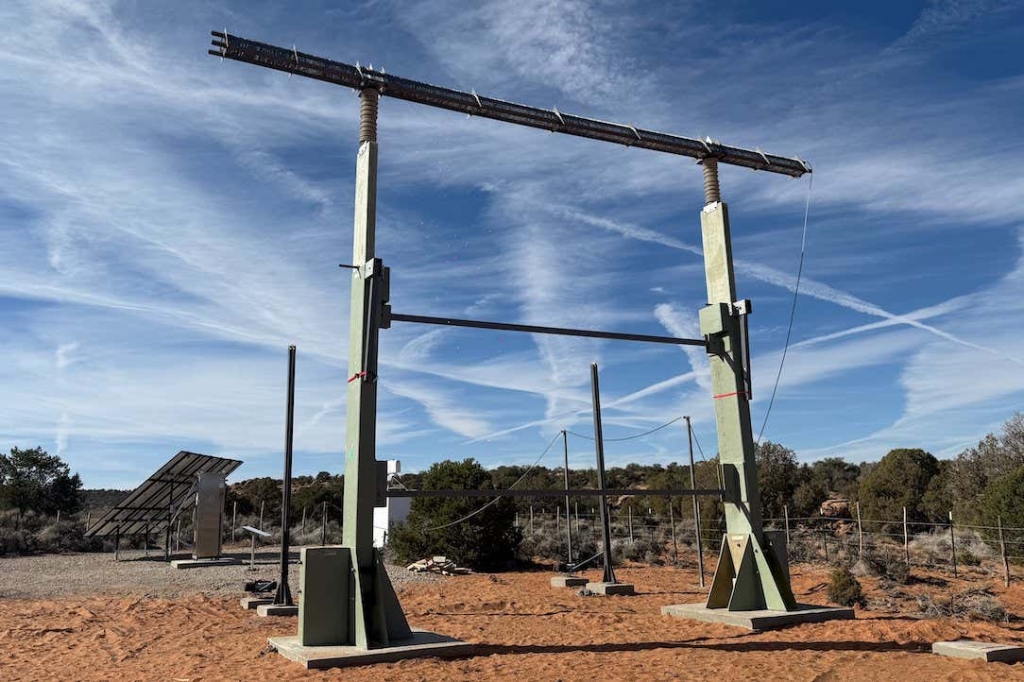
A Utah-based weather modification company says it has increased snowfall by 20% in the La Sal mountains using high-voltage ionization technology—an approach that could offer a chemical-free alternative to traditional cloud seeding. Rain Enhancement Technologies deployed an array of charged wires that ionize airborne particles, allowing them to attract water droplets and accelerate precipitation formation.
During five recent dry winters, the company compared snowfall between the La Sal range—where its equipment operated—and the Abajo mountains, located 70 km away. When active, the ionizer produced an average of 9 cm more snow in the La Sal range than would have been expected based on Abajo’s totals, according to the firm’s meteorologist, Jeff Chagnon.
“Our method doesn’t require flying into clouds or releasing chemicals,” Chagnon explained. “We can operate remotely from anywhere in the world and run the system for up to 48 hours at a time.”
The technology works by sending 10,000 volts through a coiled wire suspended between 8-meter pylons. As wind carries tiny aerosols—such as dust, soot, or salt—near the charged wire, they pick up electrons. These ionized particles are then lofted into clouds, where they enhance the collision and coalescence of water droplets, potentially increasing rainfall or snowfall.
Unlike traditional cloud seeding, which disperses salts like silver iodide from aircraft, this method avoids introducing foreign substances into the atmosphere—a key concern for public health and environmental safety. Ten U.S. states have either banned or considered banning chemical-based cloud seeding due to health fears and conspiracy theories surrounding “chemtrails.”
The United Nations has warned that the world is entering an era of “water bankruptcy,” with up to 75% of the global population facing water scarcity or contamination. In water-stressed regions like Iran, shortages have even fueled social unrest, prompting some governments to explore weather modification as a solution.
Cold War-era studies suggested electric charge could influence cloud droplet size, and a 2020 analysis found 24% more rain over the UK’s Shetland Islands on days when nuclear bomb tests ionized the air. A 2013-2018 trial in Oman reported a 10-14% increase in rainfall using similar ionization technology, while a Chinese experiment claimed a 20% boost in precipitation.
Despite these promising results, the World Meteorological Organization says the ionization approach still lacks sufficient scientific proof. Edward Gryspeerdt, a climate physicist at Imperial College London, noted that precipitation is highly variable and the observed effects could be due to chance. Jeff French of the University of Wyoming added that five dry seasons may not provide a robust enough baseline to account for seasonal snowpack differences.
“I would wait for further experimental studies and more years of data to confirm the validity of ionization as a catalyst for additional snow,” said Ibrahim Oroud of Mutah University in Jordan.
As droughts intensify across the western U.S. and beyond, the search for effective, safe, and scalable weather modification technologies is becoming increasingly urgent. Whether ionization can deliver reliable results remains an open question—but the potential for a chemical-free solution has already captured global attention.
Tags: weather modification, cloud seeding, ionization technology, snowfall increase, water scarcity, climate change, drought solutions, Rain Enhancement Technologies, Utah weather, atmospheric science, chemtrails, water bankruptcy, environmental tech, renewable resources, climate crisis
Viral Sentences: “Start-up claims 20% more snow in Utah mountains—using only electricity.” “No chemicals, no planes—just flip a switch and make it snow.” “Can ionization save the West from its worst drought in history?” “Scientists skeptical: ‘Could be chance, not climate magic.'” “Water bankruptcy looms—can tech make it rain on demand?”
,


Leave a Reply
Want to join the discussion?Feel free to contribute!