
Scientists want to put a super laser on the moon
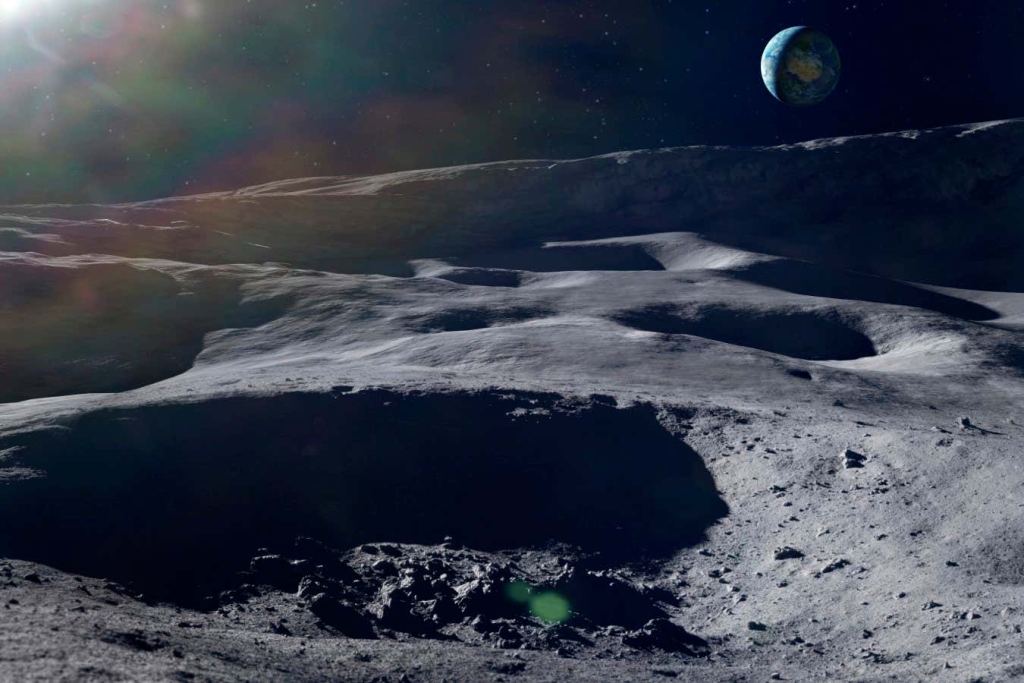
Moon’s Icy Craters Could Host Ultra-Precise Laser for Lunar Navigation and Beyond
In a groundbreaking proposal that could revolutionize lunar exploration and Earth-based precision technologies, scientists are eyeing the moon’s perpetually shadowed craters as the ideal location for an ultra-stable laser system. This cutting-edge initiative, led by physicist Jun Ye and his team at JILA in Boulder, Colorado, aims to harness the moon’s extreme cold and stable environment to create a laser with unprecedented coherence and accuracy.
The Science Behind the Cold Laser
Ultrastable lasers are the backbone of modern precision timing and navigation systems, relying on the consistent reflection of light between two mirrors within a cavity. On Earth, these systems require elaborate setups involving vacuums, cryogenic cooling, and vibration isolation to maintain stability. However, the moon’s unique geography offers a natural laboratory for such technology.
Around the lunar poles, hundreds of craters exist in permanent darkness, never receiving direct sunlight due to the moon’s minimal axial tilt. These shadowed regions can reach temperatures as low as -253°C (20 Kelvin) during lunar winter, creating an environment of unparalleled stability. “The whole environment is stable, that’s the key,” explains Ye. “Even as you go through summers and winters on the moon, the temperature still varies between just 20 to 50 Kelvin. That’s an incredibly stable environment.”
A Lunar Laser with Earth-Shattering Potential
The proposed laser system would consist of a silicon chamber with two mirrors, similar to devices already developed in JILA’s labs. While the best optical cavity lasers on Earth can only maintain coherence for a few seconds, the moon-based laser could potentially stay coherent for at least a minute. This extended coherence time opens up a world of possibilities for lunar and Earth-based applications.
For lunar activities, the laser could serve as a reference point for maintaining a standardized time zone on the moon, coordinating satellite formations that use laser ranging to measure distances, and even aiding in the precise landing of spacecraft. “We have seen various recent lunar polar landers have suboptimal landing events because of illumination conditions, which hinder the use of vision-based landing systems,” notes Simeon Barber of the Open University, UK. “Using a stable laser to support positioning, navigation, and timing could increase the reliability of successful high-latitude landings.”
Bridging the Lunar-Earth Gap
The implications of this technology extend far beyond the moon’s surface. Due to the moon’s proximity to Earth, a laser beam could reach our planet in just over a second. This rapid communication could allow the lunar laser to serve as a reference for ultra-precise measurements and timing on Earth, potentially enhancing everything from GPS systems to fundamental physics experiments.
Challenges and Future Prospects
While the concept is scientifically sound, implementing such a system on the moon presents significant engineering challenges. The harsh lunar environment, including extreme temperature fluctuations between day and night, micrometeorite impacts, and the need for autonomous operation, will require innovative solutions.
However, the potential benefits make these challenges worth tackling. As space agencies and private companies set their sights on establishing a permanent human presence on the moon, technologies like this ultra-stable laser could prove crucial for navigation, communication, and scientific research.
The proposal also aligns with broader efforts to utilize the moon’s unique characteristics for scientific advancement. From radio telescopes on the far side to ice mining in shadowed craters, the moon is increasingly seen as a platform for cutting-edge research and technology development.
Looking to the Future
As we stand on the brink of a new era of lunar exploration, initiatives like this ultra-stable laser project highlight the innovative ways scientists are thinking about using the moon’s natural features to advance technology. From improving lunar navigation to potentially enhancing Earth-based systems, the cold, dark craters of the moon may soon become the birthplace of some of the most precise instruments ever created.
This proposal not only showcases the ingenuity of modern physics but also underscores the moon’s potential as a platform for scientific discovery and technological innovation. As we continue to push the boundaries of what’s possible in space exploration, the moon’s icy craters may hold the key to unlocking new levels of precision and understanding in our quest to explore the cosmos.
Tags: Lunar exploration, Ultra-stable laser, Moon craters, Precision navigation, Space technology, JILA research, Lunar poles, Cold environment science, Optical cavities, Moon-based experiments, Space innovation, Lunar time zone, Satellite coordination, Earth-Moon communication, High-latitude lunar landings, Permanently shadowed regions, Cryogenic technology, Space engineering challenges, Future of lunar colonization, Scientific discovery on the moon
Viral Sentences:
- “Moon’s icy craters could host the most precise laser ever built!”
- “Lunar laser: Bridging the gap between Earth and the Moon in just over a second.”
- “From lunar navigation to Earth’s GPS: How moon lasers could change everything.”
- “The coldest place in our solar system might just be the hottest spot for scientific innovation.”
- “Moon’s permanent shadows: Nature’s perfect lab for ultra-precise technology.”
- “Why lunar craters are the next frontier in laser technology.”
- “From JILA labs to lunar surface: The journey of an ultra-stable laser.”
- “Lunar laser could be the key to successful moon landings in challenging polar regions.”
- “Moon’s natural vacuum and cold: The perfect recipe for scientific breakthroughs.”
- “How a minute of coherence could revolutionize space exploration and Earth technology.”
,

Leave a Reply
Want to join the discussion?Feel free to contribute!