
The Download: The rise of luxury car theft, and fighting antimicrobial resistance
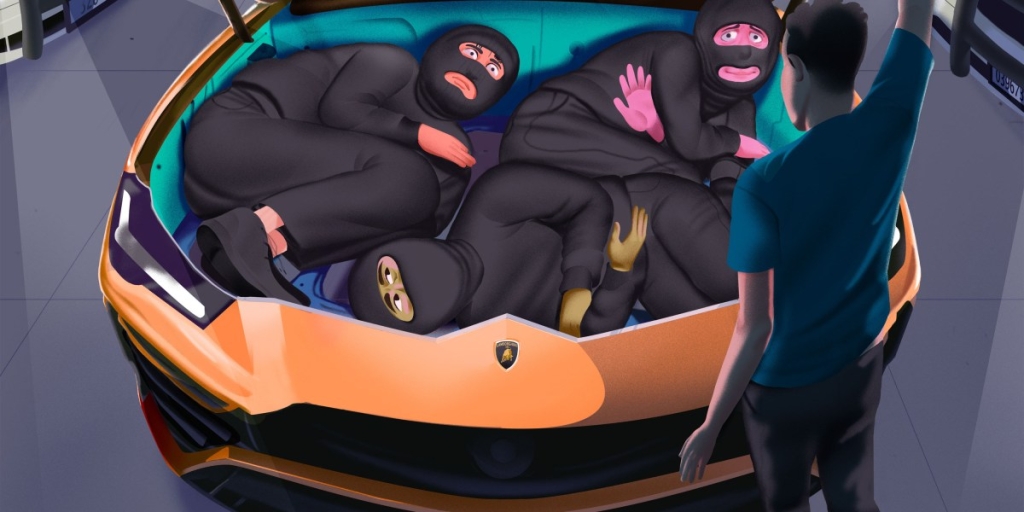
The Silent Heist: How Luxury Cars Are Vanishing Into the Shadows of Digital Crime
Across the globe, unsuspecting luxury car owners are becoming entangled in a sophisticated web of digital deception that’s rewriting the rules of automotive crime. What appears to be a routine vehicle transport arrangement has transformed into a high-stakes game of cat and mouse, where criminals armed with laptops and cunning outsmart even the most vigilant owners.
The mechanics of this modern-day heist are deceptively simple yet devastatingly effective. Criminal organizations have mastered the art of digital impersonation, creating near-perfect facsimiles of legitimate auto transport companies. Through carefully crafted phishing emails and forged documentation that would fool most professionals, these sophisticated operations secure contracts to transport vehicles worth hundreds of thousands of dollars.
Once they’ve gained custody of the vehicle, the real work begins. Rather than delivering to the agreed-upon destination, transporters divert these rolling fortunes to undisclosed locations. Here, a blend of cutting-edge technology and old-school criminal ingenuity comes into play. Digital records are systematically erased, ownership documentation is manipulated, and the vehicle’s digital fingerprint is wiped clean from tracking systems.
The timeline of these disappearances is particularly chilling. By the time owners discover their prized possessions are missing, the vehicles have often already been resold to unsuspecting buyers or shipped overseas to markets where recovery becomes exponentially more difficult. The speed and efficiency of these operations have left law enforcement scrambling to keep pace with criminals who seem to be always one step ahead.
Industry insiders describe the past two years as nothing short of catastrophic. What began as isolated incidents has mushroomed into a nationwide epidemic that’s shaking the foundations of the luxury vehicle transport industry. The financial implications are staggering, but perhaps more concerning is the erosion of trust in an industry that relies heavily on reputation and reliability.
MIT Technology Review has uncovered more than a dozen documented cases involving high-end vehicles, each following a disturbingly similar pattern. Through extensive interviews with law enforcement officials, industry brokers, transport drivers, and victims across multiple states, a clear picture emerges of an underground economy that’s thriving in the shadows of legitimate commerce.
The victims span the socioeconomic spectrum, from individual collectors to dealerships and even manufacturers. What unites them is the sense of violation that comes from discovering that the vehicle they entrusted to professionals has vanished into a criminal underworld that operates with impunity. Many describe the experience as akin to having their homes burglarized, but with the added insult that they voluntarily handed over the keys.
Law enforcement agencies are struggling to adapt to this new breed of crime. Traditional investigative techniques are proving inadequate against adversaries who can manipulate digital records, create false identities, and move assets across international borders with ease. The jurisdictional complexities alone are enough to make most cases nearly impossible to prosecute effectively.
The human cost extends beyond financial loss. Victims report feelings of paranoia, distrust, and a sense that the systems designed to protect them have failed catastrophically. Some have abandoned plans to purchase additional vehicles, while others have resorted to personally escorting their cars during transport—a solution that’s impractical for most and defeats the purpose of professional transport services.
Industry experts warn that the problem is likely to worsen before it improves. As criminal organizations refine their techniques and share information across borders, the barriers to entry for aspiring vehicle thieves continue to fall. Meanwhile, the legitimate transport industry struggles with thin profit margins that make investing in advanced security measures difficult.
The solution, according to cybersecurity specialists and law enforcement veterans, requires a multi-faceted approach. Enhanced digital verification systems, blockchain-based ownership records, and real-time GPS tracking are among the technological solutions being proposed. However, these require industry-wide adoption and significant investment—resources that many smaller operators simply don’t have.
As this silent epidemic continues to spread, one thing becomes clear: the intersection of digital technology and traditional crime has created a perfect storm that threatens to undermine confidence in an entire industry. Until comprehensive solutions are implemented, luxury car owners and transport companies alike will continue to operate in an environment where trust is a luxury few can afford.
Tags: luxury car theft, vehicle transport fraud, digital crime, organized crime, automotive security, cybercrime, vehicle tracking, ownership verification, criminal enterprise, phishing scams, blockchain technology, GPS tracking, international crime, law enforcement challenges, trust in transport industry
Viral Sentences: “The cars are gone before the owners even know they’re missing” | “Criminals are using AI to erase vehicle histories” | “This isn’t grand theft auto—it’s digital grand theft auto” | “The perfect crime in the digital age” | “When your Lamborghini disappears into the blockchain abyss” | “The transport industry’s dirty little secret” | “How criminals are turning car shipping into a disappearing act” | “The new face of organized crime wears a keyboard” | “Your luxury car might already be in another country” | “The silent epidemic stealing America’s finest automobiles”
,

Leave a Reply
Want to join the discussion?Feel free to contribute!