
TV’s Best Drama You’ve Probably Never Heard Of — Scene+Heard
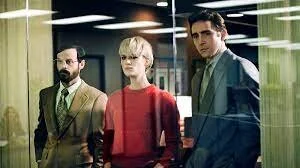
From Antihero to Alliance: How Halt and Catch Fire Reinvented Itself and Became TV’s Most Underrated Tech Drama
When Halt and Catch Fire premiered in 2014, it seemed destined to be remembered as another attempt to capture the magic of Mad Men—a period piece about charismatic visionaries trying to change the world through technology. The show’s early focus on Joe MacMillan, a Steve Jobs-esque figure with the magnetic charm of Don Draper, positioned him as the obvious centerpiece. But the show’s greatest creative decision wasn’t doubling down on Joe’s antihero journey—it was recognizing that he wasn’t the most interesting character after all.
What followed was nothing short of remarkable: a complete narrative rebirth that transformed Halt and Catch Fire from a competent period drama into one of television’s most emotionally resonant explorations of innovation, ambition, and human connection.
The Death of the Antihero
The first season’s narrative arc followed a familiar template: brilliant but troubled protagonist with a dark past, willing to burn everything down to achieve his vision. Joe MacMillan embodied this archetype perfectly—charming, manipulative, brilliant, and ultimately hollow. But as the writers leaned into this character in subsequent seasons, something fascinating happened: they watched him confront the limits of his charisma and the consequences of his actions.
This wasn’t just character development; it was the death of the antihero trope itself. Joe’s journey from magnetic leader to someone grappling with the wreckage he’s left behind became a meta-commentary on the entire era of prestige television that had elevated broken men to antiheroic heights. The show asked: what happens when the antihero realizes he’s not the hero at all?
The answer was revelatory. In Joe’s place rose a show imbued with newfound life, as the burgeoning business partnership between its two main female characters became the central narrative engine. This shift wasn’t just good storytelling—it was transformative.
A Single Shot That Changed Everything
Season 2’s opening sequence stands as one of television’s most brilliant narrative pivots. A three-minute scene shot entirely in one continuous take, the handheld camera swings and pans around a suburban home that has been transformed into a chaotic startup headquarters. Coders huddle over keyboards, construction tools litter the floor, cables snake across every surface. The cinematography becomes a visual manifestation of the crackling energy, messiness, and all the beautiful chaos that comes when people take a risk to create something new.
This single sequence announces everything the show has become: energetic, ambitious, messy, and alive. We’re introduced to Mutiny, Donna and Cameron’s video game subscription service that would take center stage for the remainder of the series. The camera work isn’t just stylistic flourish—it’s storytelling in motion, capturing the kinetic energy of innovation and the human connections that fuel it.
The Lightness of Genuine Ambition
As Donna Clark and Cameron Howe navigate the passions and pitfalls of running a startup, the melodramatic tension of the first season is replaced with a palpable lightness and ambition. This isn’t to say the stakes disappear—far from it. There are still plenty of great dramatic revelations and story beats, but none of it feels forced or in service of a half-baked antihero arc.
The stakes feel genuine and emotionally potent because they’re grounded in real human relationships rather than manufactured conflict. The show understands that building something new—whether it’s a company, a friendship, or a technological revolution—is dramatic enough without needing to artificially inflate the tension.
This is television that trusts its characters and its audience. It knows that the quiet moments between people trying to create something meaningful can be just as powerful as any manufactured crisis.
The Greatest Portrayal of Female Friendship on Television
I can’t think of a better portrayal of female friendship on television that I’ve seen than the one in this show. Donna and Cameron’s partnership transcends the typical limitations placed on female characters in media. Rather than be defined by their relations to Joe and Gordon or by tropes like the working mother, they’re given agency and allowed to be flawed and ambitious and all the things media has constantly told women not to be.
Cameron, who grew up learning how to survive on her own, opens up to collaborate and trust others—but there’s a constant fear of losing the company to which she’s dedicated her whole life. Donna, who has experienced the heartbreak of a failed product once before, comes into her own as a leader—but, by trying to always make the most logical decisions for the company, loses the partnership she needed most.
The progression of their friendship—the ways in which they support, hurt, and eventually forgive each other—is treated with such nuance that it becomes one of television’s most moving relationships to watch unfold. Their conflicts aren’t manufactured drama; they’re the natural result of two brilliant, ambitious people with different visions trying to build something together.
What makes this portrayal revolutionary is that it treats female friendship as central to the narrative rather than peripheral to male-driven stories. Donna and Cameron’s relationship isn’t defined by men, romance, or traditional domestic concerns. It’s defined by their shared passion for technology, their different approaches to leadership, and their deep, complicated love for each other as friends and partners.
A Show That Matures Alongside Its Characters
As the show matures, so do its characters. Joe learns to understand the importance of those around him—that people are not only the means to an end, but the end itself. Gordon, so eager in earlier seasons to prove himself and be remembered for something, finds confidence and peace in the present, and leaves a legacy that will long reverberate in characters and viewers alike.
But what remains at their core is what brought them together in the first place: a shared ambition to build something that makes a difference in the world. The show never loses sight of this fundamental drive, even as it explores how that drive manifests differently in different people at different stages of their lives.
This maturation isn’t just character development—it’s the show itself growing wiser. Early seasons are about proving oneself, about the hunger to be recognized. Later seasons are about understanding what truly matters, about the realization that the journey and the people you share it with are more important than any individual achievement.
The Technology of Human Connection
What makes Halt and Catch Fire truly special is how it understands that technology isn’t just about circuits and code—it’s about human connection. Every technological innovation in the show is ultimately in service of bringing people together, whether it’s through online gaming communities, early internet communication, or the simple act of sharing something you’ve built with others.
The show captures the early days of the internet revolution not as a series of technical achievements, but as a profound shift in how humans relate to each other. It understands that the personal computer revolution and the dawn of the internet age were, at their core, about democratizing connection and creativity.
This is why the show’s later seasons, focused on Mutiny and the communities that form around it, feel so emotionally resonant. They capture something true about technology that many tech-focused shows miss: that the most revolutionary aspect of the digital age isn’t the technology itself, but what it enables us to do for and with each other.
A Legacy That Endures
Halt and Catch Fire may not have achieved the cultural footprint of some of its contemporaries, but its influence and emotional impact continue to grow. It’s become a cult favorite precisely because it offers something different from the prestige dramas that dominated the 2010s: hope, connection, and the belief that building something meaningful with others is the highest form of human achievement.
The show’s final seasons represent some of the best television of the decade, not despite their departure from traditional antihero narratives, but because of it. By killing its antihero and elevating its female characters, by focusing on collaboration over individual genius, Halt and Catch Fire became something truly revolutionary: a show about technology that understands technology is, ultimately, about people.
In an era of television dominated by cynicism and darkness, Halt and Catch Fire dared to be hopeful. It dared to suggest that the connections we make while trying to change the world might be more important than whether we actually succeed in changing it. And in doing so, it created something that has already left a legacy that will long reverberate in characters and viewers alike.
Tags: #HaltAndCatchFire #TechDrama #FemaleFriendship #AntiheroEvolution #TVReinvention #StartupCulture #1980sTech #PeriodDrama #CharacterDevelopment #InnovationStorytelling
Viral Sentences:
The best thing the show’s writers ever did was realize that Joe wasn’t the most interesting character.
It’s the death of the antihero, and in its place rises a show imbued with newfound life.
I can’t think of a better portrayal of female friendship on television that I’ve seen than the one in this show.
People are not only the means to an end, but the end itself.
The journey and the people you share it with are more important than any individual achievement.
Technology isn’t just about circuits and code—it’s about human connection.
Building something meaningful with others is the highest form of human achievement.
The connections we make while trying to change the world might be more important than whether we actually succeed in changing it.
A show about technology that understands technology is, ultimately, about people.
Hope, connection, and the belief that building something meaningful with others is the highest form of human achievement.
,


Leave a Reply
Want to join the discussion?Feel free to contribute!