
Souped-Up CRISPR Gene Editor Replicates and Spreads Like a Virus
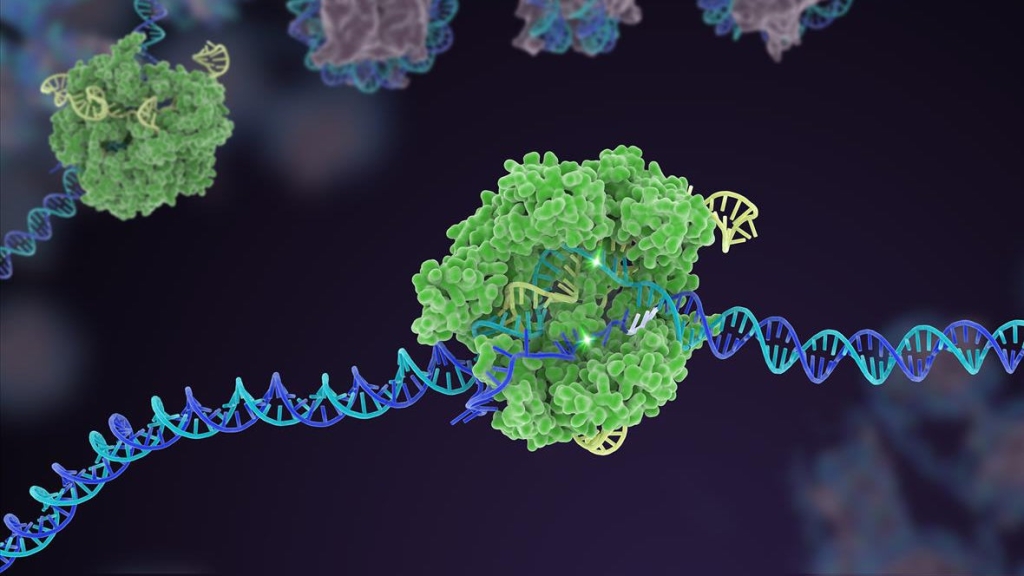
CRISPR Goes Viral: Scientists Unleash Gene Editing That Spreads Like a Benevolent Virus
In a breakthrough that sounds like science fiction, researchers have reimagined CRISPR gene editing by giving it the viral superpower of self-replication. The result? A gene editor that can spread from cell to cell, potentially revolutionizing how we treat genetic diseases.
The Numbers Game That Changed Everything
For decades, gene editing has been a frustrating numbers game. You can design the perfect molecular scissors to snip out disease-causing DNA, but unless those scissors reach enough cells, the treatment fails. Current CRISPR systems hit a wall: they work once in whatever cells they enter and then stop. It’s like trying to paint a house by throwing a single bucket of paint at the wall.
“Think of it like trying to put out a forest fire with a single bucket of water,” explains the research team from UC Berkeley. “No matter how perfect your technique, you need enough water to make a difference.”
The mathematical reality is brutal. For sickle cell disease, you need to edit about 20% of blood stem cells. For Duchenne muscular dystrophy, over 15% of muscle cells need fixing. These percentages sound achievable until you realize current CRISPR delivery systems struggle to reach even a fraction of target cells without massive, risky doses.
Nature’s Viral Inspiration
Jennifer Doudna, Nobel laureate and CRISPR pioneer, saw an elegant solution in nature’s most successful genetic engineers: viruses. While CRISPR tools are one-and-done, viruses replicate exponentially, turning a few infected cells into thousands.
The team’s innovation, called NANITE (NANoparticle-Induced Transfer of Enzyme), hijacks this viral strategy but makes it benevolent. They engineered CRISPR to manufacture its own delivery system inside treated cells, creating a self-amplifying gene editor that spreads like a controlled viral outbreak—but instead of causing disease, it cures it.
How NANITE Works: The Benevolent Virus Strategy
The system works like a microscopic Trojan horse factory. Once inside a cell, NANITE’s genetic instructions tell the cell to build both the CRISPR machinery and the delivery vehicles simultaneously. These components automatically assemble into hollow protein shells that bud off from the treated cell, drift to neighbors, and fuse with them to deliver their therapeutic cargo.
It’s cellular networking at its finest. Just as neurons form nanotube connections to share resources, NANITE exploits natural cell-to-cell communication pathways. The system packages guide RNA (CRISPR’s molecular bloodhound) and the Cas9 enzyme together, ensuring the gene editor arrives intact and ready to work.
Lab Results That Defy Expectations
In laboratory tests, NANITE delivered results that left traditional CRISPR in the dust. When editing multiple cell types in culture, NANITE was roughly three times more efficient than standard CRISPR. But the real shocker came when they counted the total number of edited cells: NANITE-treated cultures showed nearly 300% of the initially treated number, meaning the system had successfully spread to untreated neighbors.
The team then tested NANITE in mice with a genetic disorder causing dangerous protein buildup. Using a high-pressure delivery system that targets the liver, NANITE reduced the harmful protein by nearly 50% while editing only about 11% of liver cells. In contrast, classic CRISPR at the same dose edited just 4% of cells and had minimal therapeutic effect.
Why This Changes Everything
The implications are staggering. Current gene therapies require either removing cells from the body (expensive, slow, patient-specific) or delivering massive doses of CRISPR directly into tissues (risky, with potential immune reactions and off-target effects). NANITE sidesteps both problems.
By lowering effective dose requirements, the technology could make genome editing more practical and accessible for treating human disease. Diseases that were previously untouchable due to delivery challenges might suddenly become treatable. The liver, notoriously difficult for gene therapy delivery, responded beautifully to NANITE—suggesting other organs might too.
The Future Is Self-Replicating
The team is already working on enhancements. They’re exploring ways to increase NANITE’s efficiency and potentially convert the system to mRNA delivery, similar to COVID-19 vaccines. This would open up a wider range of established delivery systems and potentially make the therapy even safer and more controllable.
Safety tests in mice showed no toxic side effects, but the real test will come in human trials. The controlled self-replication aspect raises important questions about containment and reversibility—critical considerations for any therapy that spreads through the body.
The Numbers Game, Solved
NANITE fundamentally changes the gene therapy equation. Instead of needing to deliver enough CRISPR to edit every target cell directly, you only need to reach enough cells to start the chain reaction. Even if only a fraction of the initial dose reaches its target tissue, its ability to spread could still deliver enough impact to cure currently untouchable genetic diseases.
As the team puts it: “By lowering effective dose requirements, NANITE could make genome editing more practical and accessible for treating human disease.” In a field where success has been limited by the brutal mathematics of cellular coverage, NANITE offers a way to cheat the numbers—and potentially cure the incurable.
Tags: CRISPR breakthrough, gene editing revolution, viral gene therapy, Jennifer Doudna innovation, self-replicating CRISPR, NANITE technology, genetic disease cure, liver gene therapy, mRNA delivery breakthrough, Nobel Prize gene editing, next-generation gene therapy, cellular networking, therapeutic cargo delivery, transthyretin reduction, Duchenne muscular dystrophy treatment, sickle cell disease therapy, biotechnology breakthrough, precision medicine, genetic engineering, medical innovation
Viral Sentences:
- “CRISPR just got a viral upgrade that could cure the incurable”
- “Scientists created gene editing that spreads like a benevolent virus”
- “The numbers game of gene therapy just changed forever”
- “Nobel laureate’s team makes CRISPR self-replicate inside your body”
- “This isn’t just better gene editing—it’s gene editing that multiplies itself”
- “From one cell to thousands: The viral strategy that could end genetic disease”
- “CRISPR’s biggest limitation? Solved by copying nature’s most successful genetic engineers”
- “The future of medicine is self-replicating—and it’s already here”
- “What if your gene therapy could infect healthy cells with healing instead of disease?”
- “This breakthrough means we might finally cure genetic diseases we thought were untouchable”
,


Leave a Reply
Want to join the discussion?Feel free to contribute!