
Tesla Robotaxis Crashing Vastly More Often Than Human Drivers
Tesla Robotaxis Crash at Four Times the Rate of Human Drivers, New Data Shows
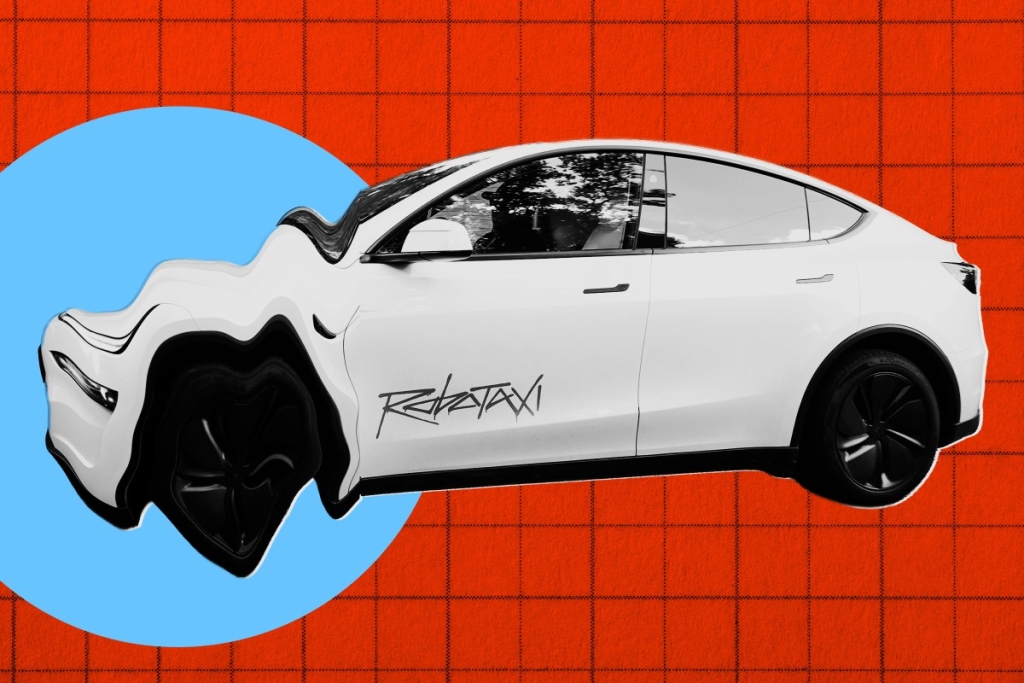
Tesla’s highly touted Robotaxi service, launched with much fanfare in Austin, Texas, last June, is facing a serious credibility crisis. Recent data from the National Highway Traffic Safety Administration (NHTSA) reveals that Tesla’s autonomous vehicles are crashing at a rate four times higher than human drivers—a stunning revelation that challenges the core promise of self-driving technology.
According to updated NHTSA filings analyzed by Electrek, Tesla has now reported 14 crashes involving its Robotaxis since the service began. The latest batch of five incidents, submitted in January 2026 and occurring between December 2025 and January 2026, includes collisions with fixed objects, a stationary bus, a truck, and two backing incidents into poles or trees.
What makes these numbers particularly damning is the context. Based on Tesla’s Q4 2025 earnings data, the Robotaxi fleet had accumulated roughly 800,000 miles by mid-January. This works out to one crash every 57,000 miles—compared to the average human driver’s collision every 229,000 miles, according to Tesla’s own Vehicle Safety Report.
The comparison with competitors is even more stark. Waymo, Tesla’s chief rival in the autonomous vehicle space, averages an accident every 98,000 miles across over 127 million fully driverless miles. Despite Elon Musk’s frequent boasts about Tesla’s superiority, the numbers tell a different story.
The disparity becomes even more pronounced when considering operational scale. Waymo operates a fleet of over 2,000 robotaxis across multiple major US cities, while Tesla has fewer than 50 vehicles limited to a small area of Austin. Waymo’s cars are truly driverless with no human monitors inside or outside the vehicles, whereas Tesla has reportedly resorted to tailing its Robotaxis with human-driven cars to meet safety requirements.
Adding to the controversy, Tesla quietly revised a July 2025 crash report, changing the injury classification from “property damage only” to “Minor W/Hospitalization”—a correction that took nearly six months to make. This delay mirrors a pattern of NHTSA investigations into Tesla’s failure to report crashes in a timely manner, sometimes months after incidents occurred.
Tesla’s practice of heavily censoring its crash reports by redacting crucial details under the guise of protecting “confidential business information” has also drawn scrutiny. The company is the only robotaxi operator that systematically censors these details in all NHTSA filings, raising questions about transparency and accountability.
The timing couldn’t be worse for Tesla, which has positioned the Robotaxi as the future of urban transportation and a key growth driver for the company. With competitors like Waymo expanding rapidly and maintaining better safety records, Tesla’s Robotaxi program appears to be falling short of both safety expectations and market leadership.
As autonomous vehicle technology continues to evolve, the gap between Tesla’s promises and its performance grows increasingly difficult to ignore. For a technology that was supposed to make roads safer, the current data suggests Tesla’s Robotaxis may be doing the opposite.
#Tesla #Robotaxi #SelfDrivingCars #AutonomousVehicles #TeslaCrashes #Waymo #ElonMusk #NHTSA #ArtificialIntelligence #AVTechnology #TechNews #Transportation #FutureOfMobility #SafetyFirst #TechFail,

Leave a Reply
Want to join the discussion?Feel free to contribute!