
The building legal case for global climate justice
The climate justice movement is entering a pivotal new phase, as groundbreaking legal battles and advancing scientific tools converge to challenge the long-standing impunity of the world’s largest carbon polluters. For decades, the moral argument for holding fossil fuel companies and wealthy nations accountable for the climate crisis has been clear: they have reaped enormous profits from activities that have destabilized the global climate, yet they have largely evaded responsibility for the devastating consequences. Homes destroyed, coastlines swallowed by rising seas, and lives cut short—these are the human costs of a crisis disproportionately fueled by a handful of powerful actors. By some estimates, the major economies owe the rest of the world a staggering climate debt approaching $200 trillion in reparations.
Yet, the legal path to justice has been fraught with obstacles. Early climate science lacked the precision to trace the origins of carbon dioxide molecules across borders and through time. Deep-pocketed corporations, armed with formidable legal teams, have exploited these scientific and jurisdictional gaps to avoid liability. But the tide may finally be turning. A surge of climate-related lawsuits—especially in the Global South—signals a new era of accountability. Governments, nonprofits, and citizens in the most climate-vulnerable nations are testing innovative legal arguments in courts around the world, and some of these courts are beginning to recognize climate change as a matter of human rights.
Despite these advances, no court has yet held a climate emitter liable for specific climate-related damages. Nations are generally shielded from lawsuits filed in other countries, so most cases have targeted major carbon producers. However, these companies have mounted a powerful defense: while they extract, refine, and sell fossil fuels, the vast majority of emissions come from the vehicles, power plants, and factories that burn those fuels. In essence, companies argue, they simply provide the fuel; it’s not their fault someone else sets it on fire.
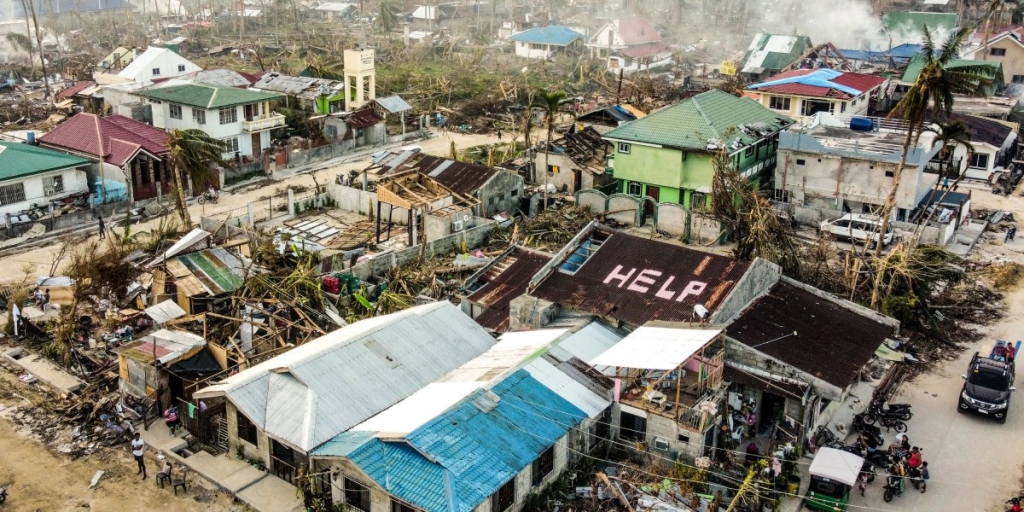
Plaintiffs are undeterred. Armed with ever-more-convincing science, victims of extreme weather events continue to seek justice through new legal avenues. In the Philippines, survivors of Super Typhoon Odette—a 2021 storm that killed over 400 people and displaced nearly 800,000—recently sued oil giant Shell. Their case hinges in part on an attribution study demonstrating that climate change made the extreme rainfall associated with Odette twice as likely. This is just one example of how evidence linking a specific company’s fossil fuel production to a particular disaster is becoming increasingly robust.
Recent advances in climate attribution science are opening new doors for accountability. A study published in Nature in September was able to quantify how much individual companies contributed to a series of 21st-century heat waves. As the science of linking emissions to specific disasters improves, so too does the potential for legal liability.
A series of recent legal decisions offers further hope. The European Court of Human Rights has affirmed that states have legal obligations to protect their citizens from the effects of climate change. Although a German court ultimately dismissed the case of a Peruvian farmer who sued a German power company over fears that a melting glacier could destroy his property, the court’s reasoning was significant: it established that major carbon polluters could, in principle, be held liable for climate damages tied to their emissions.
These developments mark a turning point in the fight for climate justice. As scientific evidence becomes more precise and courts more receptive, the era of corporate impunity may be drawing to a close. The question is no longer whether the world’s largest polluters should pay for the damage they have caused, but whether the legal system will finally hold them accountable.
Tags / Viral Phrases:
- Climate justice breakthrough
- Fossil fuel companies on the hook
- $200 trillion climate debt
- Super Typhoon Odette lawsuit
- Shell faces climate lawsuit
- Climate attribution science advances
- European Court of Human Rights climate ruling
- German court opens door to climate liability
- Climate reparations are coming
- The era of corporate impunity is ending
- Climate victims fight back
- Science meets the courtroom
- Holding polluters accountable
- Climate crisis legal revolution
- The world’s biggest climate debtors
- From moral argument to legal victory
- Climate lawsuits surge in Global South
- Attribution studies: the new weapon in climate litigation
- Human rights and climate change
- The climate debt clock is ticking
- Justice for climate victims
- Climate change litigation heats up
- The science is clear, the courts are waking up
- Climate accountability: the next frontier
- The legal tide is turning on Big Oil
,


Leave a Reply
Want to join the discussion?Feel free to contribute!