
Italy’s Iconic Lovers’ Arch Collapsed—Ironically—on Valentine’s Day
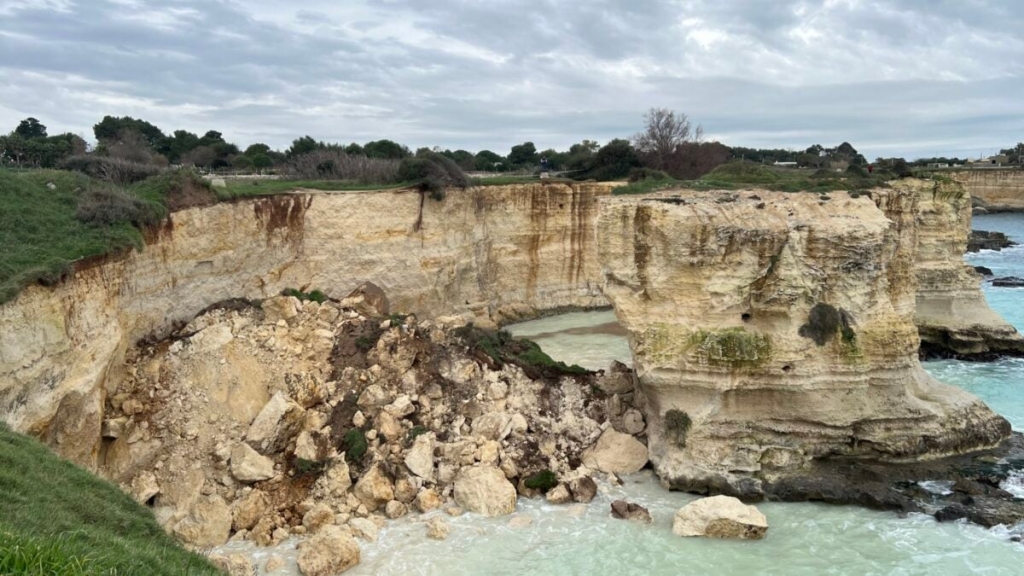
Italy’s Beloved ‘Lovers’ Arch’ Crumbles Into the Adriatic on Valentine’s Day
In a poignant twist of fate that feels almost scripted by the cosmos itself, one of Italy’s most romantic coastal landmarks met its end on the most romantic day of the year. The Faraglioni di Sant’Andrea, affectionately known as the “Lovers’ Arch,” collapsed into the turquoise waters of the Adriatic Sea on February 14, leaving locals, tourists, and romantics worldwide mourning the loss of a geological wonder that had stood sentinel over the Salento coastline for millennia.
The limestone arch, which had served as a backdrop for countless marriage proposals, first kisses, and declarations of eternal love, succumbed to the relentless forces of nature after a particularly brutal winter season. Local authorities had been bracing for this moment, though the timing—Valentine’s Day—added an almost cruel poeticism to the event. Fortunately, no injuries were reported as the massive limestone formation crumbled into the sea.
The Perfect Storm: Climate Change and Coastal Erosion
What makes this collapse particularly significant is not just the romantic symbolism, but the stark warning it represents about our changing climate. The Mediterranean region experienced one of its most severe winter seasons in recent memory, with powerful cyclones battering coastlines throughout January. A particularly devastating storm in early February ravaged the Iberian Peninsula, creating a domino effect of extreme weather patterns across Southern Europe.
“The Mediterranean experienced among its hottest years on record in 2025,” explains Christian Mulder, a climate expert at the University of Catania in Italy. “Warmer seas are supercharging the atmosphere and fueling extreme events.” This phenomenon creates a perfect storm of conditions that accelerate coastal erosion far beyond natural rates.
The arch’s collapse wasn’t an isolated incident but rather the culmination of years of environmental stress. Warmer waters, more intense storms, and increasingly erratic weather patterns have been systematically weakening coastal structures throughout the Mediterranean basin. What once took centuries to erode is now happening in mere decades.
A Cultural Icon Lost to Time
For the residents of Melendugno and the broader Salento region, the loss extends far beyond mere geography. The Faraglioni di Sant’Andrea was woven into the very fabric of local identity, featuring prominently in folklore, tourism campaigns, and family histories.
“It is a devastating blow to the heart,” said Maurizio Cisternino, the mayor of Melendugno, in an emotional statement to local reporters. “One of the most famous tourist features of our coastline and of the whole of Italy has disappeared.” The sentiment was echoed by Francesco Stella, the region’s tourism councilor, who described the event as “like a funeral.”
The arch’s cultural significance was matched only by its geological importance. Formed over thousands of years through the patient work of wind and saltwater erosion, the limestone formation represented a textbook example of natural coastal processes. Its distinctive layers told the story of ancient seas, changing climates, and the slow but inexorable power of natural forces.
Myths and Legends of the Adriatic
Long before it became a tourist attraction, the Faraglioni di Sant’Andrea was the subject of countless local legends. According to traditional folklore collected by regional historians, the area was believed to be home to sirens who lured sailors with their enchanting songs. Others claimed that mythical giants had once roamed the coastline, tossing limestone blocks around as if they were mere pebbles.
These stories, passed down through generations, transformed the arch from a simple geological formation into a living repository of cultural memory. Couples would visit not just for the stunning views, but to connect with centuries of romantic tradition. The arch became a symbol of enduring love, standing firm against the elements much as couples hope their relationships will withstand life’s challenges.
The Science Behind the Collapse
While the romantic narrative captures public imagination, the scientific reality is equally compelling. The Mediterranean’s unique geography makes it particularly vulnerable to climate change impacts. As a semi-enclosed sea, it warms faster than the open ocean, creating a feedback loop that intensifies weather patterns.
The limestone composition of the Faraglioni di Sant’Andrea made it especially susceptible to erosion. Limestone is particularly vulnerable to chemical weathering, as slightly acidic rainwater and seawater gradually dissolve the calcium carbonate that forms the rock. When combined with the mechanical stress of waves and the freeze-thaw cycles of winter, the structure’s integrity was compromised over time.
Local authorities had recognized the growing threat years before the collapse. Mayor Cisternino revealed that the municipality had previously applied for coastal preservation funding but failed to secure the necessary resources. This funding gap highlights a broader challenge facing coastal communities worldwide: the struggle to protect vulnerable landmarks in the face of escalating climate threats.
Environmental Impact and Future Implications
The collapse of the Lovers’ Arch raises urgent questions about coastal management and climate adaptation strategies. The rubble that once formed the iconic arch will continue to weather and eventually return to the sea, but the loss of the structure itself represents an irreplaceable gap in the region’s natural and cultural landscape.
“This isn’t just about losing a beautiful view,” notes Dr. Elena Rossi, a coastal geologist at the University of Bari. “It’s about understanding how our coastlines are changing and what that means for communities that have depended on these landscapes for generations.”
The event serves as a stark reminder that climate change isn’t a distant threat but a present reality affecting cherished landmarks and communities. As Mediterranean temperatures continue to rise and extreme weather events become more frequent, similar collapses may become increasingly common along vulnerable coastlines.
Tourism in Transition
The economic impact of the arch’s collapse extends beyond mere sentiment. The Salento region, already a popular tourist destination, had been actively promoting the Lovers’ Arch as a key attraction. Local businesses that depended on tourism—from hotels and restaurants to souvenir shops and tour operators—now face the challenge of reimagining their offerings.
However, the tourism industry has shown remarkable resilience in the face of such challenges. Local authorities are already exploring ways to transform the site of the collapse into a new attraction, potentially creating educational programs about coastal erosion and climate change. The story of the Lovers’ Arch may evolve from a tale of loss to one of adaptation and learning.
Looking Forward: What Comes Next?
As the community mourns its loss, attention is turning to what can be learned from this event. The collapse of the Faraglioni di Sant’Andrea serves as a wake-up call for coastal regions worldwide, highlighting the urgent need for comprehensive climate adaptation strategies.
Experts are calling for increased monitoring of vulnerable coastal structures, enhanced funding for preservation efforts, and greater public awareness about the impacts of climate change on cultural heritage sites. The tragedy also underscores the importance of preserving not just the physical structures but the stories and traditions associated with them.
For now, the people of Melendugno and the broader Salento region are left to grapple with the loss of a beloved landmark. But in the rubble of the collapsed arch, there lies an opportunity for renewed commitment to environmental stewardship and cultural preservation.
As Valentine’s Day approaches next year, couples will undoubtedly seek new places to declare their love along the Adriatic coast. But for many, the memory of the Lovers’ Arch—and the lessons learned from its collapse—will remain a poignant reminder of nature’s power and the urgent need to protect our shared heritage in an era of climate change.
The Faraglioni di Sant’Andrea may be gone, but its story continues to resonate, serving as both a cautionary tale and a call to action for communities facing similar challenges around the world.
Tags
Lovers’ Arch collapse, Faraglioni di Sant’Andrea, Adriatic Sea, Italian landmark, Valentine’s Day tragedy, climate change impact, coastal erosion, Mediterranean cyclones, Salento region, Melendugno, limestone formation, geological wonder, romantic landmark, environmental disaster, cultural heritage loss, climate adaptation, extreme weather events, coastal preservation, Italian tourism, Adriatic coastline, nature’s power, geological erosion, Mediterranean warming, climate emergency, romantic tragedy, historical landmark loss, environmental warning, coastal management, climate change reality, cultural memory, geological processes, extreme weather, climate crisis, Mediterranean climate, coastal vulnerability, environmental preservation, cultural identity, climate education, tourism adaptation, heritage conservation, geological history, climate action, environmental stewardship, Mediterranean ecosystem, coastal communities, climate resilience, cultural preservation, environmental awareness, geological wonder lost, climate impact, coastal protection, Mediterranean geography, environmental change, cultural significance, geological formation, climate vulnerability, coastal erosion acceleration, environmental heritage, climate education opportunity, geological processes, Mediterranean climate change, coastal adaptation, cultural storytelling, environmental legacy, geological vulnerability, climate preparedness, coastal heritage, environmental memory, geological transformation, climate response, coastal identity, environmental narrative, geological story, climate lessons, coastal future, environmental impact, geological change, climate understanding, coastal preservation, environmental connection, geological education, climate awareness, coastal evolution, environmental history, geological significance, climate challenge, coastal protection, environmental preservation, geological wonder, climate adaptation, coastal management, environmental heritage, geological processes, climate action, coastal communities, environmental stewardship, geological story, climate education, coastal resilience, environmental memory, geological transformation, climate response, coastal identity, environmental narrative, geological significance, climate lessons, coastal future, environmental impact, geological change, climate understanding, coastal preservation, environmental connection, geological education, climate awareness, coastal evolution, environmental history.
,


Leave a Reply
Want to join the discussion?Feel free to contribute!